
MPR: The struggle for women's equality is a national civilisational agenda
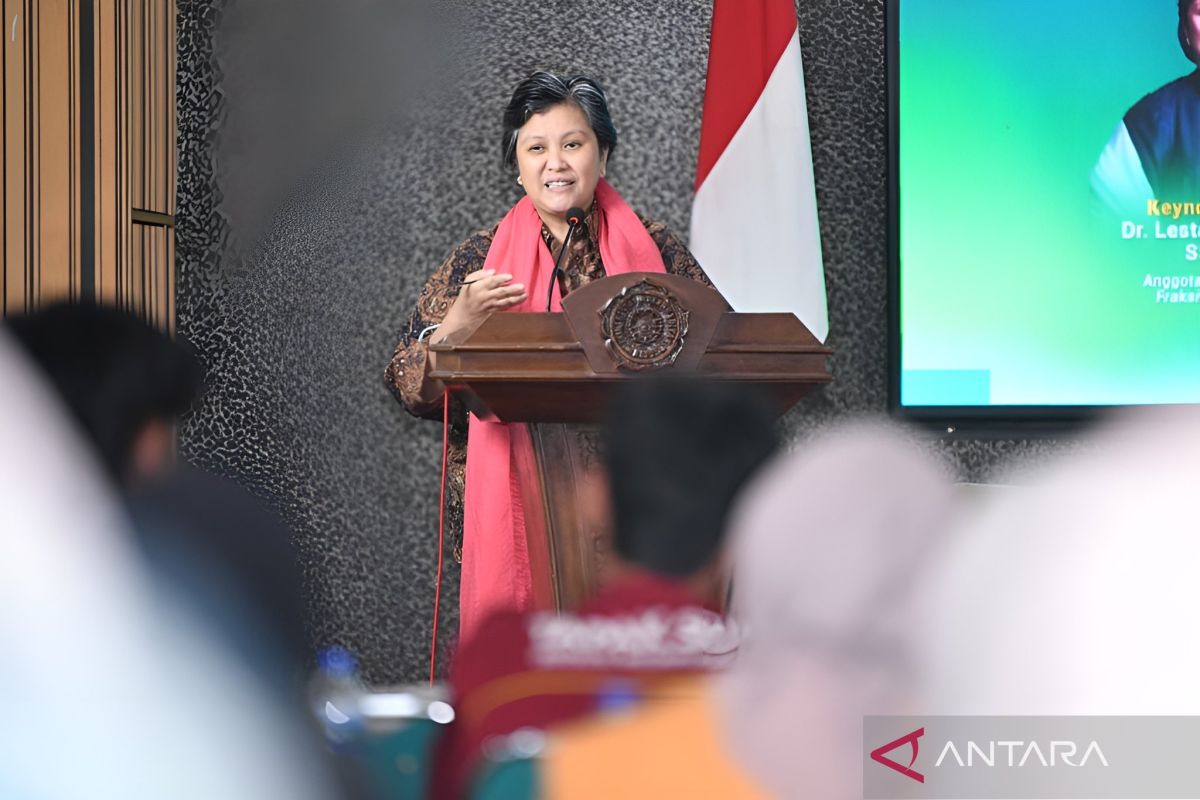
Deputy Speaker of the People’s Consultative Assembly (MPR) Lestari Moerdijat has stressed that the struggle for women’s equality and empowerment is not merely a sectoral issue, but a national civilisational agenda that must become a collective movement.
Despite progress having been made, she said, various structural and cultural barriers continue to hinder the advancement of Indonesian women. This phenomenon is a ‘glass wall’ that requires extraordinary courage to break through.
‘When we talk about women and position women as equals, we are in fact building a better national civilisation for the future,’ Lestari said during a discussion on women at the Ministry of Women’s Empowerment and Child Protection (KPPA) in Jakarta on Thursday.
According to her, a number of data points illustrate the current inequality, including those relating to women’s representation in parliament.
Although there is an affirmative policy of 30 percent female legislative candidates, she revealed that the composition of women in the House of Representatives (DPR RI) currently stands at only 21.9 percent.
On the other hand, Rerie (as Lestari Moerdijat is familiarly known) also acknowledged that political parties find it difficult to recruit female cadres who are ready to enter politics because they have not received full support from their families.
‘It is very difficult to find women who are ready. Some are willing, but have not been accepted by their surroundings. The husband is ready, but the family does not give permission,’ she said.
In addition, she said that inequality also occurs in the employment sector, with the female labour force participation rate at only around 55 percent, far below that of men at 84 percent.
According to her, around 61 percent of women also still work in the informal sector, which offers minimal protection and social security, as well as lower wages than men in the same positions.
According to Rerie, the main problem lies not in women’s capacity, but in a social structure that is not yet fair and a patriarchal cultural bias that remains deeply rooted.
To that end, she invited all elements of the nation, including political parties, to make women’s issues a national movement, not merely a formality of quota fulfilment.