
MPR Study Body Emphasises Importance of Decentralisation Evaluation
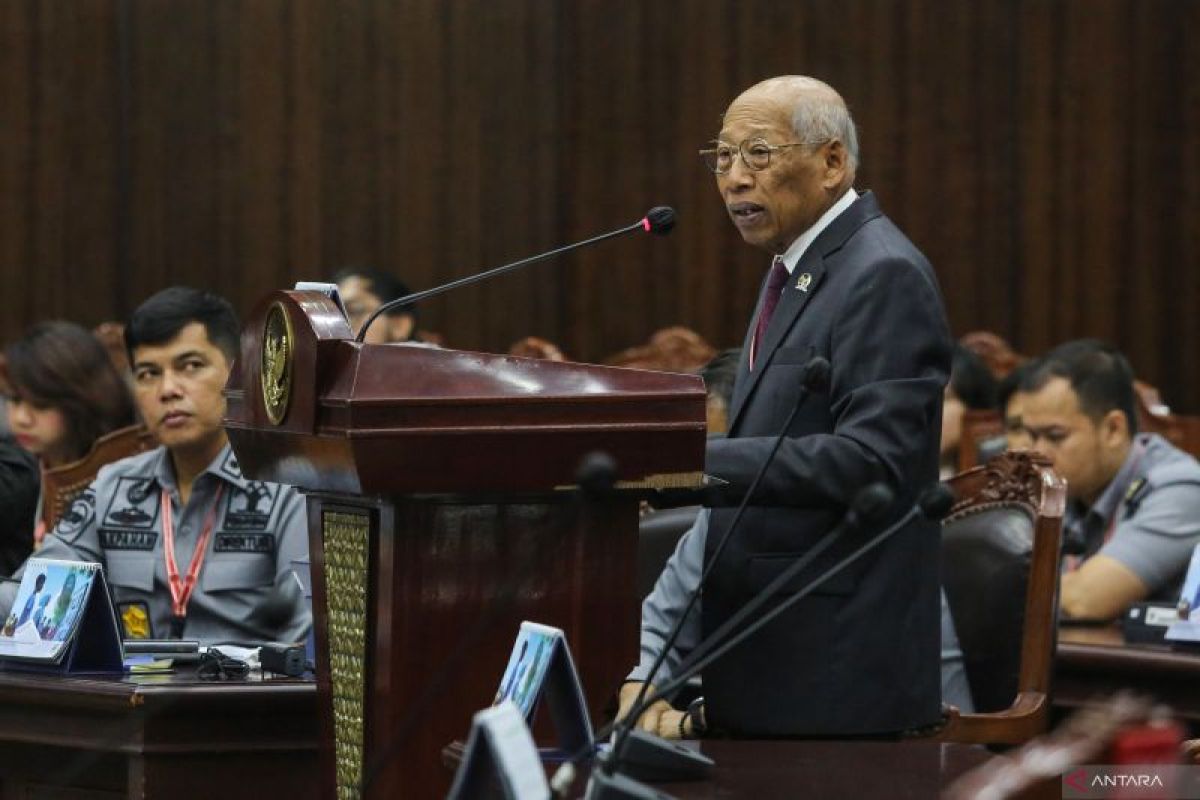
It must be acknowledged that we are lagging in the development of decentralisation and regional autonomy.
Jakarta (ANTARA) - I Wayan Sudirta, a member of the MPR RI Study Body, has emphasised the importance of a thorough evaluation of the implementation of decentralisation and regional autonomy in Indonesia to ensure it can meet future development challenges.
He believes that an evaluation is necessary by observing the development of decentralisation in dozens of countries that are actually continuing to strengthen the position of local governments.
“It must be acknowledged that we are lagging in developing decentralising and regional autonomy,” Wayan stated in a briefing in Jakarta on Wednesday.
He made these remarks after attending a Focus Group Discussion (FGD) for Group III of the MPR RI Study Body, titled Decentralisation, Regional Autonomy, Local Government, and Villages, in Surabaya, East Java, on Monday (31/8).
He explained that Indonesia cannot immediately conclude that current decentralisation practices have failed, but existing dynamics indicate a need to evaluate the design of central-regional relations.
For this reason, the MPR RI Study Body is organising FGDs in various regions to gather input from academics and experts regarding the effectiveness of the current system.
“Is it still competent, is our constitution still appropriate? Or perhaps some parts are still good, but other parts may now need to be questioned,” he said.
The member of Commission III of the DPR RI reminded that Indonesia adheres to the principle of a ‘living constitution’—one that lives and evolves according to the demands of the era.
“Therefore, if there are things that we still need to maintain, then we maintain them. But if refinement is needed, why shouldn’t we do it?” said Wayan.
Furthermore, he revealed that discussions on decentralisation are not limited to the division of power, but must also encompass the position of villages, the role of governors, and central-regional financial relations. Regarding the debate over regional election mechanisms, whether direct or through the Regional House of Representatives (DPRD), he stated, “The discussion will continue to be conducted objectively.”
Specifically, Wayan highlighted one important issue for Indonesia, namely the State Policy Guidelines (PPHN) as a reference for national development.
“The PPHN addresses both short-term and long-term development, as well as national and regional interests,” he noted.
Wayan exemplified that without a clear national framework, the programmes of hundreds of regional heads could potentially lack continuity during leadership transitions. The presence of the PPHN serves as a framework to ensure the direction of development across all levels of government remains aligned.
“Whoever becomes the president, whoever the governor, regent, or mayor, they must adhere to the state guidelines,” he said.
He is optimistic that leadership operating within the corridor of state guidelines will accelerate the achievement of national goals. According to Wayan, development continuity is the primary key to entering a new era.
Regarding the continuation of PPHN discussions, Wayan dismissed notions of a deadlock. He explained that the MPR RI Study Body has completed an in-depth study, which will subsequently be communicated by the MPR leadership to state institutions and the government.
“We hope that the in-depth study receives a positive response. And then there is a follow-up,” he said.
Wayan also urged the government not to hesitate to open space for constitutional amendments if necessary, provided they are conducted in a limited manner.
“Even an amendment, if indeed required, is a normal thing. We just need to frame what kind of amendments they are, so that these amendments do not wander, expand, or become uncontrolled,” he said.
In closing, he invited all parties to discuss these constitutional issues rationally and to set aside excessive political fears, as the commitment to the Unitary State of the Republic of Indonesia (NKRI) is deeply rooted.
“There is no need to be afraid; there must be courage,” he concluded.