
MPR: Strengthening Literacy and Numeracy Requires Sustainable Policies
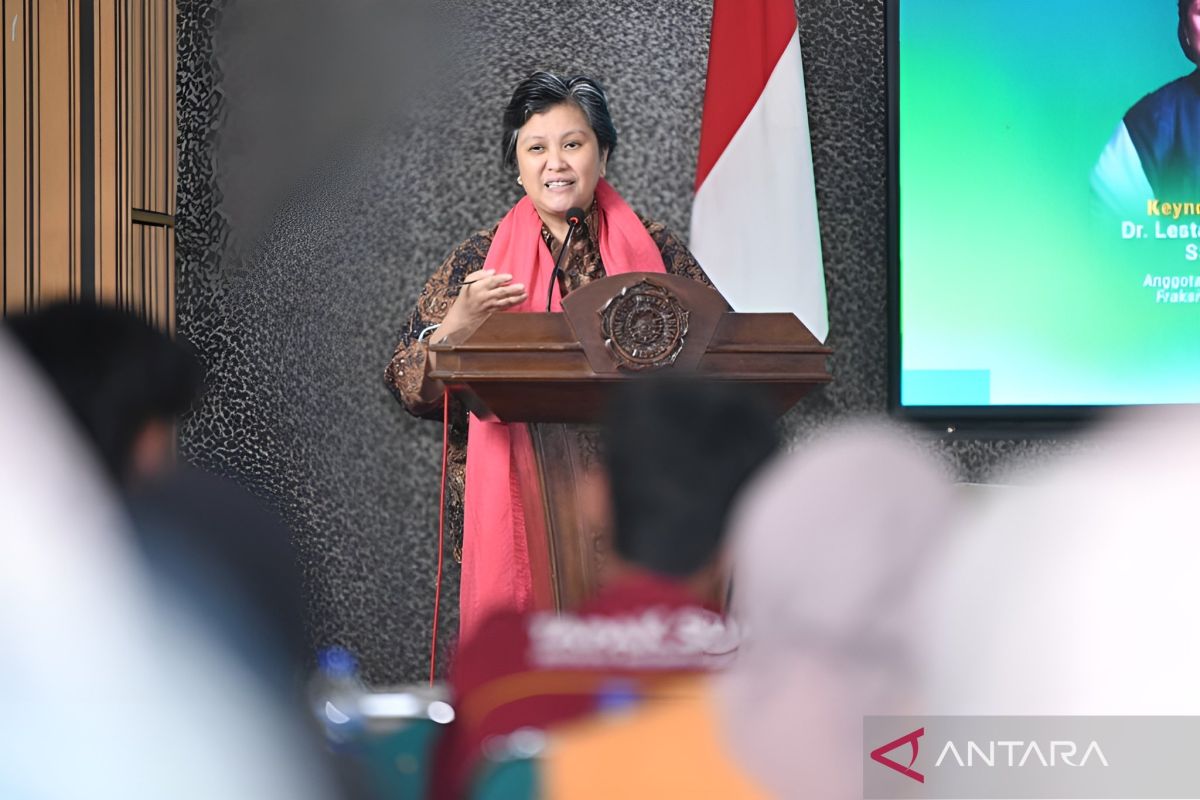
Jakarta (ANTARA) - The Deputy Speaker of the MPR RI, Lestari Moerdijat, stated that the educational transformation through the strengthening of literacy, numeracy, and PISA-based STEM approaches, as promoted by the Ministry of Primary and Secondary Education, requires sustainable educational policies on the ground.
According to her, without sustained execution, such programmes risk becoming nothing more than ceremonial discourse. “Good educational policy is not enough to simply announce. What determines success is whether it is consistently implemented, evaluated, and improved over time,” Lestari said in a statement received in Jakarta on Sunday.
Lestari was responding to several steps taken by the Ministry of Primary and Secondary Education (Kemendikdasmen) to share practices of educational transformation through the strengthening of literacy, numeracy, and the integration of science, technology, engineering, and mathematics (STEM) based on PISA standards in various schools.
Lestari, affectionately known as Rerie, highlighted that the issues of literacy and numeracy in Indonesia still face fundamental challenges. Data from the 2025 National Assessment shows that only about 55.7 per cent of primary school students have reached the minimum competency threshold for reading literacy. Meanwhile, approximately 50 per cent of Indonesian students generally have not reached minimum competency in literacy and numeracy.
“These figures indicate that the issue of learning quality has not been fully resolved. While access to education is important, quality must also be a priority,” she said.
Rerie also warned the government not to become complacent regarding the increase in Indonesia’s PISA scores, even though such improvements are noteworthy. The PISA score is an achievement from the Programme for International Student Assessment, used to measure the academic abilities of 15-year-old students.
She detailed that Indonesia’s science score rose by six points to 389, and the reading score rose by six points to 365. However, the mathematics score actually fell by two points to 364 compared to the 2022 PISA period. “The increase in several fields deserves appreciation, but the decline in mathematics is a red flag that must be responded to seriously,” she noted.
The member of Commission X of the DPR RI emphasised the importance of consistency in three main areas. Specifically, strengthening teacher capacity must be a sustained priority, not a one-off programme. “Teacher training in learning communities, STEM education, coding, and artificial intelligence must truly reach the classroom and impact teaching methods,” she explained.
Furthermore, Rerie urged that literacy and numeracy programmes be systematically integrated into assessments and curricula, as has already been implemented in several schools across the country. “What must be guaranteed is the sustainability of these good practices. We must not allow them to depend solely on specific principals or teachers. The system must be strong,” she said.
On the other hand, the legislator from Central Java’s 2nd Electoral District also highlighted the wide digital divide between urban and rural areas. BPS data shows that computer or laptop ownership for learning purposes in urban areas reaches 65 per cent, while in rural areas, it is only around 28 per cent. “This inequality will hinder technology-based transformation. Special interventions are required for disadvantaged regions,” she added.
She also expressed appreciation for the ‘Deep Learning’ approach, which encourages learning to be more meaningful and enjoyable. However, Rerie warned that such an approach requires adequate resource support, ranging from teaching materials and learning media to teacher welfare. “Without comprehensive support, changes in approach will only burden teachers in the field,” she said.
Lestari emphasised the need for strong collaboration between the government, schools, society, and parents to build the foundation of critical thinking for the nation’s future generations. “Literacy and numeracy are not merely assessment targets. They are the foundation of national competitiveness. We must be consistent, patient, and serious in implementing them,” she concluded.
Source: jawawa.id (https://jawawa.id/newsitem/mpr-strengthening-literacy-and-numeracy-requires-sustainable-policies-1789311417)
Originally published by Antara (Indonesian) (https://www.antaranews.com/berita/5738941/mpr-penguatan-literasi-dan-numerasi-butuh-kebijakan-berkelanjutan), translated from Indonesian