
MPR: School Principals are the Forefront in Instilling the Four Pillars from an Early Age
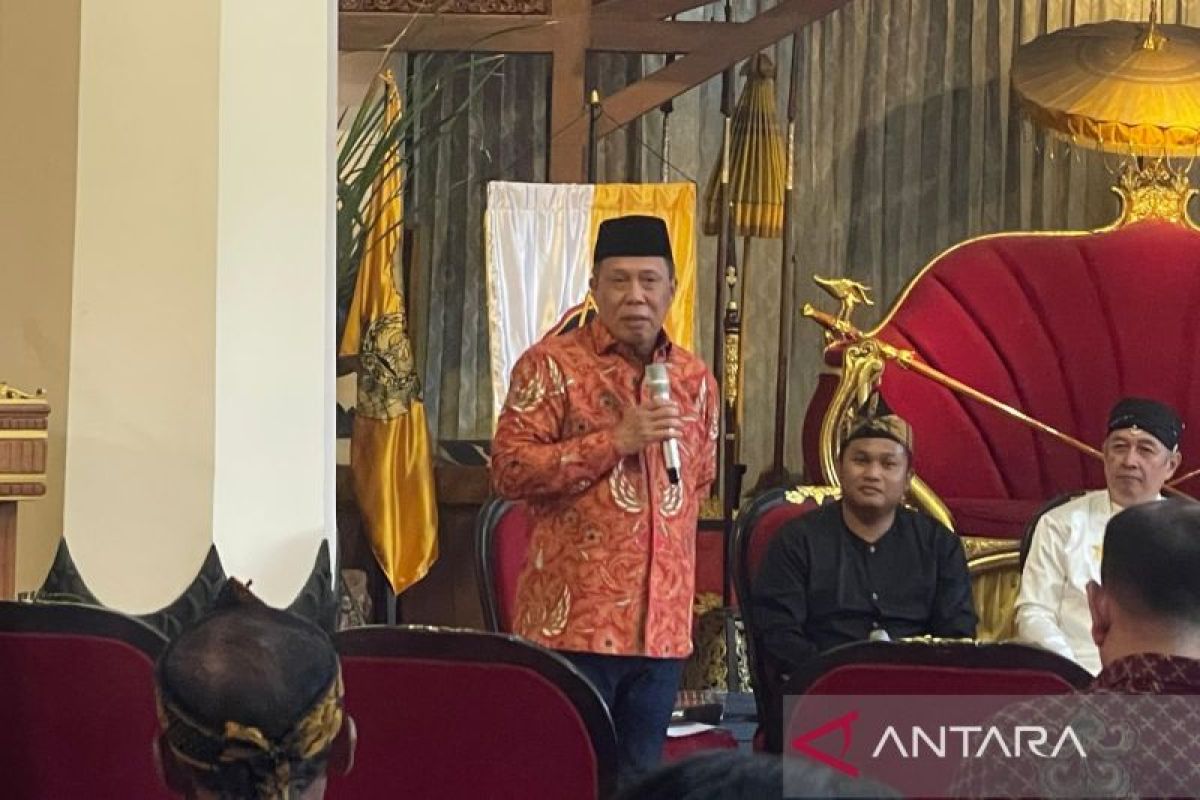
The Deputy Chairman of the MPR RI Socialisation Body, Abidin Fikri, has asserted that school principals and educators play a strategic role as the frontline in instilling the values of the MPR RI Four Pillars from an early age.
Abidin explained that the Four Pillars of the MPR RI—which include Pancasila, the 1945 Constitution, the Unitary State of the Republic of Indonesia (NKRI), and Bhinneka Tunggal Ika (Unity in Diversity)—must not be understood merely as academic subject matter. These values must be brought to life through school culture so they can become part of students’ attitudes and behaviours in daily life.
In his presentation, Abidin specifically explained Pancasila as the foundation and ideology of the state. Pancasula serves as the nation’s way of life, the foundation of statehood, and the philosophical basis of the country. Therefore, Pancasila values must serve as a guide for students in interacting, making decisions, respecting others, and facing various changes in the era.
“Pancasila must not stop at being something to memorise. Pancasila is a way of life, a foundation, and the philosophical basis of the state. Its values must be present in the lives of children, starting from the family environment, school, to society,” Abidin stated in a written statement in Jakarta on Wednesday.
These remarks were made during a socialisation activity for the Four Pillars of the MPR RI with the Working Group of Private Primary School Principals (K3S) of Bekasi City, held in Bekasi on Tuesday (1/9).
Schools are required not only to produce students who are academically intelligent but also to possess character, integrity, and a national identity.
According to him, the implementation of Pancasila values in schools can be realised through simple yet tangible activities, such as mutual cooperation (gotong royong), respecting differences, practising deliberation (musyawarah), acting fairly, and building compassion for others. In this way, students will not only know Pancasila values but will also experience and practise them.
Abidin then invited principals to understand the Preamble of the 1945 Constitution, particularly the fourth paragraph, which contains the nation’s objectives. These four objectives are to protect all the people of Indonesia and the entire Indonesian territory, to advance general welfare, to educate the nation’s life, and to participate in the implementation of world order based on independence, eternal peace, and social justice.
He emphasised that these national objectives are closely linked to the duties of education. When principals and teachers educate students, they are essentially helping to carry out the constitutional mandate to educate the nation’s life.
“When principals and teachers educate children, they are actually helping to carry out the constitutional mandate, which is to educate the nation’s life. Thus, the task of education has a very strong national dimension,” he said.
He noted that this history is important to introduce to the younger generation so they understand that the state foundation and constitution were born through a long process of exchanging ideas, differing views, and agreements among the nation’s founders.
“If the younger generation understands how Pancasila was formulated and how our constitution was born, they will appreciate this nation more and understand that Indonesia’s unity was built through a process that was not simple,” he explained.
Abidin assessed that this historical understanding also strengthens the spirit of Bhinneka Tunggal Ika. The nation’s founders came from diverse backgrounds but were able to find common ground to build Indonesia as a united and independent nation. This value needs to be continuously passed down to students so that diversity is viewed as a national strength.
He also reminded that the challenges facing the younger generation today are increasingly complex due to technological developments and the heavy flow of information. In such a situation, the values of the Four Pillars can serve as a foundation for students to filter various influences and determine their stance without losing their identity as Indonesians.
Therefore, Abidin encouraged principals and teachers to be role models in applying the values of the Four Pillars through both the learning process and the culture of educational institutions. Pancasila as a way of life, the 1945 Constitution as the constitutional basis, NKRI as a shared home, and Bhinneka Tunggal Ika as the spirit of unity must be present in school life.
“We want school principals to return from this activity with the spirit to make schools a space for the growth of a Pancasila-aligned generation. It is from schools that the nation’s character is formed,” Abidin concluded.
Source: jawawa.id (https://jawawa.id/newsitem/mpr-school-principals-are-the-forefront-in-instilling-the-four-pillars-from-an-early-age-1788303292)
Originally published by Antara (Indonesian) (https://www.antaranews.com/berita/5721645/mpr-kepala-sekolah-garda-terdepan-tanamkan-empat-pilar-sejak-dini), translated from Indonesian