
MPR RI Discusses Strengthening Decentralisation, Highlights Central-Regional Relations
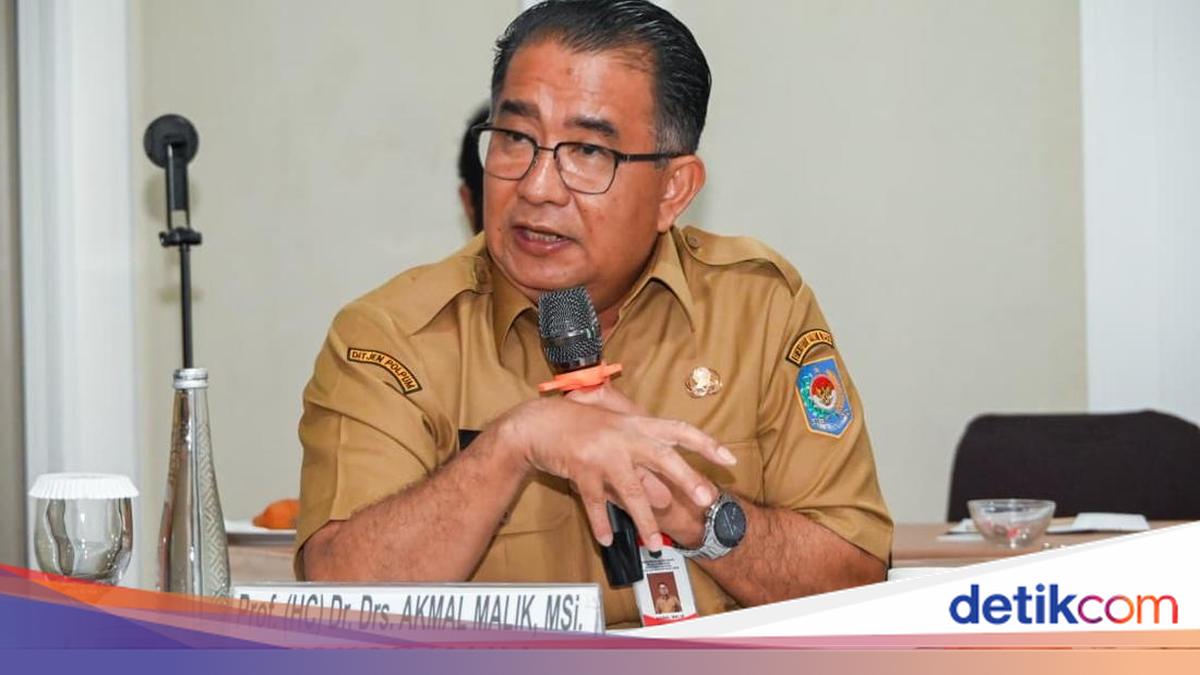
The Director General of Politics and General Governance at the Ministry of Home Affairs, Akmal Malik, assessed that the issue of decentralisation in Indonesia is not merely related to the constitution. The problem is believed to be more deeply rooted in the implementation stage and the dynamics of the relationship between the central and regional governments.
Akmal emphasised that the division of authority between the central and regional governments must be accompanied by institutional and budgetary clarity. Furthermore, aspects such as human resources, supervision, and systems of rewards and sanctions must be addressed.
“The problem lies in implementation. When there are problems in implementation, is meritocracy functioning? What is the reward for those who succeed, and what is the punishment for those who do not? This mechanism is currently non-existent,” Aklar stated in a written statement on Monday (21/9/2026).
These remarks were made by Akmal while serving as a speaker in a Focus Group Discussion (FGD) for Group III of the MPR RI Research Body. The event, themed “Decentralisation, Regional Autonomy, Local Government, and Villages,” took place in Bintaro, South Tangerang.
The discussion was led by the Chairperson of Group III of the MPR RI Research Body, Hindun Anisa. Several members of the MPR RI Research Body from various factions, including I Wayan Sudirta, Firman Soebagyo, and Ida Fauziyah, were present, alongside the Vice Rector I of UIN Syarif Hidayatullah Jakarta, Prof. Ahmad Tholabi Kharlie, S.H., M.H., as a resource person.
Akmal highlighted the importance of policies that consider the specific conditions of each region. According to him, the characteristics of regions such as Aceh, Papua, Yogyakarta, and Jakarta cannot always be equated with other areas.
“Not all regions are the same. Sometimes we are too lazy to create different policies and instead choose a one-size-fits-all approach, even though regional conditions vary,” he said.
Additionally, Akmal encouraged regional governments not to rely solely on transfer funds from the central government. Regions need to develop their inherent potential to boost the economy and public welfare.
“Productive autonomy like this must be encouraged moving forward. Do not forget to bring prosperity to the people. There is much that can be done,” he noted.
He added that strengthening decentralisation still requires an active role from the central government. The central government is tasked with coordinating various policies while considering the diverse conditions of each region.
“Decentralisation requires centralisation to coordinate it,” he said.
Meanwhile, Prof. Ahmad Tholabi Kharlie, S.H., M.H., stated that every issue in the administration of government does not necessarily need to be resolved through constitutional amendments. He argued that a diagnosis must first be conducted to determine whether the problem originates from the constitution or is merely related to laws, regulations, and their execution.
“So, we must diagnose first before providing the prescription. Before changing the most fundamental norms, we need to ensure whether the problem truly stems from constitutional norms or can still be resolved through legislation and implementation improvements,” he explained.
Ahmad assessed that Articles 18, 118A, and 18B of the 1945 Constitution of the Republic of Indonesia already provide a sufficient basis for the implementation of regional autonomy and special regional status. The challenge lies in how those rules are applied in policy and governmental practice.
“Our laws are not heading in the wrong direction. The problem lies in the fact that the safeguards are not yet strong enough against the tendency towards re-centralisation through sectoral regulations,” he said.
Ahmad assessed that the issue of high political costs and the potential for transactional practices in regional elections (Pilkada) cannot be resolved simply by changing the election mechanism. Changing the system from direct elections to those conducted via regional legislatures (DPRD) is considered insufficient to resolve the core problems of local democracy.
“If the source of the problem is at the upstream, then moving the election to the DPRD will not necessarily eliminate transactions. Transactions can simply move spaces, from the public sphere to the elite sphere,” he said.
Therefore, he urged that the improvement of local democracy be carried out from upstream to downstream, starting from the nomination process, political and campaign financing, supervision, to accountability after a candidate is elected. Ahmad emphasised that the improvement of decentralisation and local democracy can first be achieved through regulatory and implementation reforms without immediately altering the constitution.
“The first priority is legislative reform and implementation improvement. Even if the constitution needs to be addressed in the future, such changes must be done in a limited, measurable, and diagnosis-based manner,” he concluded.