
MPR RI Cultural Seminar Explores Sumbawa Cultural Identity Amidst Changing Times
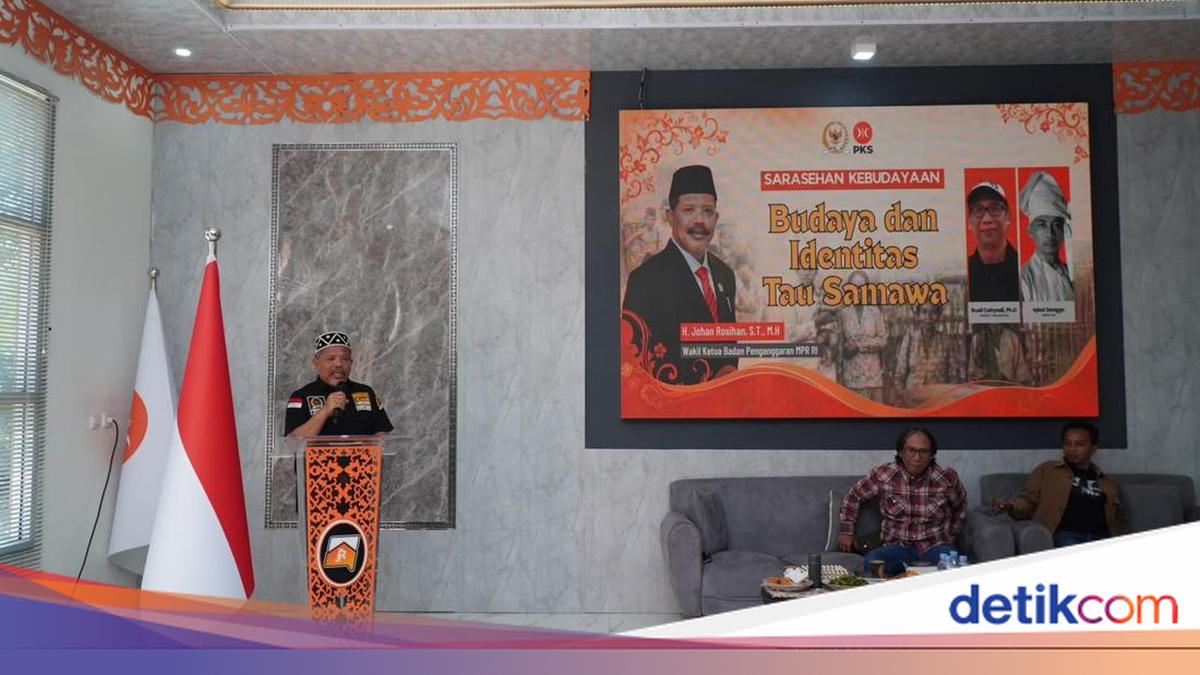
The MPR RI Cultural Seminar, themed ‘Culture and the Identity of Tau Samawa’, featured an in-depth discussion on how the identity of the Sumbawa community is formed and maintained amidst changing times. Facilitated by the Deputy Chairman of the MPR RI Budget Committee, Johan Rosihan, the event featured cultural expert Iqbal Sanggo and academic Rusli Cahyadi as keynote speakers.
Johan stated that the MPR RI views culture as a vital component of strengthening national character. Consequently, dialogue spaces such as cultural seminars must be continuously provided so that local values can be documented, studied scientifically, and passed down to future generations. “Cultural diversity is the strength of the Indonesian nation. The MPR RI is committed to ensuring that local values, such as those held by the Tau Samawa people, continue to live and become part of national character development,” Johan said in a statement on Sunday (2/8/2026).
In his presentation, Rusli explained that the identity of the Tau Samawa, or the indigenous people of the Sumbawa Tribe, is not a static identity or something solely inherited by birth. Referring to anthropologist Peter R. Goethals’ research on Rarak Village in Sumbawa, identity is understood as a social process continuously built through an individual’s involvement in community life.
“Goethals’ research identified at least twelve indicators showing that a person truly becomes part of the community, ranging from kinship ties, land ownership, and involvement in agriculture to religious activities, as well as participation in social obligations such as community patrols (ronda), tax payments, and involvement in customary life. All these elements demonstrate that cultural identity is born from daily life practices, rather than mere administrative status,” he explained.
Rusli also highlighted the local concept of ‘Satama Djiwa dalam Karang Nyenan’, an expression describing someone who has ‘infused their soul’ into the community. This concept suggests that acceptance as a member of society is achieved through service, involvement, and social recognition, meaning cultural identity is something constantly negotiated within communal life.
Meanwhile, Iqbal noted that Tau Samawa culture should not be viewed merely as a relic of the past, but as a source of inspiration for building the future. According to him, values such as mutual cooperation (gotong royong), respect for tradition, religiosity, and social solidarity are cultural assets that must be passed to the younger generation to remain relevant in the face of globalisation challenges. “Modernisation is no reason to abandon local identity. On the contrary, society needs to use culture as a foundation for building character while strengthening regional competitiveness amidst rapid social change,” he remarked.
The seminar was attended by 150 participants, including community leaders, academics, cultural experts, students, and cultural activists. It is expected to serve as a starting point for further studies regarding the Tau Samawa cultural identity as part of Indonesia’s national cultural wealth.