
MPR RI Commits to Improving Service Standards for Four Pillars Socialisation
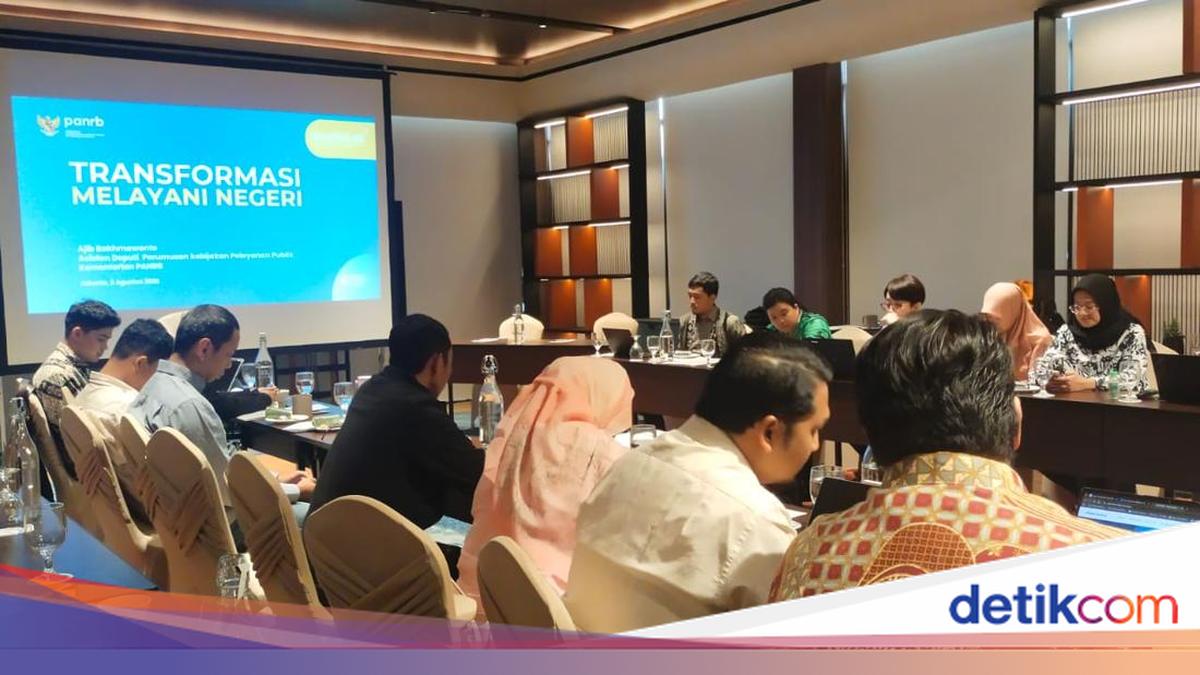
The Bureau of Deliberation and Constitutional Socialisation of the MPR RI Secretariat General held a Public Consultation Forum to evaluate the service standards for the socialisation of the Four Pillars. The event collaborated with the Ministry of Administrative and Bureaucratic Reform to comprehensively formulate improvements to the institution’s service quality. The strategic activity was attended by the Head of the Bureau of Deliberation and Constitutional Socialisation, Wachid Nugroho, and the Inspector of the MPR RI Secretariat General, Anies Mayangsari Muninggar, along with expert staff and other relevant officials. The main speakers were policy practitioners from the Ministry of Administrative and Bureaucratic Reform, Ajib Rakhmawanto and Ayu Aprianti Harandavina.
In his presentation, Ajib Rakhmawanto explained various policies regarding the obligation of organisers to develop service standards. Organisations are strongly encouraged to pursue digitalisation, provide integrated services, and build transparent information systems. This step must be accompanied by active public involvement to provide input. “We also encourage feedback from services, namely the public providing assessments of public services, such as public satisfaction surveys,” Ajib stated in a written statement on Thursday (26/8/2026). According to Ajib, this feedback is crucial for monitoring and evaluating public services in the future. A good Service Standard will serve as a benchmark and reference for quality in accordance with Minister of Administrative and Bureaucratic Reform Regulation Number 15 of 2014. “With this service standard, it can guarantee service certainty, ensure public protection, encourage the professionalism of apparatus, and provide user-friendly service support,” he said.
The existence of this Service Standard is an absolute promise by the organiser to realise public services that are fast, easy, affordable, and measurable. Ayu Aprianti then elaborated on 14 technical aspects of drafting the Service Standard, ranging from requirements to performance evaluation. All stages of this design must be carried out in a participatory manner for maximum results. “The formulation of public service standards must be carried out by involving the community and related parties,” Ayu stressed.
Responding to this input, Wachid Nugroho revealed that the socialisation of the MPR’s Four Pillars has now transformed into a form of public service. This transformation certainly demands readiness and adaptation from all levels within the internal organisation. “A paradigm and mindset shift is needed, from an activity to a public service,” Wachid stated. Wachid mentioned that several components of the service standards have actually been successfully implemented by the MPR so far. Several important points that are already running include the completeness of requirements, procedural mechanisms, completion duration, tariffs, and complaint handling. Meanwhile, complementary components such as the fulfilment of infrastructure and the mapping of implementer competencies are still in progress. The Ministry of Administrative and Bureaucratic Reform also appreciated the MPR’s efforts for having implemented several main components of the public service standards. Wachid then affirmed his bureau’s commitment to continuously improving the quality of socialisation services in the future. He pledged to immediately accelerate improvements to serve government agencies, community organisations, and political parties much better.