
MPR Research Body Holds Focus Group Discussion on Pancasila Democracy in Deli Serdang
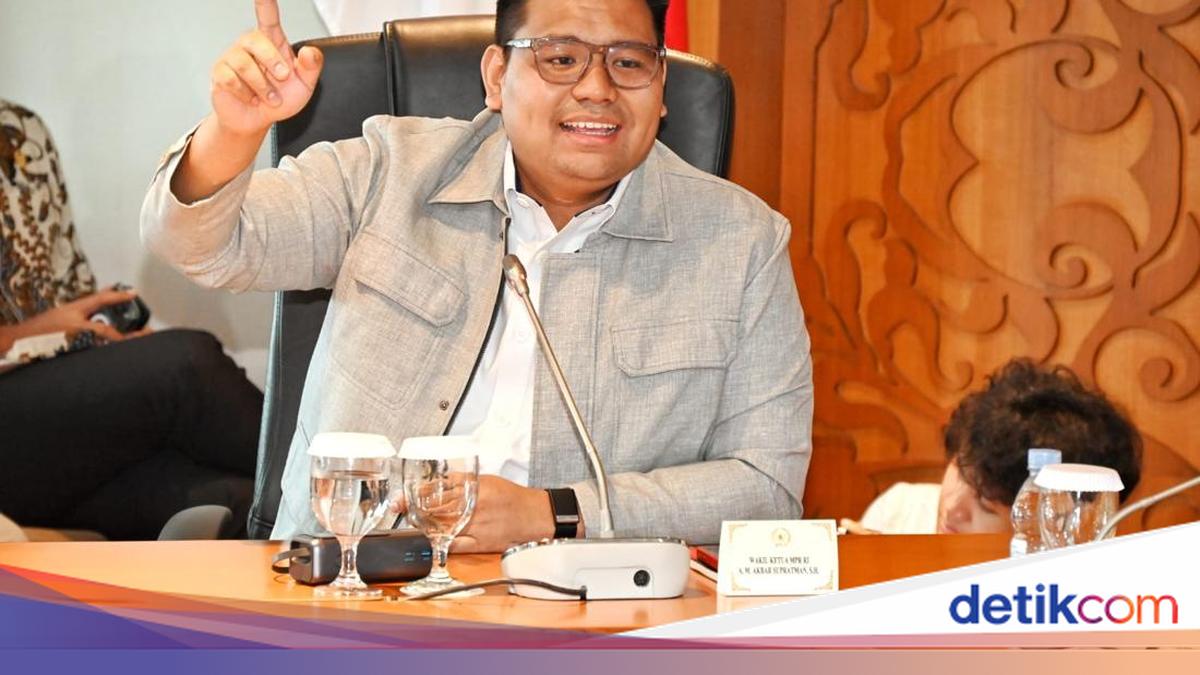
The Research Body of the People’s Consultative Assembly of the Republic of Indonesia (MPR RI) has held another focus group discussion (FGD), entitled ‘Popular Sovereignty from the Perspective of Pancasila Democracy’. The event, led by Professor Yasonna H. Laoly, head of Group I of the MPR RI Research Body, took place in the Jati Kesuma area of Deli Serdang Regency, North Sumatra, yesterday.
In his opening remarks, Yasonna stressed the importance of the MPR RI Research Body continuing to engage with substantive ideas about the direction and foundations of the nation.
“Unlike the DPR’s role, which focuses on day-to-day political oversight and regulation, the MPR Research Body operates at the level of in-depth discussion about the national system,” Yasonna said in a written statement on Tuesday (3 November 2026).
“We need to re-examine the reality of popular sovereignty and political recruitment today in the context of Pancasila Democracy, and ask whether they truly represent the will of the sovereign people,” he added.
Yasonna also reflected on the five elections held since the Reformasi era. Indonesia’s democratic system, he said, should by now have reached maturity, yet challenges in conducting elections have become increasingly complex and demanding.
He said he hoped Indonesian democracy would have grown more mature after five elections in the Reformasi era.
“However, current dynamics show that the challenges of conducting elections are becoming more serious. We need to evaluate parliamentary oversight and the process of drafting laws, so that legislation is not rushed through like a ‘blitzkrieg’ and continues to prioritise debate quality and transparency in the public interest,” he said.
Public administration expert Professor Marlan Hutahaean said that since the 1998 Reformasi, Indonesian democracy had functioned well procedurally through regular elections. In substantive terms, however, the realisation of popular sovereignty still faced serious challenges in the implementation of public policy.
“We often build the structure first without knowing where we are going. The MBG policy is fine in relation to popular sovereignty, but its implementation needs to be questioned. Collaborative governance does exist, but it must not be practised incorrectly,” Marlan said.
He outlined several strategic steps, including broadening the focus of administrative reform and shifting the approach to public services from government provision alone to recognising them as a fundamental right of citizens. Inclusive digitalisation and stronger public trust were also needed.
Grass-roots public participation mechanisms such as Musrenbang (development planning forums) should be revitalised so that they genuinely reflect the fourth principle of Pancasila: deliberation to reach consensus. He also called for the professionalism of the state civil apparatus (ASN) to be strengthened through an objective merit system.
Adil Arifin, an academic at the University of North Sumatra’s Faculty of Social and Political Sciences, said there remained a wide gap between constitutional aspirations and people’s lived reality.
“The Constitution says state officials are merely executors. Through elections, the people do not simply lend their governing authority unconditionally. Popular sovereignty is inalienable; the people never permanently sell it,” Adil said.
He warned that sovereignty could be hijacked through hasty legislative processes that did little to incorporate public views. Meaningful participation, he said, must be ensured by making academic papers and draft regulations openly accessible to academics and the wider public.
The values of wise deliberation, consensus and social justice should underpin the review of public policies to ensure that prosperity is shared more equitably.
Kristian Redison Simarmata, executive director of the Sudut Muda Inspirasi Association, criticised the tendency to invoke Pancasila in current state practice.
“Pancasila must not be used merely as a tool to legitimise power; it must serve as an ethical benchmark. Where is justice? Where is humanity? Where is representation? The ethical standards and integrity of Pancasila must be tested in practice in every policy,” Kristian said.
He stressed that Pancasila should be the foundation for nation- and character-building and for distributive justice in the management of the economy and natural resources. He also called for an end to money politics and the high cost of elections, warning that these practices risk damaging the people’s mandate, eroding public trust and distancing elected representatives from the values of wise deliberation.
The MPR RI Research Body will gather strategic input and constructive policy recommendations from the discussion.
The findings from the Deli Serdang FGD will inform the legislature’s efforts to strengthen oversight and ensure that state governance remains consistent with the principles of Pancasila Democracy and genuine popular sovereignty.
The event was attended by academic and practitioner speakers, including Professor Marlan Hutahaean, professor of public administration at HKBP Nommensen University in Medan; Adil Arifin, a lecturer at the University of North Sumatra’s Faculty of Social and Political Sciences; and Kristian Redison Simarmata, executive director of the Sudut Muda Inspirasi Association (SMI).
Several members of the MPR RI Research Body also attended, including I Gusti Ngurah Kesuma Kelakan of the Indonesian Democratic Party of Struggle faction; Endang Setyawati Thohari of the Gerindra Party faction; Erna Sari Dewi of the NasDem Party faction; Guntur Sasono of the Democratic Party faction; and Denty Eka Widi Pratiwi and Ivanda Awalina Firdausi Sukandar of the Regional Representatives Council group.
Source: jawawa.id (https://jawawa.id/newsitem/mpr-research-body-holds-focus-group-discussion-on-pancasila-democracy-in-deli-serdang-1793703339)
Originally published by detikcom (https://news.detik.com/berita/d-8736646/badan-pengkajian-mpr-gelar-fgd-demokrasi-pancasila-di-deli-serdang), translated from Indonesian