
MPR Research Body Holds FGD on Decentralisation and Regional Autonomy
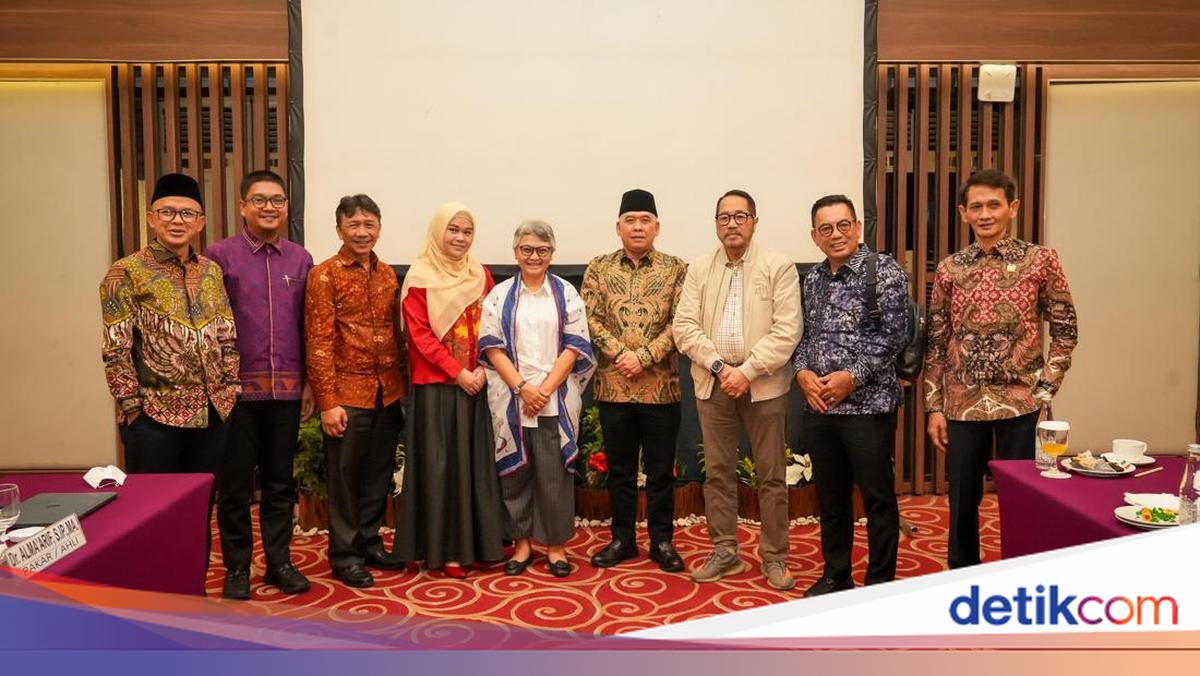
Group III of the People’s Consultative Assembly (MPR) Research Body held a Focus Group Discussion (FGD) on the theme ‘Decentralisation, Regional Autonomy, Regional and Village Governance’. The FGD featured three speakers: Professor Susi Dwi Harijanti from Padjadjaran University’s Faculty of Law, Dr. Slamet Usman Ismanto from Padjadjaran University’s Faculty of Social and Political Sciences, and Dr. Alma’arif from the Institute of Home Affairs Governance (IPDN).
Dr. Hj. Hindun Anisah, Chair of Group III and Deputy Chair of the MPR Research Body, stated that issues of decentralisation and regional autonomy are currently a public concern. The public is questioning whether the ongoing decentralisation aligns with its intended direction or the opposite. They are also questioning whether the constitutional concept of decentralisation is sufficiently ideal or requires modification, or whether the problems lie in its implementation. Hindun expressed hope that the FGD would produce constructive recommendations to strengthen decentralisation policies and improve regional governance oriented towards public service and welfare.
Professor Susi Dwi Harijanti argued that Law No. 23 of 2014 on Regional Government has introduced a tendency towards centralisation rather than decentralisation. She noted that lawmakers emphasised that the implementation of regional autonomy is based on Article 4, paragraph (1) of the 1945 Constitution, which states the president holds governmental power. According to Professor Susi, the correct point of departure should be Article 1, paragraphs (1) and (2), and Articles 18, 18a, and 18b of the Constitution. She said this centralising tendency is confirmed in subsequent practices through sectoral laws and the Job Creation Law. Centralisation is also visible in central government programmes, such as national strategic programmes, which appear overly flexible and easily changed. Furthermore, regional dependency on the central government is increasingly evident, for instance in the case of transfer funds to regions. When these funds are reduced due to efficiency measures, public services in the regions are significantly impacted. Professor Susi reminded participants of the importance of regional autonomy as a unifying instrument for the state and a tool for welfare, emphasising that regional governments are the front line of governance.
Dr. Slamet Usman Ismanto stated that the spirit of achieving the broadest possible regional autonomy, as per Law No. 22 of 1999, failed to materialise because not all regions possess the same capabilities in terms of resources, finances, equipment, or systems. He noted that some regions receiving large mining revenue shares struggle to utilise the funds, while others with limited resources face financial constraints. He stressed that efforts to create new autonomous regions must be accompanied by mature consideration of their potential, not short-term political interests.
Dr. Alma’arif added that from a public administration perspective, while the central government could technically handle all affairs, it is not appropriate for it to manage everything from dam construction to culverts. He argued that centralisation and decentralisation should not be dichotomised or made to negate each other, except in countries without regional governments.