
MPR Research Body Highlights Budget Leakages and Declining Hajj Service Quality
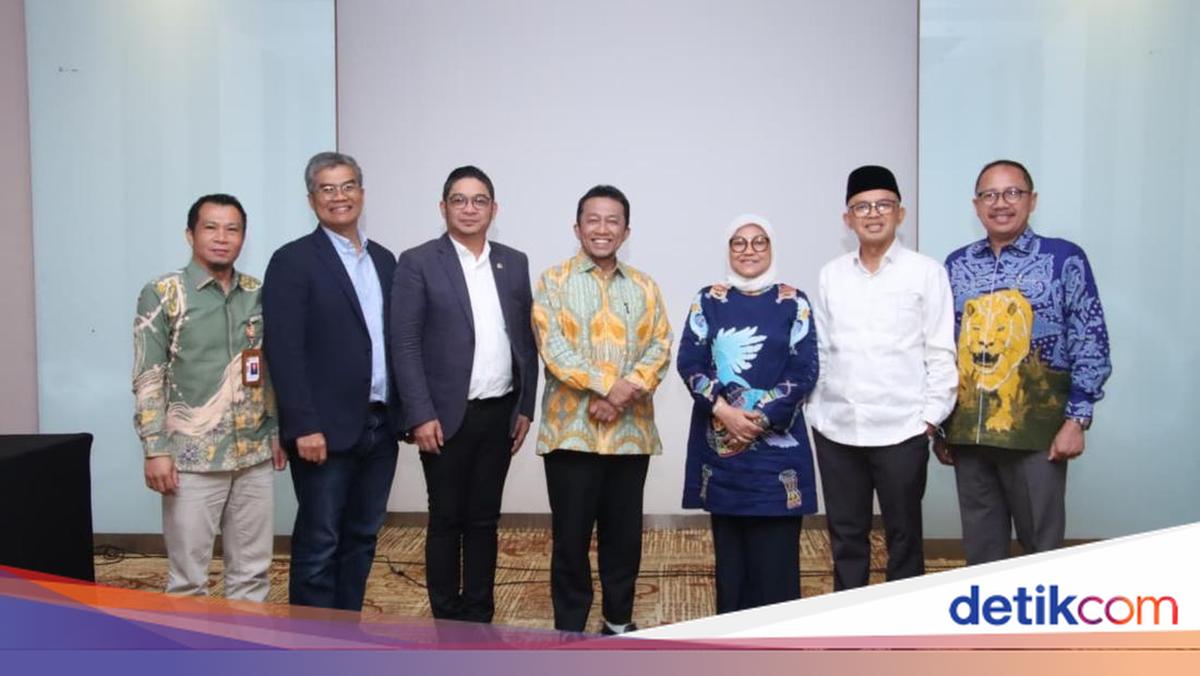
Maman, a member of the MPR Research Body, has highlighted the dilemmas faced by local governments due to the dominance of central government programmes that often fail to align with local realities or capacities. He noted that regional leaders currently face immense challenges as many programmes are centralised, unlike previous eras when village funds and other budgets were more flexible.
These remarks were made during a Focus Group Discussion (FGD) organised by Group IV of the MPR RI Research Body, titled ‘Rupiah Depreciation and National Economic Resilience: Monetary, Fiscal, and Social Welfare Implications’, held in Cibubur, Bekasi, on Tuesday (2/6/2026). During the forum, Maman criticised certain programmes that appear forced, such as village cooperatives implemented without local community engagement, describing such approaches as ‘authoritarian’.
As a legislator active in overseeing public services and religious affairs, Maman also linked the weakening of the Rupiah to the quality of services for Indonesian Hajj pilgrims in Saudi Arabia. He revealed that Indonesia’s fiscal capacity to pay for Masyair services (Arafah, Muzdalifah, and Mina) is currently lower than that of neighbouring countries such as Myanmar and the Philippines. He argued that the decision to prioritise low costs over high-quality service leads to pilgrim grievances.
Beyond the Hajj sector, Maman presented alarming data regarding budget leakages in social assistance (bansos) and energy subsidies, attributed to poor data validation and banking bureaucracy. He stated that leakages in social assistance have reached 45 per cent, or approximately Rp 17 trillion, while energy subsidies leakages range between Rp 100 trillion and Rp 140 trillion. He specifically pointed to issues with Himbara banks, alleging that funds for social assistance were sometimes held for up to 15 days in certain regions, allowing banks to benefit from the interest generated by the circulating funds.
Consequently, he supports economists’ proposals to implement integrated digitalisation, such as the use of QRIS or digital point systems, to close corruption loopholes. Despite macroeconomic indicators causing concern among investors and the public, Maman called for optimism and a search for solutions to strengthen the Rupiah’s exchange rate.
The FGD concluded with several key recommendations: first, strengthening the synchronisation of the State Budget (APBN) and Regional Budgets (APBD) through an integrated fiscal framework; second, deepening the domestic financial market and strengthening economic fundamentals by increasing export value-add and reducing strategic import dependency; and third, enhancing monetary-fiscal policy coordination to protect vulnerable groups from the impacts of Rupiah depreciation.