
MPR Research Body Examines Regional Autonomy and Local Democracy at FGD
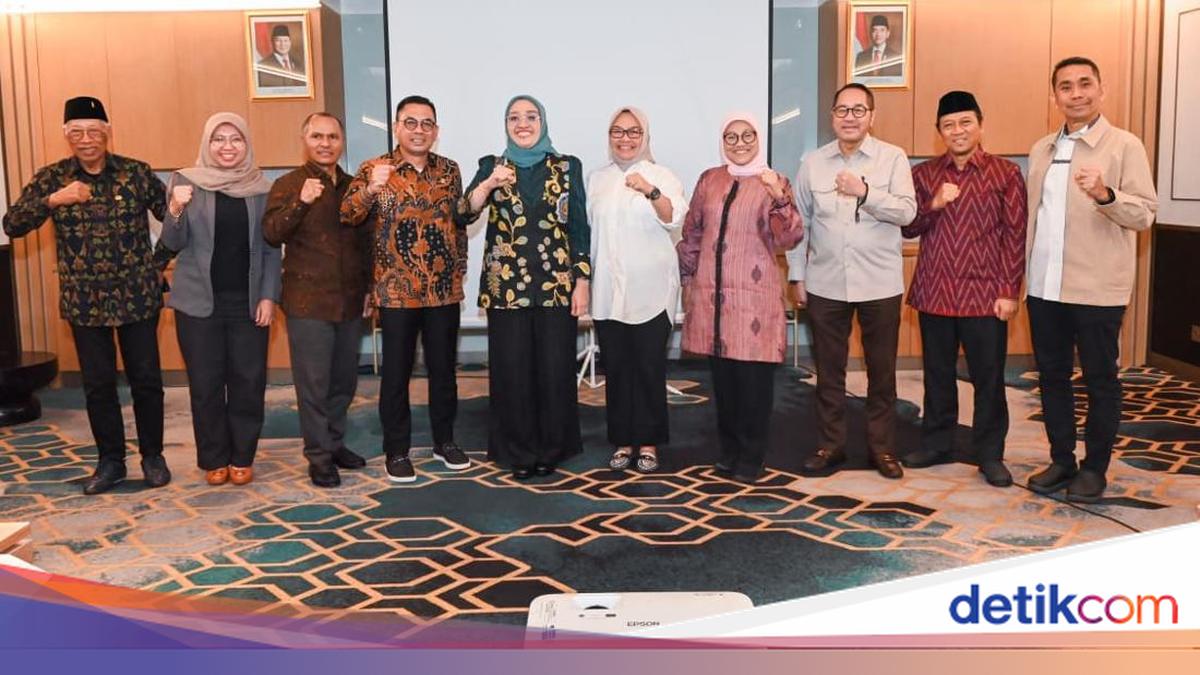
The MPR RI Research Body held a focus group discussion (FGD) specifically examining the design of asymmetric decentralisation and local democracy. The discussion formed part of a broader effort to comprehensively review the design and implementation of regional government within the framework of the 1945 Constitution of the Republic of Indonesia.
“Both aspects are closely linked to how regional government is administered and how the principle of popular sovereignty is realised at local level,” said Dr Hindun Anisah, Deputy Chair of the MPR RI Research Body, in a written statement on Friday (6 November 2026).
She made the remarks in her opening address at the FGD, held in Solo, Central Java, on Thursday (5 November). Hindun said asymmetric decentralisation allows for differentiated powers, institutional arrangements and fiscal relations in line with the objective characteristics and needs of each region.
“Various forms of asymmetric decentralisation have different foundations, objectives and characteristics, but there remains a need to clarify the conceptual framework, including the criteria for granting asymmetry, the division of powers, fiscal relations, the capacity to exercise autonomy, and the relationship between national interests and the need for regional differentiation,” Hindun said.
Hindun added that developments in local democracy, including regional head elections (Pilkada), had raised several issues, such as campaign costs, vote-buying, the influence of capital, political pragmatism, social polarisation, and the relationship between electoral processes and the quality of regional government.
“In discussions with experts and academics, ideas have emerged about the possibility of adopting a hybrid system for filling regional head positions,” Hindun said.
She said the FGD served as an academic forum to gather views, criticism and recommendations from experts, academics and practitioners on the direction of a redesign of decentralisation and local democracy.
“Can asymmetric decentralisation and local democracy be strengthened simply by improving legislation and policy, or is fundamental change at constitutional level needed?” Hindun asked.
Five parameters
In her presentation, Professor Dr Emmy Latifah, a professor at the Faculty of Law at Sebelas Maret University (UNS) in Surakarta, said that a unitary state did not mean uniformity in governance. Asymmetric decentralisation already applied in Aceh, Jakarta, Yogyakarta and Papua.
Asymmetric decentralisation is a model that gives one or more regions different degrees of authority, institutional arrangements, fiscal rules and jurisdiction from other regions.
Emmy identified five parameters for asymmetric decentralisation: historical and constitutional justification; functional needs of government; regional institutional capacity; alignment between authority and fiscal resources; and protection of national interests. She said constitutional amendments should be the last resort in addressing decentralisation issues.
“Problems must be properly diagnosed or identified in order to produce the right instruments and make decentralisation effective,” Emmy said.
Meanwhile, Professor Dr Phil Gabriel Lele, Dean of the Faculty of Social and Political Sciences at Gadjah Mada University (FISIPOL UGM), said Articles 18A and 18B provided a sufficient basis for implementing decentralisation, but were not strong enough to ensure autonomy.
“Our task is to ensure that decentralisation leads to autonomy and asymmetric decentralisation,” Gabriel said.
As an example of an ideal design for asymmetric decentralisation, Gabriel cited North Macedonia, which uses a cluster system.
“The system determines which regions should have asymmetric status and allows the degree of asymmetry to be graded as high, medium or low. The parameters are already in place; what remains is political will,” he said.
Three models for regional elections
Professor Agus Riwanto, a constitutional law professor at UNS’s Faculty of Law, focused his presentation on asymmetric Pilkada, under which regional elections would differ from one area to another across Indonesia.
Agus said asymmetric Pilkada could reduce election costs and break the cycle of political favour-trading and the repayment of campaign expenses through illicit means. He proposed three models: direct regional elections, elections by regional legislatures (DPRD), and appointment by the central government.
Regions with strong human resources and political literacy, high human development index (HDI) scores, high locally generated revenue (PAD), and low dependence on central government transfers could use direct elections. Agus said this model could be applied in Java and Bali.
Regions with medium levels of human resources and political literacy, HDI scores and PAD, as well as a medium level of dependence on central transfers, could elect their regional heads through the DPRD. He identified Sumatra, Kalimantan and Sulawesi as areas that could meet these criteria.
In regions with low human resources and political literacy, low HDI scores and PAD, and high dependence on central transfers, regional heads would be appointed by the central government. Agus listed West Nusa Tenggara, East Nusa Tenggara, Maluku and Papua as regions that would fall into this category.
“There is no need to amend Article 18(4) of the 1945 Constitution; it is enough to revise the Regional Government Law to include provisions for regions to use the three election models,” Agus said.
The FGD featured several speakers, including UNS Faculty of Law professors Agus Riwanto and Emmy Latifah, and FISIPOL UGM Dean Gabriel Lele. It was attended by members of the MPR Research Body: Dr I Wayan Sudirta (PDI Perjuangan faction); Firman Soebagyo (Golkar faction); Kamrussamad, PhD (Gerindra faction); Dr Ida Fauziah (PKB faction); T Ibrahim (Democratic Party faction); Sri Wulan (NasDem faction); and Dr KH Hilmy Muhammad and I Komang Merta Jiwa (Regional Representatives Council group).
Source: jawawa.id (https://jawawa.id/newsitem/mpr-research-body-examines-regional-autonomy-and-local-democracy-at-fgd-1793940688)
Originally published by detikcom (https://news.detik.com/berita/d-8740908/gelar-fgd-badan-pengkajian-mpr-kaji-otonomi-daerah-dan-demokrasi-lokal), translated from Indonesian