
MPR: Pertamax Price Influenced by Global Crude Oil
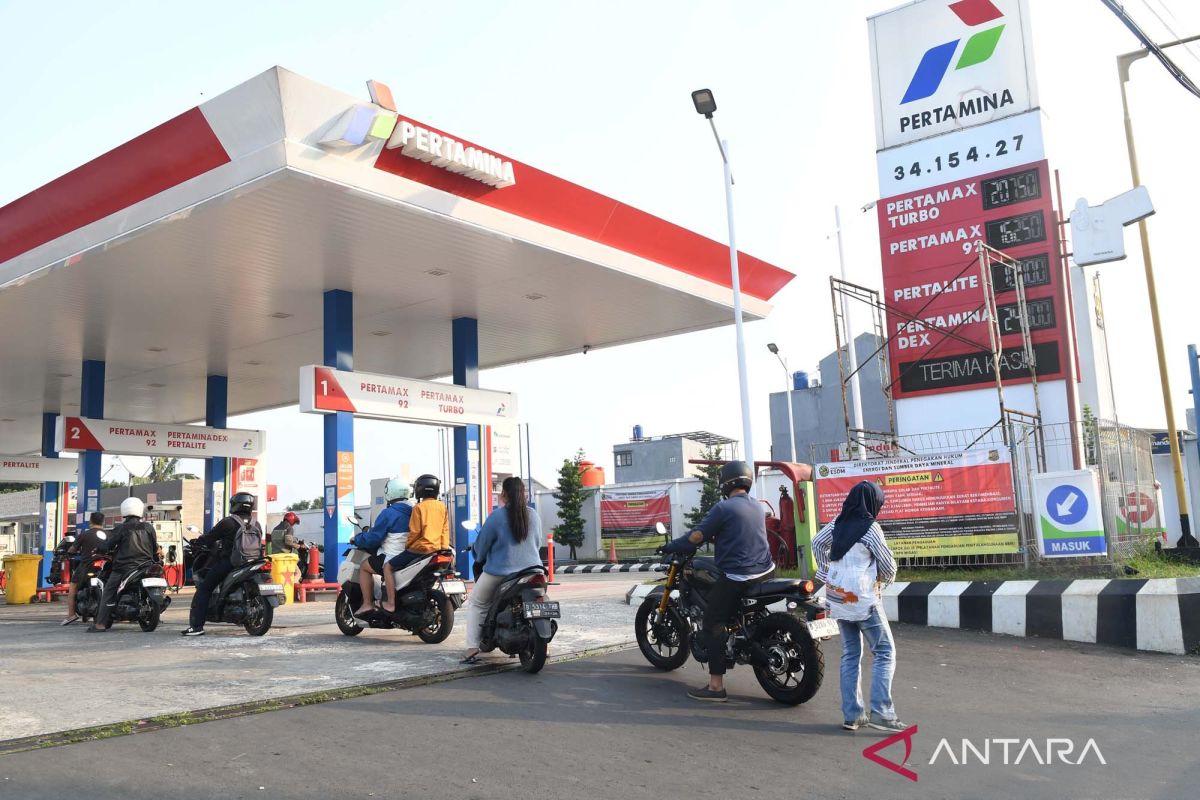
Jakarta (ANTARA) - The Deputy Speaker of the MPR, Eddy Soeparno, stated that the price increase of Pertamax-type fuel is influenced by the movement of global crude oil prices, as it does not fall into the category of fuel receiving government subsidies.
“Since Pertamax is not part of JBT (Certain Fuel Types) or JBKP (Specific Fuel Types with Assignments), it certainly does not receive government subsidies, so its price will fluctuate in accordance with global crude oil prices,” Eddy said in a statement received in Jakarta on Saturday.
According to him, the current increase in non-subsidised fuel prices is an adjustment to crude oil prices, which have remained in the range of $8ly80–$100 per barrel over the last few months. These prices could rise further due to an imbalance between supply and demand. This condition is projected to trend upwards, especially as Iran has officially closed the Strait of Hormuz to all shipping activities.
Eddy understands that the rise in Pertamax prices will affect public purchasing power and the operational costs of businesses. However, this impact has already been felt by the public and businesses when other non-subsidised fuels, such as Pertamax Turbo, Pertamina Dex, and Dexlite, previously underwent price increases.
“The hope of the business community is that the government can provide support or incentives in other areas, both fiscal and non-fiscal, to ensure that business operations and performance remain stable,” he said.
The member of Commission XII of the Indonesian House of Representatives (DPR RI), which oversees the energy and mineral resources sector, expressed hope that there would be no mass migration of Pertamax consumers to the subsidised Pertalite.
He noted that the government has strictly regulated the procedures for purchasing Pertalite for specific groups or consumers. The price of Pertamax (RON 92) previously at Rp12,300 per litre has risen to Rp16,250 per litre, while Pertamax Green (RON 95) changed from Rp12,900 per litre to Rp17,000 per litre.
Corporate Secretary of Pertamina Patra Niaga, Roberth MV Dumatubun, explained that the adjustment of non-subsidised fuel prices follows applicable regulations and is part of the implementation of energy governance aimed at maintaining a balance between business sustainability, service quality, and the certainty of energy supply for the public.