
MPR: People's Welfare Must Be Based on Ecological Justice
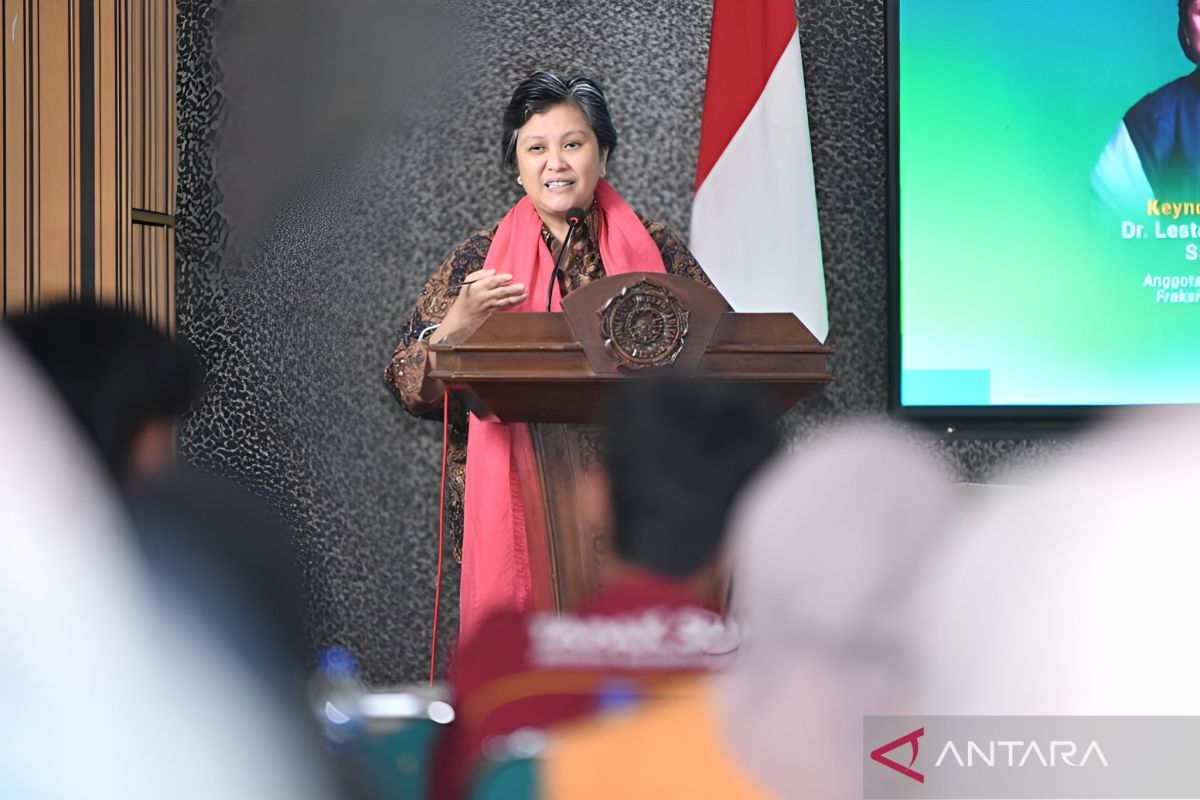
Jakarta (ANTARA) - The Deputy Speaker of the MPR, Lestari Moerdijat, stated that people’s welfare needs to be built on the basis of ecological justice so that development does not only pursue economic growth but also maintains environmental sustainability.
“True people’s welfare cannot be measured by economic growth alone. Welfare must stand upon ecological justice,” said Rerie (her familiar nickname) during her remarks at a discussion on Ecological Justice for People’s Welfare in Jakarta on Wednesday.
According to her, development governance has tended to treat nature merely as a commodity to support economic growth. This paradigm, she noted, needs to be changed by making ecosystem sustainability a primary consideration.
Rerie emphasised that forests, rivers, seas, and biodiversity are not merely resources to be exploited, but ecosystems whose preservation and resilience must be protected.
She also cited data from the National Disaster Management Agency (BNPB) showing that hydrometeorological disasters—such as floods, landslides, extreme weather, droughts, as well as forest and land fires—continue to dominate disaster occurrences in Indonesia.
According to her, the impact of these disasters is most heavily felt by communities with weak economic resilience, including farmers, traditional fishermen, women, children, the poor, and indigenous peoples.
Therefore, Rerie urged that the principles of ecological justice be applied from the stages of planning, budgeting, and licensing, through to the evaluation of development policies.
She stated that ecological justice is not only related to the equitable distribution of economic benefits from natural resources, but also encompasses the protection of vulnerable groups, ecosystem sustainability, and responsibility towards future generations.
“The state must act as the steward of the earth, not an absolute owner free to exploit nature without limits,” she said.
Furthermore, Rerie requested that affected communities be meaningfully involved in decision-making processes regarding natural resource management.
“Welfare will only be meaningful if the people live in sufficiency amidst a healthy and sustainable environment, for both present and future generations,” she added.
On the same occasion, the Deputy for Environmental Governance and Sustainable Natural Resources at the Ministry of Environment, Sigit Reliantoro, stated that ecological justice must be a consideration from the early stages of formulating development policies so that the benefits can be felt fairly by the community.
Meanwhile, the Director of the Centre for Constitutional Studies at Andalas University, Charles Simabura, noted that the 1945 Constitution provides the foundation for environmental protection through the right to a good and healthy environment and the principle of sustainable development.