
MPR open to input on the 1945 Constitution from universities
Jakarta (ANTARA) - The People’s Consultative Assembly (MPR) of the Republic of Indonesia has affirmed it is open to input from universities, particularly regarding the 1945 Constitution (UUD 1945).
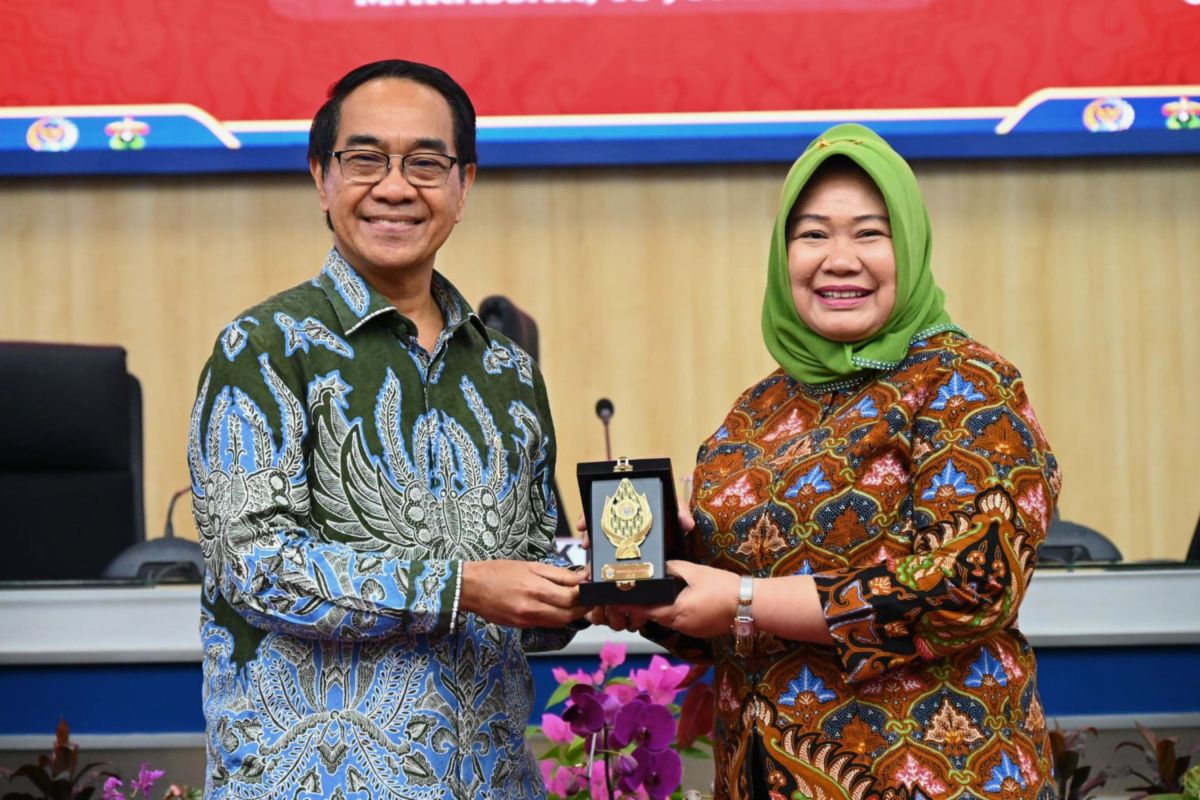
During a Constitutional Discussion event at Hasanuddin University (Unhas) in Makassar, South Sulawesi, on Wednesday (8/6), Acting Secretary General of the MPR RI Siti Fauziah expressed hope that discussions with universities would find answers regarding whether problems arise from the Constitution itself or at the level of its implementation.
“This is where we see the importance of cooperation with universities, which always think objectively,” said the woman familiarly called Titi, as quoted from a statement confirmed in Jakarta on Saturday.
She stated that evaluating various articles in the 1945 Constitution is a reasonable exercise, especially after it underwent four stages of amendments more than 20 years ago. Therefore, input from the academic community is considered very important.
Currently, the MPR is recording various public aspirations related to the 1945 Constitution, including a desire to conduct a comprehensive evaluation of the results of the constitutional amendments.
Additionally, Titi noted there are also opinions that the Constitution still meets the needs of the times, so problems that arise are not caused by the Constitution itself, but rather at the level of its implementation.
In the economic field, she revealed that the 1945 Constitution provides a legal foundation obliging the state to regulate the economic system for the prosperity of the people and to organise social welfare for all Indonesian society.
“The Constitution rejects a liberal-capitalistic economic system and replaces it with economic democracy,” she said.
She explained that this is enshrined in Article 33 paragraphs (1), (2), and (3), which state: “The economy shall be organised as a common endeavour based upon the principles of the family system. Branches of production important to the state and affecting the life of the people shall be controlled by the state. The land, the waters, and the natural riches contained therein shall be controlled by the state and exploited to the greatest benefit of the people.”
Therefore, she considers the 1945 Constitution always interesting to discuss because many issues can become topics of discussion.
This includes the discussion evaluating Article 33 of the 1945 Constitution, its relation to MPR Decree No. XVI/MPR/1998 on Economic Politics within the Framework of Economic Democracy, and MPR Decree No. IX/MPR/2001 on Agrarian Reform and Natural Resource Management, which was held by Unhas.
Titi conveyed that the discussion, featuring resource persons who are Professors from Hasanuddin University, will be properly compiled to serve as material for further discussion, both in the MPR Constitutional Studies Commission and in the MPR Assessment Body.
“It could even produce recommendations for the refinement of the 1945 Constitution,” said Titi.
The Constitutional Discussion was followed by the signing of a Memorandum of Understanding between the Secretariat General of the MPR RI and Hasanuddin University Makassar.
Also present at the event were the Chair of the MPR Constitutional Studies Commission Taufik Basari, Rector of Hasanuddin University Makassar Prof. Jamaluddin Jompa, Dean of the Faculty of Law of Hasanuddin University Prof. Hamzah Halim, and the entire academic community of Hasanuddin University.