
MPR MPR Research Body Group III Holds FGD to Discuss Decentralisation and Local Democracy
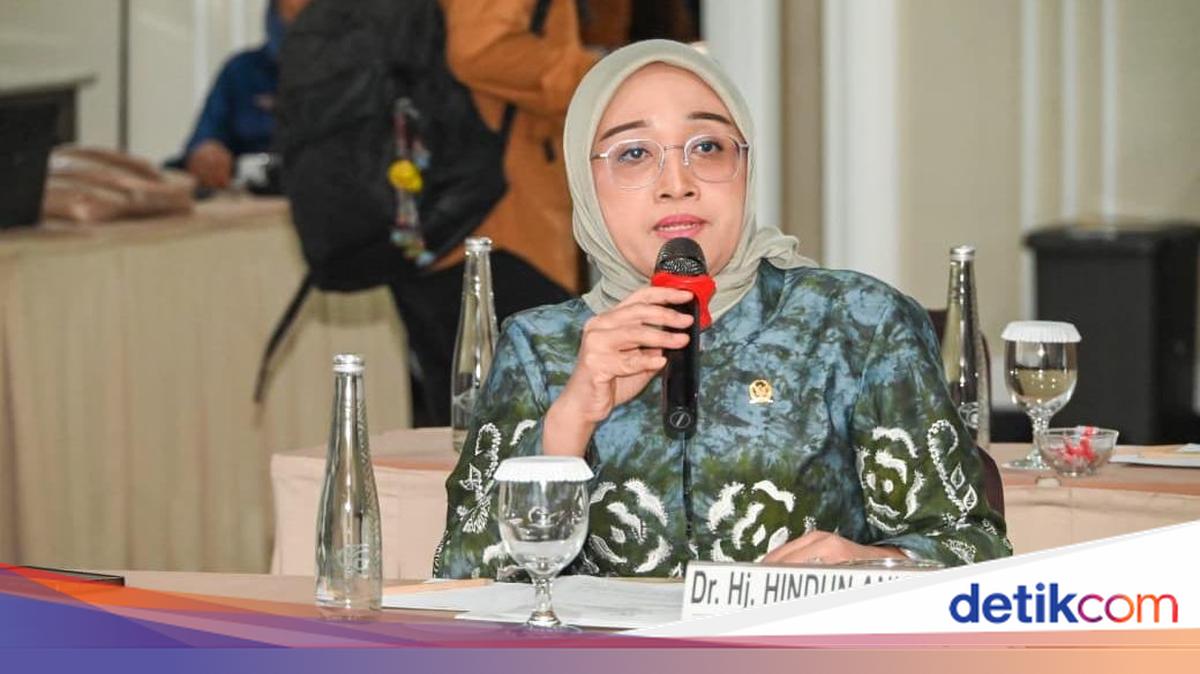
The Vice Chairman of the MPR RI Research Body and Chair of Group III, Hindun Anisa, stated that studies regarding asymmetric decentralisation and local democracy systems must be conducted comprehensively by first identifying the root causes of problems in regional government administration.
This was conveyed while leading a Focus Group Discussion (FGD) by Group III of the MPR RI Research Body, themed ‘Decentralisation, Regional Autonomy, Regional Government, and Villages’, in Bintaro, South Tangerang, on Monday (21/9). The discussion featured two keynote speakers: the Director General of Politics and General Government of the Ministry of Home Affairs, Prof. Akmal Malik, and the Vice Rector I of UIN Syarif Hidayatullah, Prof. Ahmad Tholabi Kharlie.
In her introduction, Hindun noted that the discussion on asymmetric decentralisation is closely linked to the administration of regional government and the application of the principle of popular sovereignty at the local level. “This discussion is vital because the constitution provides the foundation for regional government administration through Articles 1-18, 18A, and 18B of the 1945 Constitution of the Republic of Indonesia,” Hindun stated in her remarks on Monday.
Hindun explained that decentralisation pertains not only to the division of governmental affairs between central and regional governments but also involves governmental effectiveness, the quality of public services, equitable development, regional capacity, and the financial relationship between the centre and the regions. Consequently, asymmetric decentralisation could serve as an approach to accommodate the differing characteristics and needs of each region through differentiated authority, institutional frameworks, and financial relations.
However, Hindun assessed that clarity is still required regarding the framework of asymmetric decentralisation, including the parameters for granting asymmetry, the division of authority, fiscal relations, regional capacity, and the boundary between regional and national interests. “What we need to deepen is where the main problem of decentralisation lies: whether it is within constitutional norms or rather within regulation and implementation,” she said.
According to her, the reconstruction of the decentralisation design does not necessarily have to be directed towards amending the 1945 Constitution. Issues that can still be resolved through the refinement of regulations, policies, institutions, the division of authority, and the strengthening of regional capacity should be addressed at that level. “If the problem can be resolved through regulation and policy, there is no need to immediately aim for constitutional change. However, if there are fundamental issues, they certainly need further study,” she emphasised.
In addition to decentralisation, the discussion also addressed local democratic systems, particularly regarding legitimacy, representation, participation, and the accountability of regional governments. Hindun mentioned that Article 18, paragraph (4) of the 1945 Constitution, regarding the democratic election of governors, regents, and mayors, serves as a foundation for exploring the design of local democracy.
She noted that several issues in local democracy need to be studied objectively, including political costs, money politics, the influence of capital, political pragmatism, social polarisation, and the relationship between electoral processes and the quality of regional government. “We must view local democracy not only through the election process but also through how the system can strengthen the participation, legitimacy, and accountability of regional governments,” she added.
Hindun added that the discussion serves as an academic forum to obtain views, critiques, and input from experts, academics, and practitioners regarding the direction of reconstructing asymmetric decentralisation and local democratic systems. “The input from the speakers will be essential material for Group III in compiling the findings and recommendations of the MPR RI Research Body,” she concluded.
Source: jawawa.id (https://jawawa.id/newsitem/mpr-mpr-research-body-group-iii-holds-fgd-to-discuss-decentralisation-and-local-democracy-1789995607)
Originally published by detikcom (https://news.detik.com/berita/d-8672976/bp-mpr-kelompok-iii-gelar-fgd-bahas-desentralisasi-dan-demokrasi-lokal), translated from Indonesian