
MPR: Legislation in the AI Era Must Be Based on Data and Evidence
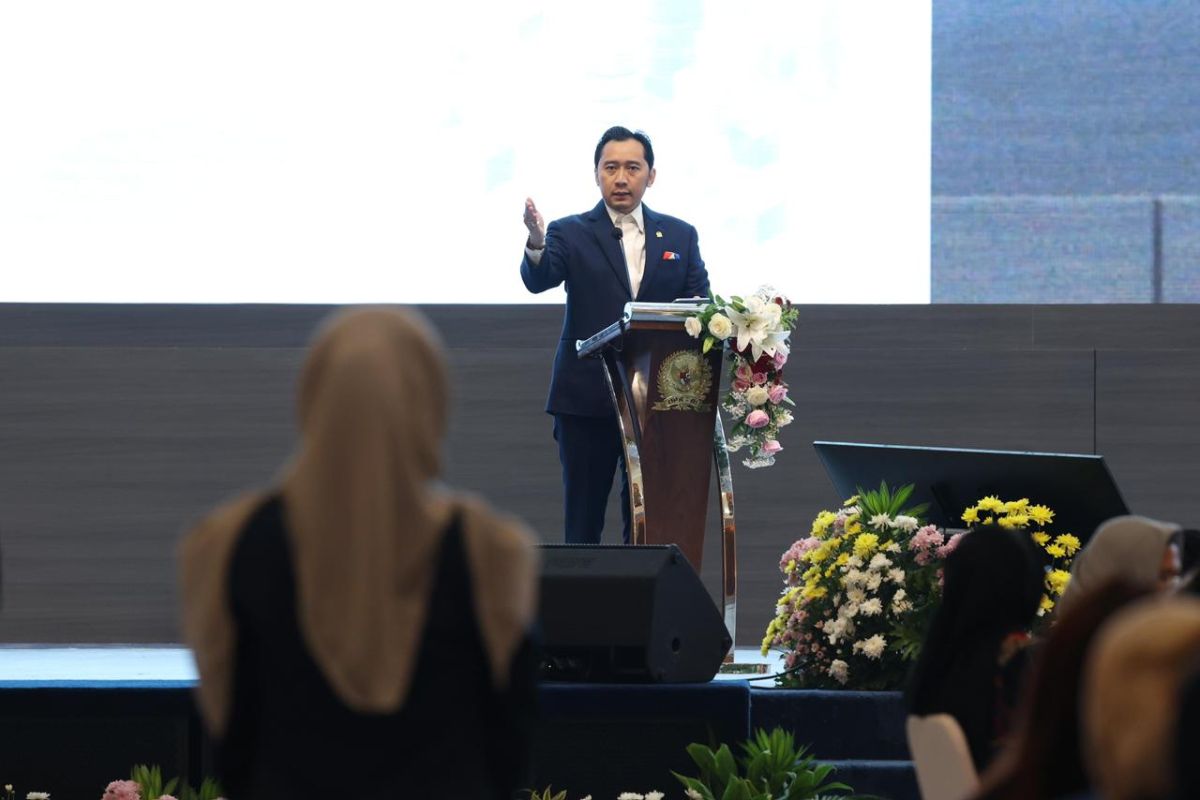
Jakarta (ANTARA) - The Deputy Speaker of the MPR RI, Edhie Baskoro Yudhoyono, emphasised that the drafting of legislation in the era of Artificial Intelligence (AI) must be based on accurate data and evidence, rather than mere assumptions or unfounded opinions.
“We must not allow a situation where the technology is AI, but the policies are still based on hearsay. We need to identify problems; we need data, we need evidence, and subsequently, we need policy,” said Ibas (his common nickname) in a statement in Jakarta on Friday.
While serving as the keynote speaker at the National Seminar titled “Strengthening Data-Based Legislation in the AI Era: Opportunities and Challenges in the Governance of One Data Indonesia” at the Nusantara IV Building of the DPR RI, Jakarta, on Wednesday (2/9), Ibas stated that the use of AI in the legislative process must be supported by accurate, integrated, and secure data governance with standardised protocols so that the technology can produce analyses that support decision-making.
According to him, “One Data Indonesia” does not mean all data must be collected in a single location, but rather ensures that data across different systems can be connected and utilised as needed while maintaining security.
“One data does not mean all data is piled up in one place. The most important thing is that the data is accurate, the standards are uniform, the systems are connected, and above all, the data is secure,” said Ibas.
He noted that this requirement is becoming increasingly vital because AI is capable of processing vast amounts of information rapidly, yet the quality of the resulting analysis remains dependent on the quality of the data used.
Beyond technological aspects, Ibas reminded that the use of AI must remain within the corridors of the constitution, democracy, ethics, accountability, and the protection of public data.
“Technology must certainly follow constitutional values, not the other way around,” he said.
Ibas also emphasised that data-driven legislative drafting must not reduce the space for public participation. In his view, the community must be meaningfully involved so that the resulting policies are not only based on data but also address the needs of the people.
“It is not merely about our presence or just signing documents; we want to continue listening, and we want to continue considering the voice of the people,” he said.
To strengthen data governance in the AI era, Ibas advocated for five key measures: ensuring data is clean, clear, and correct; building valid data standards; integrating systems; strengthening data security; and ensuring meaningful public participation in the policymaking process.
He also encouraged the younger generation not only to be users of AI but to play an active role in determining the direction of its utilisation in Indonesia.
“AI is not bad, but AI can be wrong if we do not oversee it through the correct methods,” he remarked.
The seminar, organised by the DPR RI Expertise Body, was attended by approximately 350 students from various universities.
The event discussed the utilisation of data and AI in the legislative process, alongside the challenges of data governance, security, democracy, and public interest.