
MPR Invites UIN Jakarta to Examine PPHN Draft, Emphasising Meaningful Youth Participation
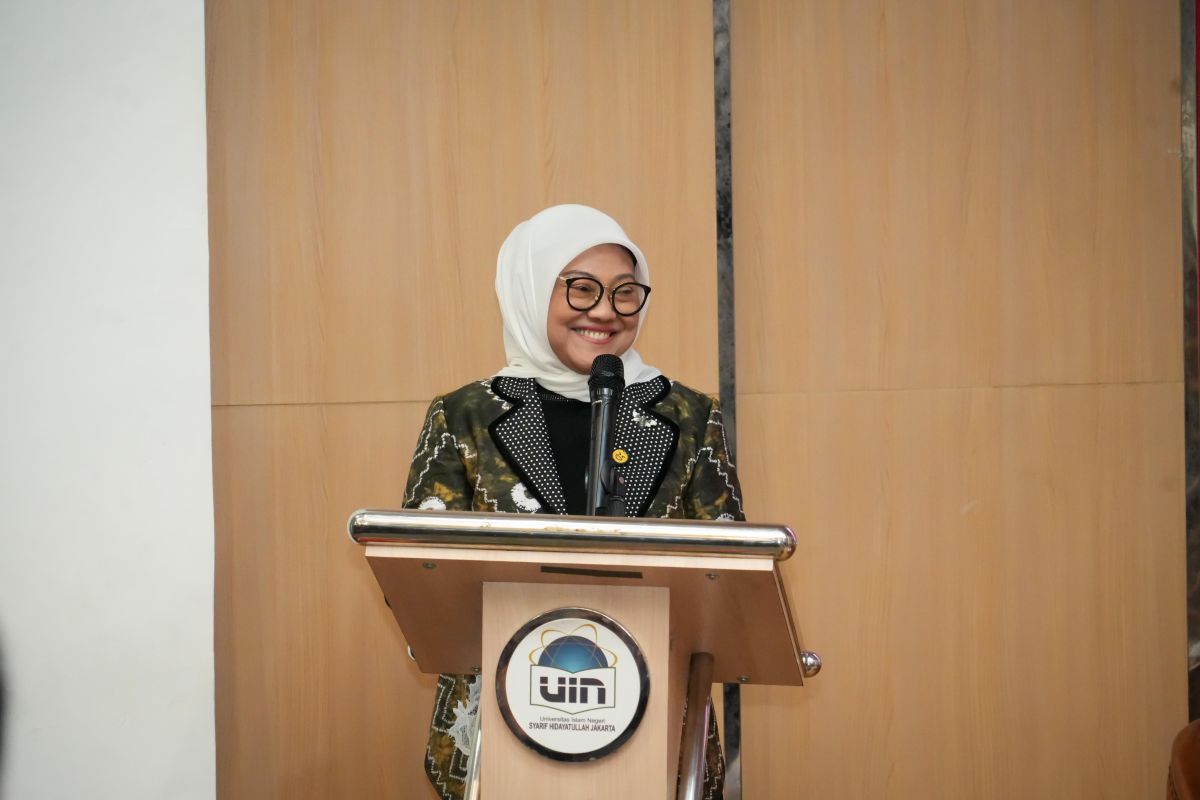
Jakarta (ANTARA) – The People’s Consultative Assembly of the Republic of Indonesia (MPR) and the Constitutional Law Students’ Association at Syarif Hidayatullah State Islamic University (UIN) Jakarta held a national seminar entitled “The Main Principles of the State Policy Guidelines (PPHN): Setting the Direction of Indonesia’s National Development”.
Held on Youth Pledge Day, the seminar also examined in depth the importance of the PPHN in setting the direction and strategy for sustainable national development.
Among those attending were MPR Study Board member Dr Ida Fauziyah; former Constitutional Court chief justice Prof Arief Hidayat, who served from 2015 to 2018; UIN Jakarta Faculty of Sharia and Law professor of Islamic politics and constitutional law Prof Khamami Zada; and Rizqon Halal Syah Aji, director of UIN Jakarta’s Centre for Economic and Public Policy Studies.
The event was moderated by Rahmat Ferdian Andi Rosidi, a constitutional law lecturer at UIN Jakarta’s Faculty of Sharia and Law. It was also attended by the university’s rector, Prof Asep Saepudin Jahar, and the dean of its Faculty of Sharia and Law, Prof Muhammad Maksum.
Addressing UIN Syarif Hidayatullah students, MPR Study Board member Ida Fauziyah said she was proud to be with them on Youth Pledge Day. She hoped the participants were young people with a spirit of struggle and the courage to make Indonesia a better country.
“The discussion is an invitation to all of you, especially the students, to ask yourselves: ‘Am I one of the 10 people who will shake the world?’ I believe UIN Syarif Hidayatullah should be able to answer that through its students,” she said at the university’s second-floor theatre in South Tangerang, Banten, on Wednesday (28 October 2026).
Ida also cited Islamic jurisprudential principles she said were relevant to the PPHN. One was “Tasharruful imam ’alar ra’iyyah manutun bil mashlahah”, meaning that a leader’s policies and actions towards the people must be based on the public good. She said the principle should serve as a compass for leaders.
The principle also underscores that power is not an end in itself, Ida said, adding that it had been discussed by Kyai Haji Abdurrahman Wahid (Gus Dur) in his thinking on Islam and public welfare.
In Indonesia’s context, this orientation is consistent with the state’s founding objectives, as set out in the Preamble to the 1945 Constitution.
“This is where the PPHN idea finds its relevance. The MPR Study Board has produced a draft examining the substance and possible legal forms of the PPHN, following a series of intensive discussions that began in late 2024. It was completed in August 2025, but we are continuing to examine it in greater depth,” she said.
Ida said the MPR Study Board was continuing to hold discussion forums to gather public input and aspirations and ensure meaningful participation.
Substantively, she said, the PPHN covered three main areas of national development: developing people’s character and capabilities; developing social and political institutions and governance; and developing the economy and welfare.
“These three are interconnected: development must strengthen people, be supported by sound institutions and, of course, lead to public welfare,” she added.
Three possible legal forms are being considered: an amendment to the 1945 Constitution, an MPR decree (TAP MPR), or a law.
Ida stressed that the PPHN was not intended to abolish or replace the existing national development planning system, including the National Long-Term Development Plan (RPJPN), National Medium-Term Development Plan (RPJMN), Regional Long-Term Development Plan (RPJPD) and Regional Medium-Term Development Plan (RPJMD). Instead, it is expected to provide strategic direction so that development planning is integrated and continuous.
As part of the commitment to meaningful participation, Ida said the draft’s substance and proposed legal forms were available on the MPR’s official website, mpr.go.id. She urged participants to help ensure that the draft’s progress was monitored collectively.
“Publishing it gives the public, academics and stakeholders the opportunity to study and scrutinise it, and to offer views and suggestions to improve the PPHN proposal. This is only a draft. I want to stress again that we need your input and new ideas to improve it,” she concluded.
Source: jawawa.id (https://jawawa.id/newsitem/mpr-invites-uin-jakarta-to-examine-pphn-draft-emphasising-meaningful-youth-participation-1793249681)
Originally published by Antara (Indonesian) (https://www.antaranews.com/berita/5818635/mpr-ajak-uin-jakarta-bedah-draf-pphn-tekankan-pentingnya-meaningful-participation-pemuda), translated from Indonesian