
MPR Holds FGD in Padang, Discusses Constitutional Amendment and Economic Justice
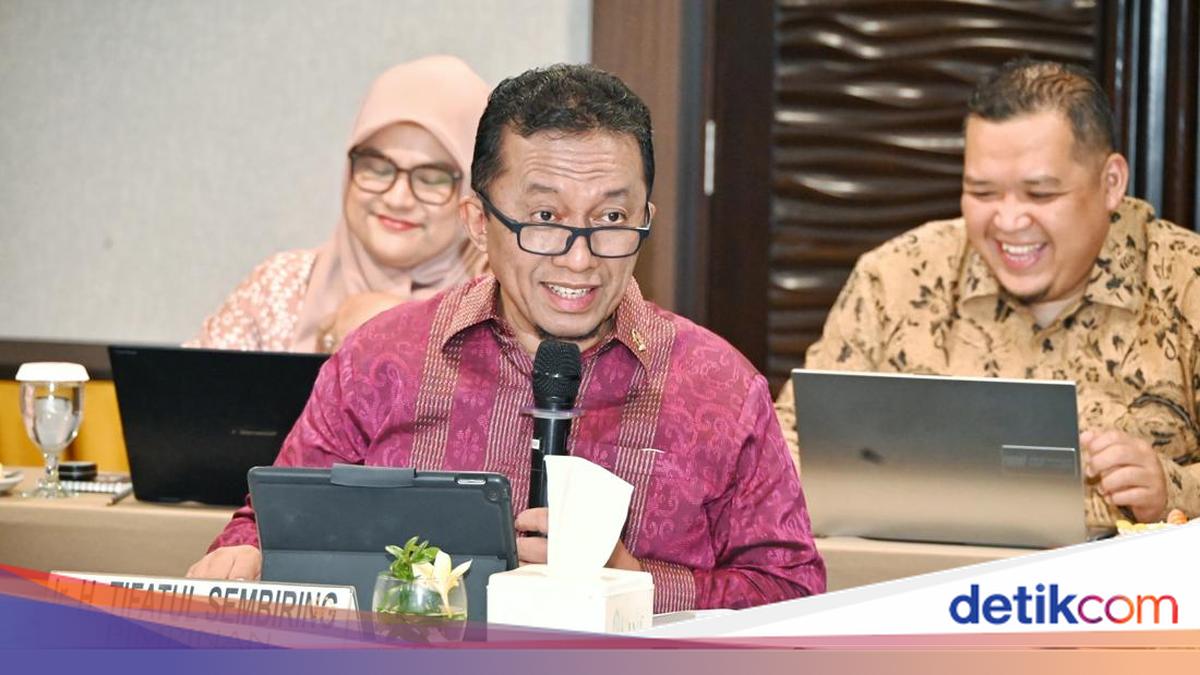
The Assessment Body of the People’s Consultative Assembly (BP MPR RI) held a Focus Group Discussion (FGD) in Padang, West Sumatra, on Monday (13/7), titled ‘State Financial System, National Economy, and Social Welfare (Family-Based Economy and Economic Justice)’.
The discussion was led by the Head of BP MPR RI’s Group IV, Tifatul Sembiring, and attended by members from the House of Representatives (DPR) and the Regional Representative Council (DPD), including K.H. Maman Imanul Haq, Yance Samonsabra, Dr. Lia Istifhama (Ning Lia), Jupri Mahmud, and Al Hidayat Samsu. Resource persons included Professor of Environmental Economics at Universitas Negeri Padang, Prof. Dr. Idris; Head of PUSaKO and Law Lecturer at Universitas Andalas, Dr. Charles Simabura; and FISIP Lecturer and PUSaKO Researcher at Universitas Andalas, Muhammad Ichsan Kabullah.
In his opening remarks, Tifatul Sembiring stated that the discussion was based on the mandate of Article 33, paragraphs (1), (2), and (3) of the 1945 Constitution, which regulates the national economic system and social welfare. He argued that current economic problems indicate a need to evaluate the state administration system to better address contemporary challenges. Tifatul assessed that many economic policies are often reactive and lack a strong philosophical foundation. ‘The government must not only be responsive to temporary issues. Every policy must have a mature philosophy, vision, and strategy so that its implementation does not create new problems,’ he said on Wednesday (15/7/2026).
He cited the Free Nutritious Meal (MBG) programme as an example, noting that while it was born from a spirit of social equity, it could face problems without a comprehensive policy design and strong oversight system. ‘Because it is not derived from a mature philosophy, vision, and strategy, it ultimately becomes vulnerable to corruption. Trillions of rupiah in budget funds could disappear without clarity,’ he said. Tifatul also stressed the importance of reviving the spirit of mutual cooperation (gotong royong) as the basis of Pancasila economics. ‘If liberalism tends to be individualistic, we should prioritise the principle of sharing,’ he stated. He added that various discrepancies in the state system, from economic inequality and low minimum wages in some regions to central-regional transfer policies, are reasons to refine the constitution. ‘The experts will speak. Ultimately, the direction is an amendment to the 1945 Constitution, because many things must be adjusted,’ he asserted.
Professor Idris emphasised that economic development must not ignore the environmental costs borne by society. He argued that the state needs to implement economic instruments that encourage businesses to be responsible for pollution impacts through the ‘polluter pays principle’. ‘The polluter is given an economically logical choice: pay an environmental tax or process the waste they produce,’ he explained.
Dr. Charles Simabura raised the issue of the state’s increasing involvement in managing religious philanthropic funds, such as Hajj funds, zakat, and endowments. He noted that this development shows that Indonesia’s economic governance is no longer solely based on Article 33 of the 1945 Constitution concerning the national economy but also intersects with Article 29 concerning religious life. Charles explained that the potential of state-managed religious funds is enormous, with Hajj funds managed by the Hajj Financial Management Agency (BPKH) reaching around Rp180 trillion and the potential for national zakat estimated at hundreds of trillions of rupiah annually. He argued that this scale demands clarity on the limits of state authority to prevent overlapping roles between regulator and operator. ‘In this mixed model, the challenge for the DPR and MPR is to redefine the boundaries: when is an institution accountable as a manager on behalf of the people, and when is it accountable as a manager on behalf of the state, including the limits of its accountability,’ he said.
Muhammad Ichsan Kabullah assessed that current national fiscal policies still create a gap between the central and regional governments. He noted that regions face fiscal pressure due to limited central transfers and increasing public service burdens. Ichsan encouraged the government to restore the spirit of fiscal decentralisation by considering the characteristics and needs of each region.
Responding to the experts’ presentations, K.H. Maman Imanul Haq highlighted the need for legal certainty in managing religious funds. He pointed out the ambiguity that arises when there is misuse of religious funds, as debates often occur over whether the funds are state finances or public funds. ‘It is ironic that when someone commits corruption or embezzlement of Hajj or endowment funds, and we try to prosecute them using state corruption laws, they evade by claiming it is not state money but public or religious community funds,’ he stressed. Maman also cautioned that the narrative of a green economy should not ignore the impacts of exploiting natural resources like nickel, lithium, and coal, which can cause environmental damage. He further emphasised the importance of strengthening parliamentary oversight of various government policies.