
MPR Highlights Budget Accuracy Concerns After 60,000 Prospective Students Allegedly Withdraw
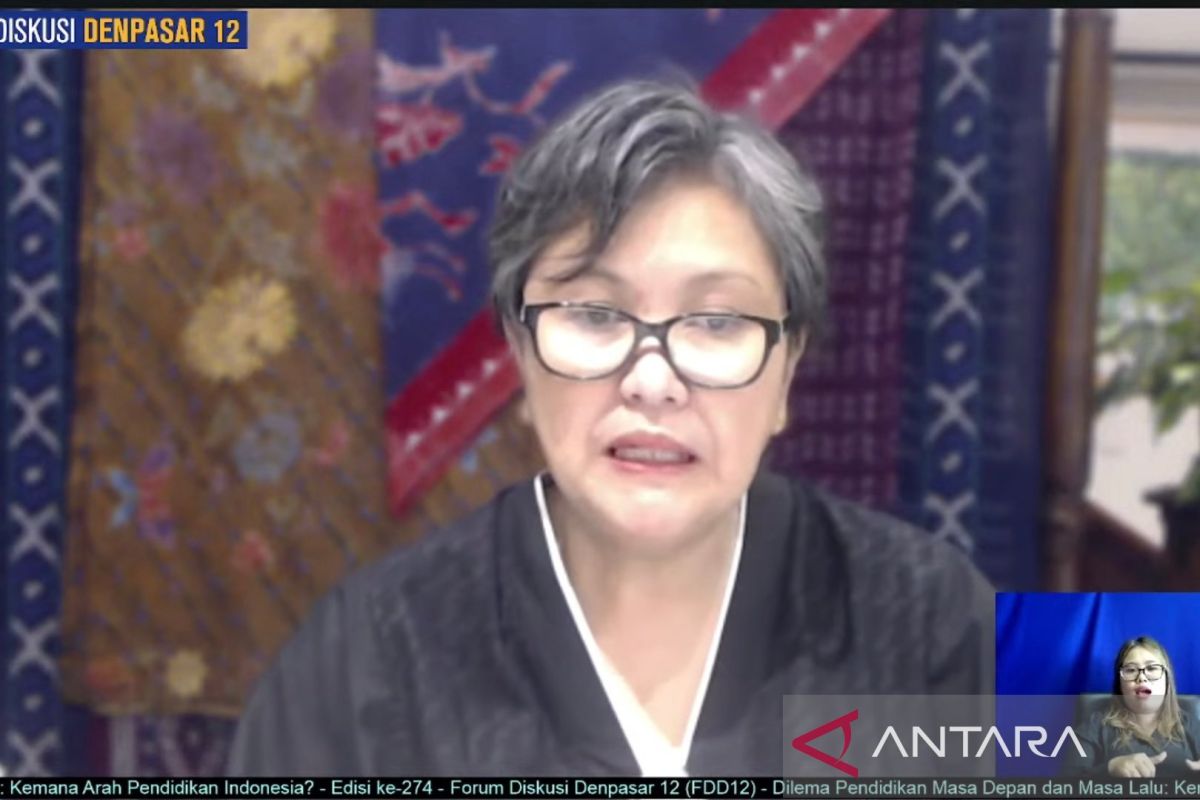
Jakarta (ANTARA) - The Deputy Speaker of the MPR RI, Lestari Moerdijat, has urged the government and policymakers to re-evaluate the accuracy of education financing schemes to prevent the younger generation from losing hope due to economic limitations.
During the Denpasar 12 Discussion Forum in Jakarta on Wednesday, Lestari referred to presentations indicating that approximately 60,000 prospective students who had passed university entrance selections chose not to re-register due to a lack of access to funding.
“This generally occurs because they do not have access to financing. This certainly raises a strategic question: why are so many Indonesian children still losing learning opportunities, even though the right to education is guaranteed by the constitution?” she said.
She also encouraged an in-depth study regarding the effectiveness of education funding to ensure that the budget is truly allocated for inclusive and progressive educational interests.
Lestari expressed optimism that with improved budget accuracy and targeted allocation, the state can ensure that no more of the nation’s children have to halt their education due to financial barriers.
Responding to these concerns, Beny Bandanadjaja, Director of Learning and Students at the Ministry of Higher Education, Science, and Technology (Kemdiktisaintek), clarified the circulating misinformation regarding the 60,000 prospective new students reported to have withdrawn or failed to re-register in this year’s selection.
Beny emphasised that the narrative of 60,000 students withdrawing in 2026 is incorrect, given that the independent track admission process for this year is still ongoing until the deadline on 31 July 2026.
According to him, the widely discussed figure of 60,000 actually refers to evaluation data from 2025 presented by the National Selection Committee for New Student Admissions during a Hearing with the House of Representatives (DPR RI).
He detailed that out of a total national capacity of 627,000 seats in 2025, 585,000 people were successfully accepted through the selection process. The difference of approximately 40,000 vacant seats was purely due to unfilled capacity because candidates did not meet the minimum quality standards, rather than due to withdrawals.
“From those 585,000, it is true that some did not re-register. Based on 2025 data, that number is around 17,000, or approximately 2.8 per cent of those accepted,” said Beny.