
MPR Four Pillars Quiz Competition Trains Students to Tackle Case Study Questions
The national-level MPR Four Pillars Quiz Competition (LCC) 2026 is not merely testing students’ memorisation of national ideology material. The competition is also designed to train critical thinking, reasoning, innovation, and the application of Pancasila values in daily life.
A total of 38 senior high school or equivalent schools from 38 provinces participated in the preliminary round of the Grand Final of the national-level MPR Four Pillars Quiz Competition 2026. The preliminary round was held at Nusantara IV Building, Parliament Complex, Jakarta, on Monday (24/8/2026).
The preliminary round featured a panel of judges, namely Trisakti University Law Lecturer Ninuk Wijiningsih, Head Lecturer of the Faculty of Law at Pancasila University Ricca Anggraeni, and Lecturer at the Faculty of Law of UPN Veteran Jakarta Rianda Dirkareshza.
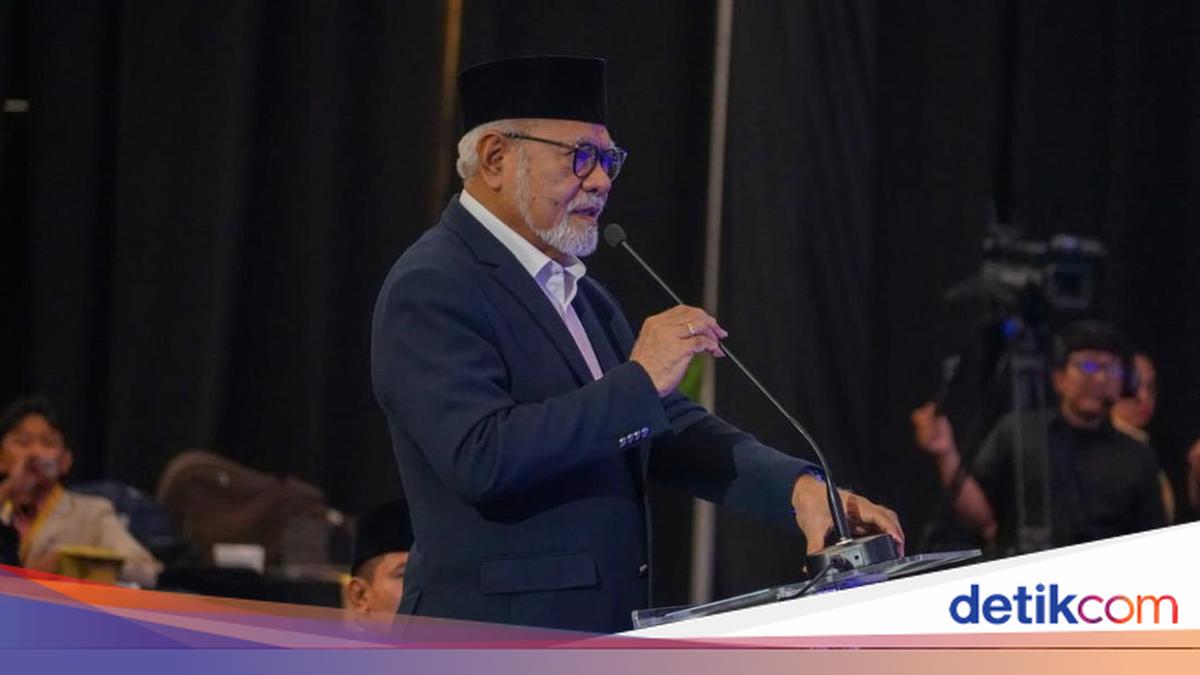
Chairman of the MPR Socialisation Body, Abraham Liyanto, appreciated the smooth running of the first day of the preliminary round. According to him, all participants from various regions showed the same spirit and enthusiasm in taking part in the competition.
“Because there are 38 provinces, we see their spirit is still the same as yesterday. I am grateful that the committee and secretariat have been able to produce six full matches, and they also have rest time,” said Abraham in a written statement (25/8/2026).
Abraham emphasised that the main substance of the MPR Four Pillars Quiz Competition is not merely testing memorisation, but building students’ ability to think, reason, and find solutions to given problems.
According to him, this is evident from the question material which uses a case study approach. Participants do not only need to know the answer, but must understand the problem thoroughly before determining the right choice based on law and national values.
“This competition is not just about memorising, but how they are trained to innovate, think, and answer case studies,” he said.
He explained that case study-based questions provide a particular challenge for participants because they require accuracy and analytical skills. Participants who rush to answer may actually make mistakes even though they have good memorisation skills. He assessed that this challenge is a special attraction that makes the competition increasingly high quality.
“If you memorise everything, you can do it. But with case studies, the questions are long, with ups and downs. Some who are quick actually get it wrong. That is what is interesting. So I think it is of high quality,” he continued.
According to Abraham, this method is one effective way to instil Pancasila values in the younger generation. Through the competition, students are encouraged to read, understand rules, analyse problems, and connect them with national values.
He assessed that this process deepens participants’ understanding of the MPR Four Pillars. In certain aspects, their mastery of national material can even surpass some adults because participants are accustomed to studying and exploring issues through the competition process.
Abraham also stressed that the challenge of Pancasila education today is no longer merely introducing Pancasila to the younger generation, but ensuring that these values are truly understood and applied in daily life. According to him, the values of tolerance, social justice, respect for differences, and communal living still need to be continuously strengthened.
“Pancasila has been around for a long time. But tolerance is still not what we hope for. Social justice is still not what we hope for. So that is why it is being instilled again now,” he added.
Abraham spoke of the importance of strengthening Pancasila values education continuously from early childhood to higher education. Attitudes of living together, respecting differences, discipline, obeying rules, and being responsible for social care need to be instilled and habituated from an early age.
The MPR Socialisation Body is committed to multiplying school participation in the Four Pillars Quiz Competition in the future. This year’s achievement has already reached around 4,000 schools, or half of the total 8,000 schools targeted by the programme.
Abraham hopes that the programme will not stop as an annual ceremonial activity, but can be developed through collaboration with ministries/institutions and local governments so that Pancasila education through the quiz competition can reach more schools and students across Indonesia.
“If we want the Unitary State of the Republic of Indonesia to remain non-negotiable and its binding spirit, Pancasila, to remain present, that is already good,” he concluded.
A total of 20 schools immediately showed their best performance on the first day of the preliminary round, which was divided into six matches. From the tight competition, six schools emerged as group winners and advanced to the semi-finals.
The six schools are Kalam Kudus Selat Panjang Christian School from Riau Province, SMAN Tugumulyo from South Sumatra Province, SMAN 1 Tanjung Selor from North Kalimantan Province, SMAN 2 Katingan Kuala from Central Kalimantan Province, MAN Insan Cendekia Bangka Tengah from Bangka Belitung Islands Province, and SMAN 1 Sambas from West Kalimantan Province.
The event was attended by MPR Socialisation Body members Saiful Nuri and Hj. Evi Apita Maya, Head of the Bureau for Session and Constitutional Dissemination Wachid Nugroho, Head of the Bureau for Human Resources, Organisation and Law Agus Subagyo, Head of General Bureau Herry Putra, and Inspector of the MPR Secretariat General Anies Mayangsari Muninggar.
Source: jawawa.id (https://jawawa.id/newsitem/mpr-four-pillars-quiz-competition-trains-students-to-tackle-case-study-questions-1787647945)
Originally published by detikcom (https://news.detik.com/berita/d-8633856/lomba-cerdas-cermat-empat-pilar-mpr-latih-siswa-hadapi-soal-studi-kasus), translated from Indonesian