
MPR: Economic Growth Must Be Felt by the People
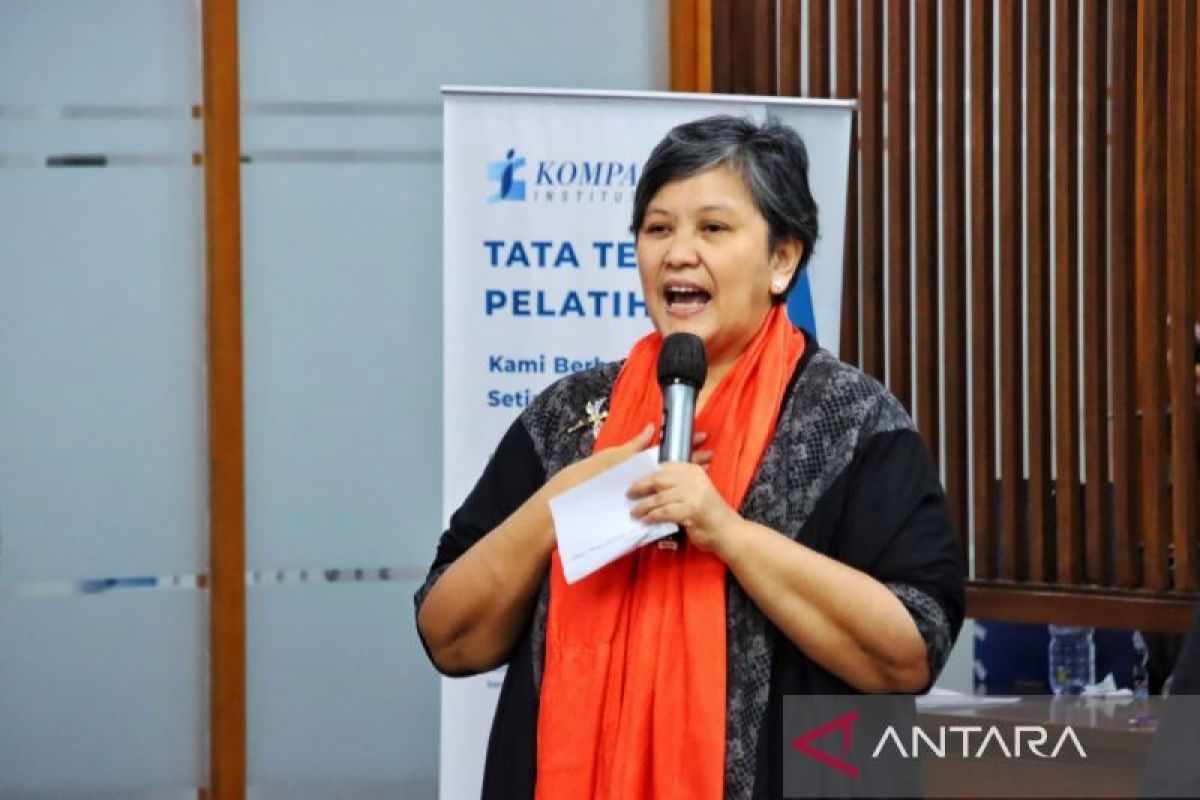
Jakarta (ANTARA) - The Deputy Speaker of the MPR RI, Lestari Moerdijat, has emphasised that national economic growth achievements must align with the increase in real public welfare, including through the strengthening of food self-sufficiency.
“In essence, our economy has the potential to grow so that the state is able to realise the protection and fulfilment of basic needs for the community. However, existing challenges must be overcome together to realise this potential,” said Lestari in her statement in Jakarta on Wednesday.
This was conveyed by Rerie (her familiar nickname) while opening an online discussion themed “Strategies for a Prosperous Indonesia: Strengthening the People’s Economy and Independent Food,” organised by the Denpasar 12 Discussion Forum on Wednesday.
Rerie argued that the fulfilment of basic needs in the long term must be realised as a manifestation of social protection for the community.
Data from the Central Bureau of Statistics (BPS) as of March 2026 recorded that approximately 74.70 per cent of community expenditure is for food needs. This indicates that the majority of people’s income is spent solely on food.
Rerie, who is also a member of Commission X of the DPR RI, argued that public affordability and the smooth distribution of basic needs must be strengthened.
“This condition must be our shared concern so that basic needs, including the people’s food, can be met,” she said.
The Director of Food and Agriculture at the Ministry of PPN/Bappenas, Jarot Indarto, stated that in an effort to guarantee the fulfilment of basic needs, the government, through Bappenas, is currently mitigating several challenges resulting from the climate crisis.
Currently, Jarot noted, farmers are facing challenges in procuring water for agricultural irrigation, and farmers are spending more time in the field.
This condition, in addition to impacting food crop productivity, also pressures farmer productivity.
In an effort to address these challenges, Jarort added, Bappenas is undertaking various efforts outlined in the national development and policy direction.
According to Jarot, his agency also continues to strive to realise the policies in Law Number 18 of 2012 concerning Food, which mandates that the state guarantees the food needs of every citizen to live healthy and active lives.
Jarot argued that the people’s economy must be built within the context of achieving food self-sufficiency.
Professor of Agricultural Economics at the University of Lampung, Bustan_anul Arifin, argued that building national food self-sufficiency requires transformative steps from the upstream, midstream, and downstream sectors of the national agricultural sector.
According to Bustanul, increasing research and development efforts in the agricultural sector is one of the keys to facing various future challenges.
The Chairman of the Keling Kumang Credit Union, Stefanus Masiun, expressed that based on his experience, the economic impact of the people’s economy in the context of cooperatives is only visible after five years.
In the first year, Stefanus said, cooperative members usually focus on meeting their basic needs. After the fifth year, they begin to expand businesses into other fields.
Building a people’s economy, according to Stefanus, is a significant task. The people’s economy can grow as long as it receives a good place, a good system, and a good supporting ecosystem.
Researcher at INDEF, Nur Komaria, argued that the role of the MSME sector in the Indonesian economy is currently not maximised because many obstacles remain.
According to Nur, approximately 97.3 per cent of MSMEs are still concentrated on Java Island, yet access to funding from formal financial institutions remains limited.
On the other hand, Nur added, the demographics of Gen Z present an opportunity for MSMEs to adapt to the digital economy.
Nur added that alternative funding systems are required for MSMEs.
Member of Commission XI of the DPR RI, Thoriq Majiddanor, revealed that Indonesia currently faces several challenges in its efforts to provide food.
According to Thoriq, food security and availability should not be measured solely by the fullness of stocks in warehouses. It must be measured by food affordability, controlled prices, and increased people’s income.
“Food is available, producers are growing, and the community is prosperous,” said Thoriq.