
MPR Discussion Urges Strengthening of People's Sovereignty in Democracy
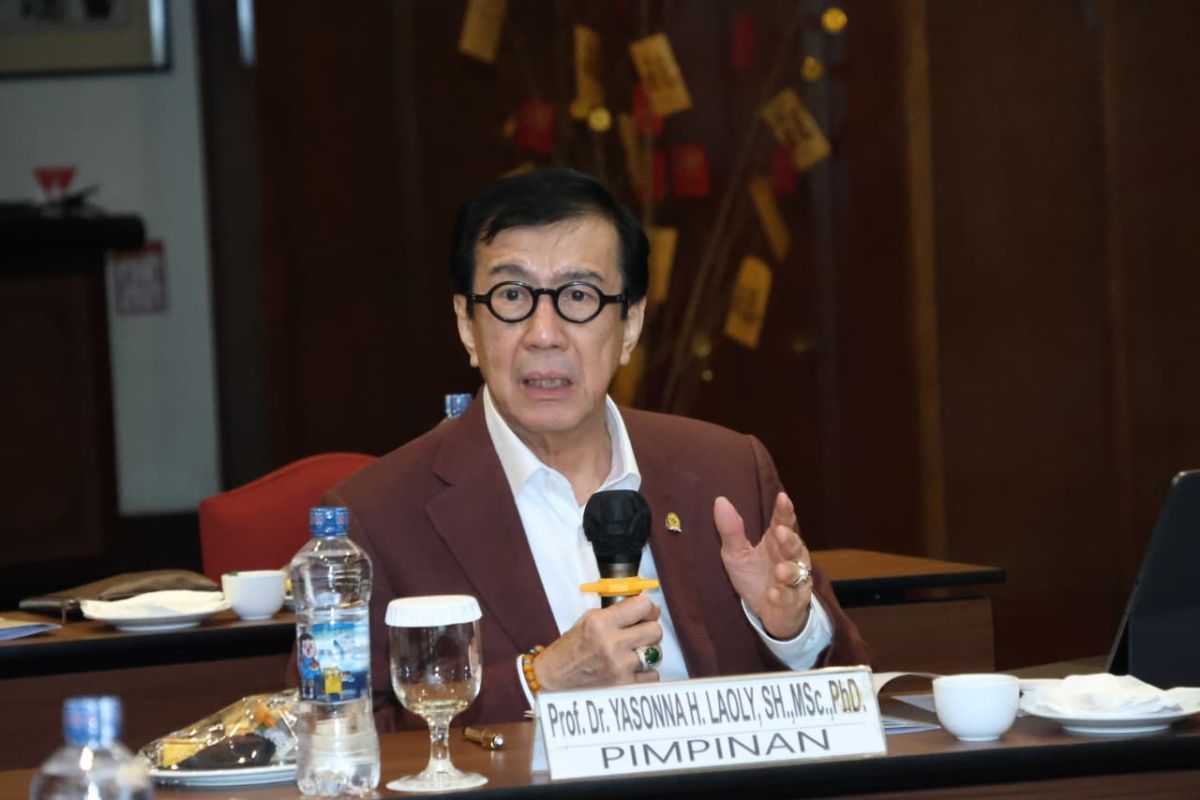
The People’s Consultative Assembly (MPR RI) held a Focus Group Discussion (FGD) by Group I of the MPR Assessment Body themed ‘People’s Sovereignty in the Perspective of Pancasila Democracy’, which discussed strengthening people’s sovereignty within Pancasila democracy. The discussion was led by the Head of the MPR Assessment Body, Yasonna Laoly, and featured various academics from Padjadjaran University (Unpad), including Professor of Contemporary Political Science at FISIP Unpad, Prof Caroline Paskarina.
During the discussion, Caroline explained that Indonesia possesses a relatively strong constitutional and procedural foundation for conducting general elections and regional head elections. However, democracy has not yet fully delivered substantive people’s sovereignty. According to her, various issues still affect the quality of democracy, such as the dominance of political party elites in the nomination process, high political costs, money politics practices, candidates’ dependency on capital owners, and the weak relationship between representatives and constituents after elections.
She assessed that the main problem with Indonesian democracy lies not in the absence of democratic institutions, but in the gap between the available democratic mechanisms and the public’s ability to genuinely influence, oversee, and correct the use of state power. ‘People’s sovereignty must not stop on polling day. People’s sovereignty must be present before, during, and after elections through a healthy relationship between the people and their representatives,’ said Caroline.
She also emphasised that Pancasila Democracy does not have to completely imitate the democratic practices of other countries. Indonesian democracy needs to be built based on the nation’s history, culture, and social realities, while upholding the limitation of power, respect for human rights, openness, accountability, and social justice. She encouraged the application of the principle of meaningful participation in the process of policy and legislation formation. Society, she said, should not merely be given the opportunity to express opinions, but also has the right to have its input considered and to receive an explanation regarding whether the proposal is accepted or rejected.
Meanwhile, the Head of the Postgraduate Political Science Programme at FISIP Padjadjaran University, Ari Ganjar Herdiansah, assessed that the increasing mobilisation of students and the younger generation in recent years is an indicator that formal channels for conveying public aspirations are not yet fully effective. According to him, the main challenge for democracy lies not in low public participation, but in the suboptimal process of transforming public aspirations into responsive policies. ‘The people’s voice must be translated into a public agenda, discussed openly, responded to by state institutions, and realised in policies that favour the people’s interests,’ said Ari.