
MPR Deputy Speaker Urges Universities to Take Active Role in Solving Plastic Waste Crisis
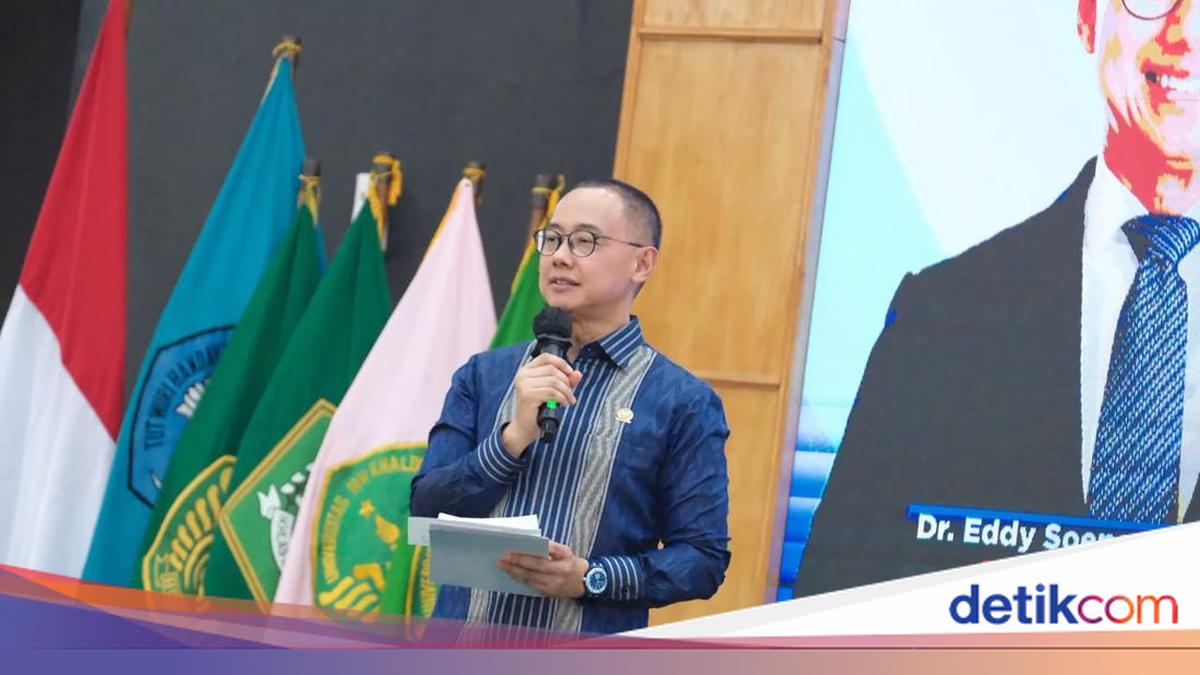
Deputy Speaker of the People’s Consultative Assembly (MPR) from the National Mandate Party (PAN) faction, Eddy Soeparno, has invited universities to take a more active role in addressing the challenges of climate change and the plastic waste crisis. This can be achieved by strengthening national policies based on scientific knowledge. According to the University of Indonesia political science doctorate holder, campuses should become strategic partners of the government in formulating solutions to environmental problems. One of the pressing environmental issues currently faced is the waste emergency. Recent fires at various final disposal sites (TPA) and the disaster at Bantargebang demonstrate the urgency of resolving the waste problem. ‘Solving Indonesia’s waste problem cannot rely solely on increasing the capacity of final processing sites or waste transportation. The solution must include producer responsibility for the waste they generate,’ he stated on Wednesday (5/8/2026). He made these remarks while speaking at the 51st MPR Goes to Campus event at Ibn Khaldun University (UIKA) Bogor. Eddy emphasised the importance of implementing Extended Producer Responsibility (EPR) as an instrument to reduce plastic waste generation from the upstream level. ‘The burden of waste management has been disproportionately borne by local governments and the community. It is time for producers to take responsibility for the plastic packaging they produce, from product design to collection and recycling processes. This is the essence of Extended Producer Responsibility that we need to strengthen,’ he said. The Deputy Chairman of PAN noted that Indonesia produces more than 56 million tonnes of waste annually, with approximately 18-20 percent being plastic waste. Meanwhile, the national plastic recycling rate remains relatively low, resulting in most waste ending up in final disposal sites, polluting rivers and oceans. ‘Strengthening the implementation of Extended Producer Responsibility obliges producers to be responsible for the entire life cycle of their product packaging, from design, material reduction, collection systems, to the recycling process,’ he explained. ‘Producers must not stop at the point of sale. They must also take responsibility for packaging that ends up as waste. The easier a package is to reuse or recycle, the smaller the burden on local governments and the community,’ he asserted. According to Eddy, the implementation of EPR will also encourage businesses to innovate in producing more environmentally friendly packaging, reduce the use of single-use plastics, and accelerate the implementation of a circular economy in Indonesia. ‘So far, the cost of waste management has largely been charged to local governments. With EPR, this responsibility becomes fairer because producers participate in solving the waste problem originating from their products,’ he explained. Eddy specifically emphasised that collaboration between the government, universities, industry, and the community is key to overcoming the increasingly complex waste problem.