
MPR Deputy Speaker Urges Revision of Human Trafficking Law and Better Protection of Indonesian Migrant Workers
The practice of human trafficking (TPPO) has now transformed into a transnational cybercrime disguised as increasingly sophisticated corporate operations. To stem this threat targeting the nation’s children, Law Number 21 of 2007 on the Eradication of Human Trafficking is being urged for immediate revision.
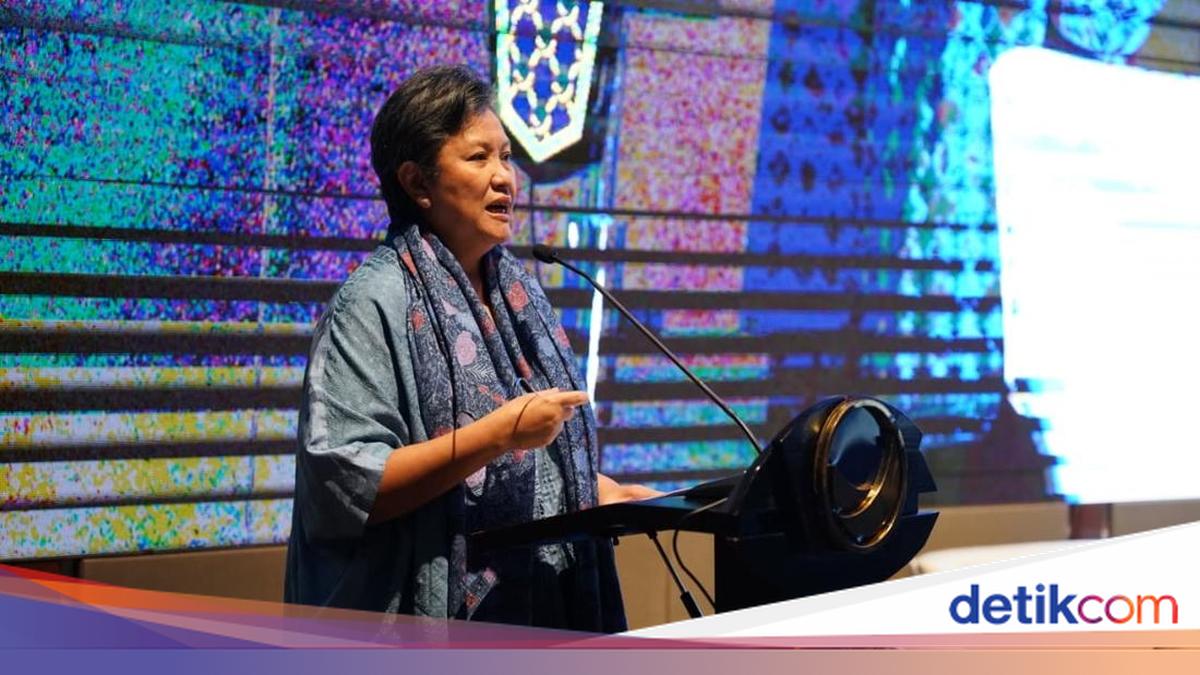
“Comprehensive protection strengthening must be realised and reach the grassroots. In addition, the TPPO Law must be revised immediately to strengthen the governance of Indonesian Migrant Workers,” said Deputy Speaker of the MPR RI Lestari Moerdijat in her statement on Wednesday (19/8/2026).
Lestari made the remarks while opening a discussion themed Strengthening the Governance of Indonesian Migrant Workers (PMI) for the Prevention of Human Trafficking and the Soft Launching of the NasDem Migrant House and Care Economy (RM-CEN) today.
The discussion, moderated by Expert Staff to the Deputy Speaker of the MPR RI, Nur Amalia, featured three main speakers: Chairman of Commission XIII of the Indonesian House of Representatives Willy Aditya, Director of Cyber Protection for PMI at the Ministry of P2MI/BP2MI Brigadier General Pol. Nur Romdhoni, and Kompas journalist Sonya Hellen. Also present as a respondent was the Head of the Migrant Affairs Division of the NasDem Party Central Board, Eva Kusuma Sundari.
According to the figure familiarly known as Rerie, the existing TPPO Law is no longer able to keep pace with the evolution of crime. Human trafficking has now transformed into a white-collar crime and a transnational cyber industry using corporate structures.
Referring to 2026 data from the International Organization for Migration (IOM), there were 2,908 recorded victims of human trafficking in Indonesia, the majority of whom were women and children. Rerie therefore urged an amendment to the TPPO Law to strengthen existing protection clauses, given that the current instrument still focuses on post-incident handling.
“The TPPO Law still focuses on post-incident criminal instruments and has not touched the sociocultural roots. Yet the current TPPO ecosystem is driven by cross-border corporations,” said Rerie.
She also stressed the importance of integrating cross-border cyber patrols into PMI governance, as conventional instruments are no longer designed to counter algorithmic operations. Amid weaknesses in cross-agency oversight systems, the launch of the Migrant House and Care Economy (RM-CEN) by the NasDem Party is expected to become a new protection innovation.
Meanwhile, Chairman of Commission XIII of the Indonesian House of Representatives Willy Aditya assessed that human trafficking is a well-organised crime, making it easy for victims to be isolated. According to him, the crime involves various layers of authority, from the village level, regional government, immigration, police, and a number of stakeholder layers.
“This must be addressed through a collective movement of every citizen and a strong TPPO Law as a tool to tackle the crime of human trafficking that continues to occur,” said Willy.
Director of Cyber Protection for PMI, Brigadier General Pol. Nur Romdhoni, said that human trafficking scammer syndicates operate extensively in Myanmar and Cambodia. Throughout 2026, there were 229,618 recorded Indonesian Migrant Workers (PMI) abroad, with 2,214 of them entangled in cases.
According to him, these cases occur due to differences in legal rules between countries. He cited the example of Saudi Arabia, where Indonesian citizens enter on tourist visas to work as domestic workers, even though Indonesia has halted the placement of domestic workers there since 2015.
“That practice is legal in Saudi Arabia,” said Romdhoni.
He also estimated that the number of unregistered PMI abroad is actually far higher than official data suggests. The many non-procedural departure routes make their presence difficult to monitor, so the potential for unreported crime cases is estimated to be much greater.
Kompas journalist Sonya Hellen shared her experiences covering various human trafficking cases. According to Sonya, various modus operandi—from promises of work abroad, being made into brides in China, to exploitation causing layered suffering—colour human trafficking cases.
“Are we truly free from the practice of human trafficking that still occurs today?” said Sonya.
The various cases affecting women and children are deeply concerning. According to her, the prevalence of this crime cannot be separated from the involvement of our own citizens.
“If we want to be truly free, start by saving the nation’s children,” said Sonya.
Head of the Migrant Affairs Division of the NasDem Party Central Board Eva Kusuma Sundari also revealed that migrant workers face extraordinary threats. In addition, the same threats are also suffered by domestic workers within the country.
For this reason, NasDem is mobilising its party structure from the branch level (DPC) to the provincial level (DPW) to map problems and assess the potential vulnerability to human trafficking in their respective regions. This step is taken so that prevention and recovery efforts can be carried out more quickly and target the root of the problem.
According to Eva, handling human trafficking requires cooperation from all parties. This synergy is important to save citizens from the crime of human trafficking.
Senior journalist Usman Kansong assessed that the fundamental question that must be answered is why modern slavery is worsening despite the legal framework already being in place. He emphasised that the handling of human trafficking has even been supported by a special body whose authority has been elevated to ministry level.
“Perhaps we are quietly normalising it; we have become banal about human trafficking,” said Usman.
Usman assessed that modern slavery will continue to recur as long as poverty has not been successfully addressed. According to him, the normalisation of this crime is difficult to stop as long as the state is unable to provide decent employment.
“When we agree that the TPPO Law needs revision, can poverty alleviation and job creation be included in it, as part of the handling and prevention of human trafficking,” concluded Usman.
Source: jawawa.id (https://jawawa.id/newsitem/mpr-deputy-speaker-urges-revision-of-human-trafficking-law-and-better-protection-of-indonesian-migrant-workers-1787147674)
Originally published by detikcom (https://news.detik.com/berita/d-8626107/waka-mpr-dorong-revisi-uu-tppo-dan-tata-kelola-pmi-lebih-baik), translated from Indonesian