
MPR Deputy Speaker Urges Demak Tidal Flood Handling to Be National Priority
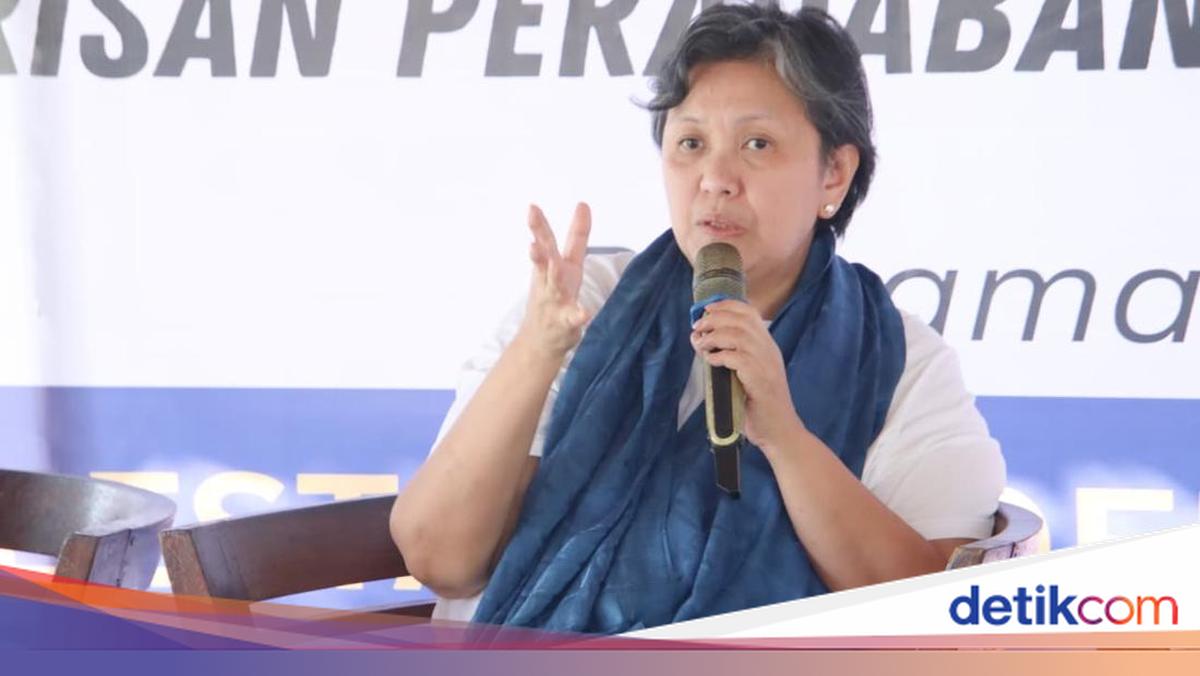
The Deputy Speaker of the MPR RI, Lestari Moerdijat, has emphasised that the tidal flooding and permanent inundation affecting the Sayung District, Demak Regency, Central Java, must be addressed comprehensively. This issue is considered urgent and needs to become a national priority.
She expressed this during an MPR RI public aspiration session titled ‘Acceleration and Equitable Regional Development: Ecological and Infrastructure Challenges’ at the Amantis Hotel, Demac, on Monday (22/06/2026).
In her address, Lestari highlighted infrastructure developments such as the Semarang-Sayung Toll Road. Although intended to accelerate development access, the project is assessed to have caused massive environmental impacts.
Lestari, commonly known as Rarie, explained that the Sayung area was historically a strait region that had not been developed since the Dutch colonial era due to geological considerations. However, the area is currently under heavy pressure due to infrastructure development and climate change.
“If we speak in the context of Demak, the Sayung area and surrounding villages have entered the category of permanent disaster, no longer just tidal flooding,” Rarie stated in her remarks on Monday.
The legislator from Central Java’s second electoral district revealed that based on collected data, the disaster has caused 6,600 hectares of the Demak region to be submerged. This condition directly impacts approximately 15,000 households.
Many residents have lost their agricultural land and have been forced to transition into fish pond farmers without adequate knowledge, resulting in unstable daily incomes.
Facing this situation, the Member of Commission X of the DPR RI offered two options. The first option is relocation, which is deemed very difficult to realise at this time. The second option is to encourage adaptation efforts by preparing affected residents through various programmes.
“For example, for agricultural land that can no longer be cultivated, we will discuss with the government to endeavour to use biosaline rice varieties. Or, paddy fields that have turned into inundations could be functioned as fish ponds. However, the licensing process for converting paddy fields into ponds is not simple,” she explained.
Furthermore, Rarie criticised short-term solutions such as raising road embankments. This is viewed as merely shifting the problem, as water runoff will continue to submerge residential areas. She urged the Local Government and the local Regional House of Representatives (DPRD) to take more progressive administrative policies.
Beyond infrastructure and economic aspects, the NasDem Party member highlighted the importance of environmental education. She encouraged nature-based ecological restoration, such as mangrove planting to prevent abrasion and systematic waste management.
“This is already a disaster and we cannot allow it to continue. If the approach is always normative, this problem will not be resolved. What is lost in Sayung is not just land, but living space, certainty, and the future,” concluded Rarie.