
MPR Deputy Speaker: Indonesia Has Vast Resources to Develop Clean Energy
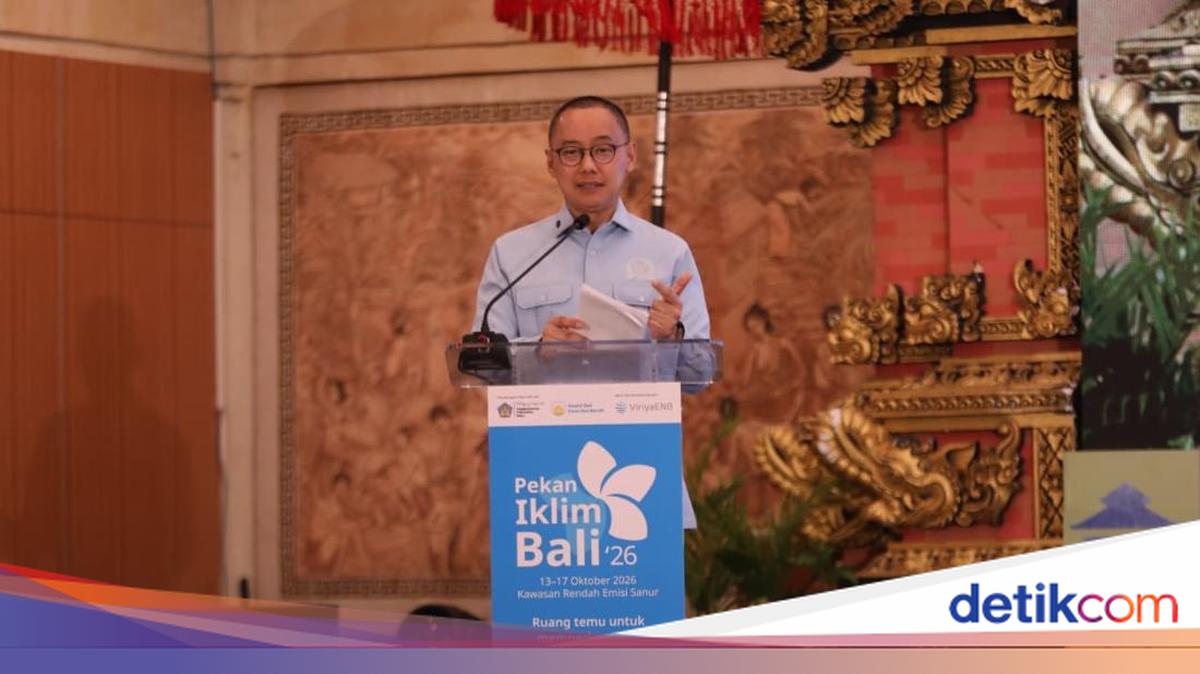
Deputy Speaker of the People’s Consultative Assembly (MPR) Eddy Soeparno, from the National Mandate Party (PAN) faction, stressed that climate change must be viewed as a national resilience issue. Its effects are already being felt in the rising risk of hydrometeorological disasters, threats to food and water security, and economic losses that burden the public, particularly vulnerable groups.
“Climate resilience is part of national resilience. We are talking about protecting food, water, territory and people’s safety. Climate action must therefore be an integrated and equitable part of the national development agenda,” Eddy said in a statement on Wednesday (14 October 2026).
Eddy made the remarks while delivering the keynote address and opening the Climate Investment Forum, held as part of Bali Climate Week 2026 in Bali on Wednesday.
Eddy said Indonesia, meanwhile, had significant resources to turn its climate agenda into an opportunity for economic growth. The country’s renewable energy potential is estimated at around 3,600 gigawatts, including 3,286 gigawatts of solar power potential. However, utilisation remains very limited.
He said the gap between this vast potential and its actual use must be addressed through consistent policies, regulatory certainty and an investment climate capable of attracting private-sector participation and global investors.
“Indonesia has vast resources to develop clean energy. The challenge is turning that potential into concrete projects that are economically viable, regulatory-ready and attractive to investors,” he said.
“Indonesia’s NDC targets will not be achieved through state budget funding alone. The investment required far exceeds the capacity of the state budget. Financing and collaboration among all stakeholders are therefore prerequisites for the success of Indonesia’s climate agenda,” he added.
He also highlighted the scale of funding needed to meet Indonesia’s climate targets. According to the Second NDC document, Indonesia’s investment needs for 2031 to 2035 are estimated at US$472.6 billion. This figure underscores the importance of mobilising funding beyond the central and regional government budgets.
To address the challenge, Eddy called for stronger Public-Private Partnership (PPP) schemes, wider access to international financing, the preparation of priority energy transition projects by regional governments, and stronger integrity in carbon markets and carbon credits.
On legislation, Eddy emphasised the need to accelerate deliberations on the Fair Climate Change Control Bill, the New and Renewable Energy Bill, and amendments to the Electricity Law. He said a robust legal framework was needed to provide investors with certainty and ensure that the energy transition was fair and sustainable.
“Climate investment requires legal certainty and a clear policy direction. Regulatory strengthening must therefore go hand in hand with efforts to open up investment opportunities and ensure that the benefits of the energy transition reach the public,” Eddy said.
Eddy stressed the importance of meaningful public participation in climate policymaking, so that every community group has the opportunity to voice its aspirations and receive an explanation of how its views have been considered.
“Bali Climate Week must be a forum that brings commitments together with concrete action. We need to ensure that the climate agenda does not stop at targets and declarations, but is translated into bankable projects, realised investment and tangible benefits for the public,” Eddy concluded.