
MPR Deputy Speaker Ibas: Education Is Not Just Schooling, But a Civilisational Investment
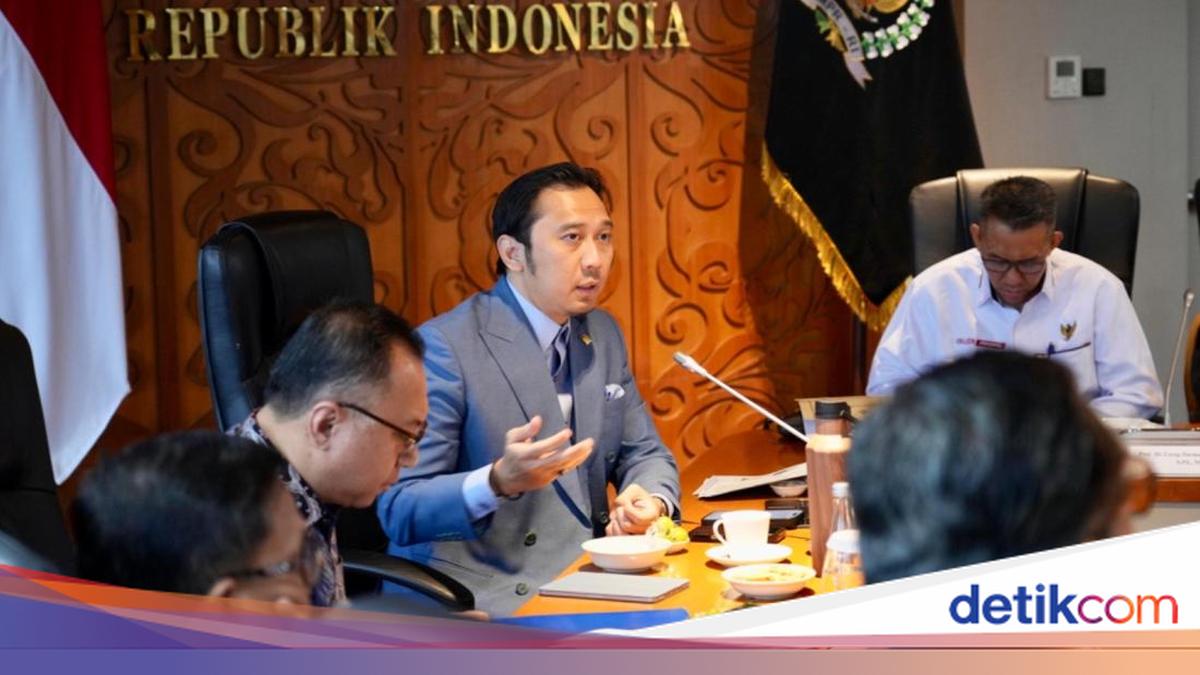
Deputy Speaker of the People’s Consultative Assembly (MPR) Edhie Baskoro Yudhoyono (Ibas) has emphasised the importance of positioning education as a long-term investment. The sector is a decisive instrument in building the quality of Indonesia’s human resources and its future.
“Education is not merely a matter of schooling. Education is a civilisational investment. If we want to change Indonesia’s future, we must start from the classroom,” Ibas said in a written statement on Thursday (20/8/2026).
He made the remarks during a national discussion titled ‘Quality Schools, Quality Human Resources: Education Investment for a Golden Indonesia in the 2027 State Budget Draft’. The event was held at the MPR Leadership Meeting Room in Jakarta.
According to Ibas, discussion of the education budget in the 2027 State Budget Draft should not be viewed solely from the nominal size of its allocation. He reminded that improvements in education must be firmly rooted in the classroom.
Every rupiah from the State Budget in the education sector must deliver clear benefits for the people. Success indicators must be able to change the life trajectories of Indonesian children.
“The question is simple: are children learning better, are teachers stronger, are schools safer, and do children from underprivileged families have equal opportunities? The measure of budget success is not only how much is spent, but how many children’s futures we succeed in changing,” he said.
Ibas also appreciated the government’s steps in prioritising the education budget and revitalising schools. However, he cautioned that the revitalisation process must not stop at physical improvements to buildings.
“Do not just build classrooms. We must build rooms for dreaming. Safe, clean, and quality schools are not a luxury. They are the right of every Indonesian child,” he said.
Beyond schools, Ibas urged that teachers become the main focus of current government investment. Improvements in educators’ welfare must go hand in hand with their competence.
“Teachers must be the primary investment. Welfare must progress together with improved competence. We want teachers not only to be present in the classroom, but to be capable of becoming the main drivers of improved learning quality,” he said.
The discussion also highlighted the challenge of adapting to technological changes such as the development of artificial intelligence (AI). Teachers were seen as playing a crucial role in teaching critical and ethical thinking when students engage with technology.
“AI can provide answers. But teachers teach which questions are worth asking,” he said.
Therefore, the younger generation must be thoroughly prepared to become reliable innovators. They are expected not merely to be consumers in the global digital market.
“We do not want Indonesia’s generation to be merely technology users. We want them to be technology creators. Not just seeking jobs, but capable of creating jobs,” he stressed.
Ibas then outlined five main policy directions for education in the 2027 State Budget Draft. One focus is ensuring equal educational opportunities for all children regardless of socio-economic background.
“Birthplaces may differ. Opportunities to have a future must not differ,” he said.
Furthermore, the State Budget must be viewed as a real instrument of struggle in improving the quality of people’s lives. Education budget discussions must ensure every rupiah has a measurable impact.
“The State Budget is not merely numbers. The State Budget is an instrument of struggle to protect the people, strengthen the nation, and deliver a better life,” he said.
Input from various experts and academics is expected to help refine the quality of the 2027 State Budget Draft policies. This education investment will certainly be decisive for national welfare going forward.
“Quality schools produce quality human resources. Quality human resources produce productivity. Productivity produces competitiveness. And competitiveness produces welfare,” he said.
He reiterated that the mission of achieving the nation’s grand vision cannot be postponed for years.
“Golden Indonesia 2045 does not begin in 2045. Golden Indonesia begins in today’s classrooms,” he concluded.
Ibas’s views were supported by experts and legislative representatives in attendance. Professor Cecep Darmawan of the Indonesia University of Education reminded that the constitutional limit of a 20 per cent education budget allocation is not the sole measure of success.
“The approach should not be trapped in input-oriented policy, but outcome-oriented policy,” he said.
In line with this, Sabam Sinaga, head of the House of Representatives Commission X working group, highlighted the reality of teacher welfare on the ground, despite the education budget mandate having been allocated a very large portion.
“With the 20 per cent mandatory spending figure, our teachers and lecturers should be prosperous — there should no longer be stories of teachers earning five hundred thousand rupiah. But the reality is still like that,” Sabam stressed.
Source: jawawa.id (https://jawawa.id/newsitem/mpr-deputy-speaker-ibas-education-is-not-just-schooling-but-a-civilisational-investment-1787201667)
Originally published by detikcom (https://news.detik.com/berita/d-8626663/waka-mpr-ibas-pendidikan-bukan-sekadar-sekolah-tapi-investasi-peradaban), translated from Indonesian