
MPR Deputy Speaker Highlights Importance of Collaboration in Cultural Heritage Management
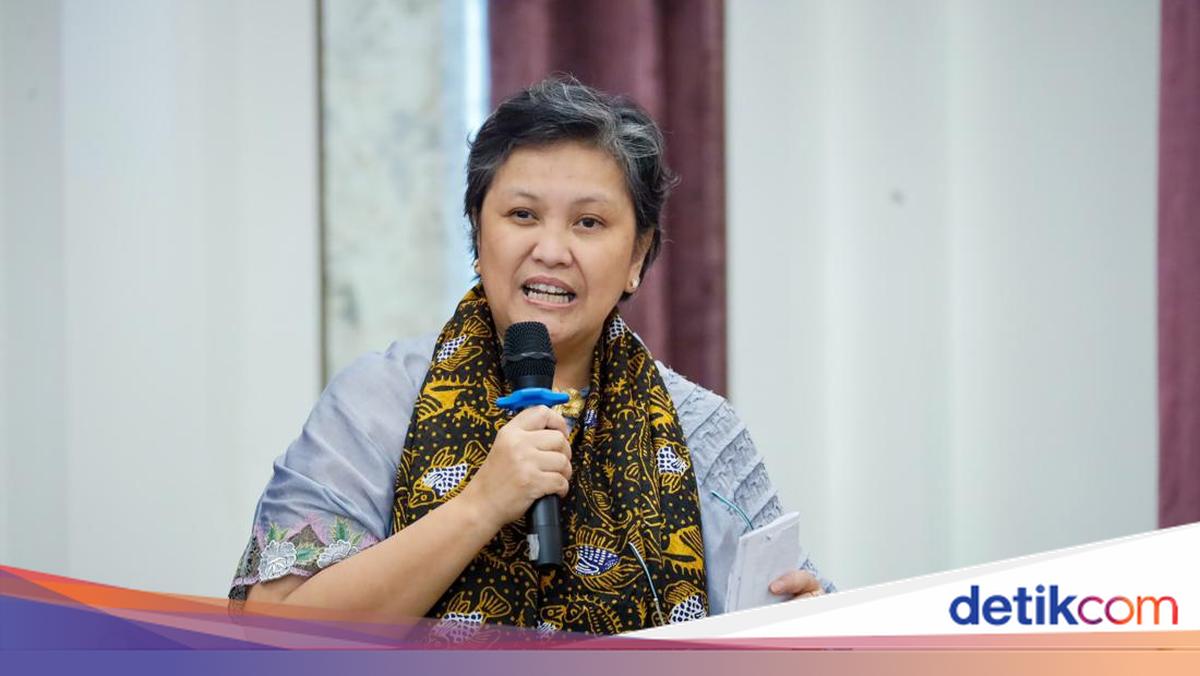
Deputy Speaker of the People’s Consultative Assembly (MPR) Lestari Moerdijat has stressed that cultural heritage must remain alive and provide sustainable benefits through tangible support from both the government and the community. She made the remarks while opening an online discussion themed ‘Who Guards the Nation’s Heritage? Building Partnerships between the State, Indigenous Communities, and Cultural Heritage Owners’, organised by the Denpasar 12 Discussion Forum. “Cultural heritage is tangible proof of the relationship between the past and the present, which can shape the nation’s identity and is part of the effort to build the character of the nation’s children,” Rerie said on Wednesday. According to Rerie, these cultural assets should not merely be preserved as historical relics but must also continue to fulfil social, cultural, spiritual, educational, and customary functions. However, she noted that many cultural asset managers are currently burdened in their efforts to preserve heritage sites located on privately owned land. Rerie opined that existing cultural heritage preservation policies are not yet well integrated. “A major step is needed to realise comprehensive and sustainable heritage preservation across the country,” she asserted.
Chairman of Commission II of the House of Representatives (DPR RI), M Rifqinizamy Karsayuda, argued that constitutionally, Article 18b paragraph 2 of the 1945 Constitution already recognises indigenous communities, provided their customary practices are alive in their daily lives. Rifqinizamy revealed that his party is continuing efforts to finalise the deliberation of the Indigenous Peoples Bill to strengthen the existence of indigenous communities. “The hope is for the active involvement of the community in identifying and inventorying cultural heritage, territories, or indigenous community areas,” he said. On the same occasion, the Head of the Sub-Directorate for Maintenance, Restoration, and Zoning at the Ministry of Culture, Prabawa Dwi Putranto, opined that designating a site as a cultural heritage does not mean the state takes over ownership of the cultural asset. According to Prabawa, the current legal basis is Article 13 of Law Number 11 of 2010 concerning Cultural Heritage, which serves as a constitutional guarantee in preservation efforts. However, he acknowledged that the implementation of this regulation still faces many obstacles in the field. He cited the Baduy indigenous area in Banten and the Mangkunegaran Principality in Solo as examples where heritage designation has not eliminated ownership rights. “Current challenges in the field include overlapping zoning and a gap in incentives and compensation for managers,” Prabawa said.
Anak Agung Made Dewandra Reinhard Djelantik, from the management body of Taman Soekasada Ujung in Karangasem, explained that the site is a legacy of the Karangasem Kingdom in Bali. The area, he said, consists of a resting place, a guest reception area, and a meditation space, making it not only a cultural site but also a spiritual one. The site is currently managed jointly by the Karangasem Regency Government and the Karangasem Royal Family. Dewandra admitted that managing the 11-hectare Taman Soekasada Ujung area requires substantial funding. He therefore expressed hope for clear information regarding the types of support available to managers of cultural heritage sites, so that preservation efforts can be sustainable. Meanwhile, archaeologist and Indonesian cultural heritage preservation expert Wiwin Djuwita Ramelan stated that the recognition of a heritage site must be based on an assessment of whether the asset holds significant historical, scientific, educational, religious, or cultural value. “Currently, there is a tendency for heritage designations to no longer be based on in-depth considerations of value,” Wiwin said. She stressed that such a designation carries the obligation to protect, develop, utilise, and manage the site. Wiwin argued that the concept of ‘living heritage’ is important to apply in the designation of cultural heritage sites.
Deputy Chairman of Commission X, Kurniasih Mufidayati, revealed that her commission currently has a working committee on the protection and utilisation of cultural heritage. She stated that the issue of collaboration between protection and utilisation efforts is crucial. She emphasised that regulation, government and community institutions, as well as social aspects, must be given serious attention in the development of cultural heritage across the country. Cultural heritage enthusiast Anak Agung Ayu Manik Mulyaheni opined that owners, heirs, indigenous communities, and the government share the same goal in preserving cultural heritage. However, she added, a lack of mutual trust often arises. “Concerns frequently emerge when a cultural asset is designated as a heritage site, because the owning community worries that restrictions will limit their freedom of movement,” Manik said. She stressed that what is needed is equal and mutually respectful collaboration among all parties in caring for the nation’s cultural heritage. Additionally, the 40th Datu of Luwu, Andi Maradang Mackulau, revealed that he is a cultural actor in the Kedatuan Luwu Palace. He asserted that Kedatuan Luwu adheres to the philosophy that the beliefs and understanding of the leader and the community are one. He acknowledged that the 12 sub-tribes within the Kedatuan Luwu region are also currently facing issues regarding the designation of customary land. According to Andi, customary law and custom are different concepts; customary law is the order, while custom is the behaviour. “Human behaviour will produce its customary order,” he said. The two-term Regent of North Luwu and initiator of the Indigenous Peoples Bill, Muchtar Luthfi Andi Mutty, revealed that the Datu of Luwu has always been the last hope when conflicts between the community and other parties remain unresolved. Luthfi stated that kingdoms or sultanates are, in reality, still recognised for their role by the community.
Source: jawawa.id (https://jawawa.id/newsitem/mpr-deputy-speaker-highlights-importance-of-collaboration-in-cultural-heritage-management-1785941579)
Originally published by detikcom (https://news.detik.com/berita/d-8606119/waka-mpr-ungkap-pentingnya-kolaborasi-pengelolaan-warisan-budaya), translated from Indonesian