
MPR Deputy Speaker: Energy Transition Is Not a Choice but an Inevitability
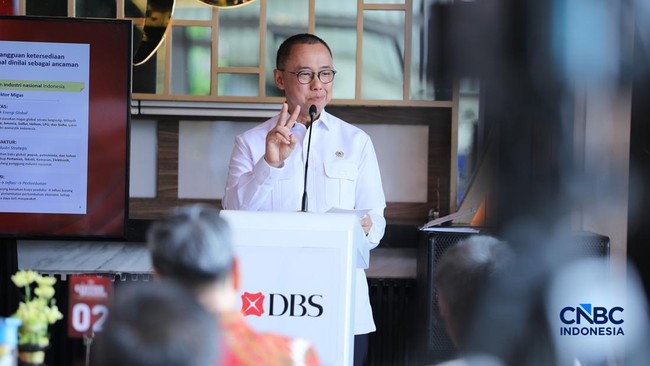
Deputy Speaker of the Indonesian People’s Consultative Assembly (MPR) Eddy Poernomo believes the energy transition programme is no longer merely an option, but an effort that must be undertaken to maintain national economic sustainability. This is also a major target for Indonesia in pursuing decarbonisation to achieve net zero emissions by 2060 at the latest.
Eddy stated that the energy sector must transform to become more sustainable amidst global disruption. He considers this transition urgent given the world’s geopolitical dynamics that continue to pressure fossil energy resilience.
“For me, the energy transition is not an option, not a choice, it is an inevitability. So it is inevitable that we have to transform our energy sector to become more sustainable,” he said at a CNBC Indonesia Coffee Morning event, quoted on Friday (24/7/2026).
According to his records, Indonesia has a new and renewable energy (EBT) potential of up to 3,600 Giga Watts (GW), of which 3,300 GW comes from solar-based energy sources. Although Indonesia currently still has coal reserves sufficient for the next 150 years, the utilisation of clean energy remains a top priority.
“We have a huge amount. Indonesia is truly a rich country. We have enormous fossil energy sources, as I mentioned, 150 years of coal. We still have large gas reserves. On the other hand, we also have very large renewable energy sources,” he added.
The energy transition process is also expected to create a new economic pillar through the carbon trading mechanism. The government itself has reopened the carbon trading tap to gain economic benefits from greenhouse gas emission reduction programmes.
“What does that mean? We have the opportunity to gain economic benefits from our emission reductions. Our energy transition, becoming more sustainable, has a reward that we can use to finance the transition process we have today,” he explained.
Eddy stressed that the energy transition also aims to reduce dependence on imported fuel oil and LPG, which have been a burden on the country’s foreign exchange reserves. The utilisation of renewable energy sources such as geothermal, wind, and water will continue to be promoted by his party.
“So the energy transition we are undertaking today is part of our commitment to decarbonisation, and I believe today the decarbonisation target through energy transition is not only being pursued by Indonesia but by the entire world,” he concluded.