
MPR Deputy Chairman Urges Use of Latest Data for Better Access to Education
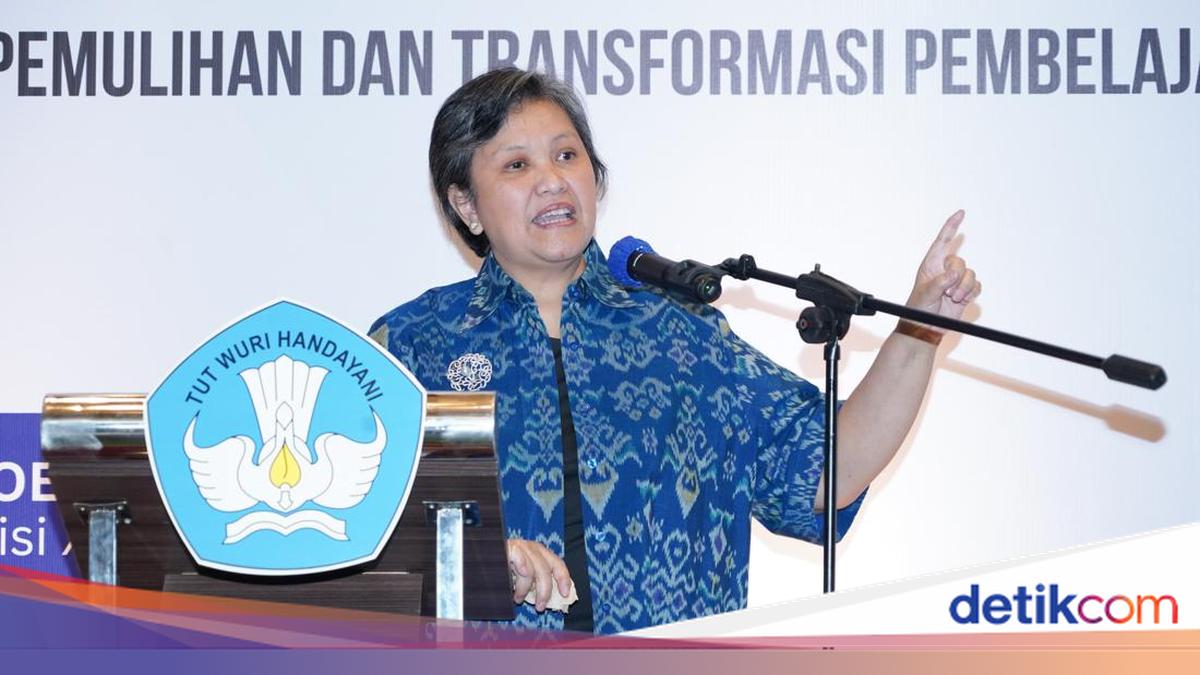
Deputy Chairman of the MPR RI, Lestari Moerdijat, highlighted the importance of utilising the latest data on out-of-school children. According to her, this step is crucial to help overcome various societal obstacles in accessing education services.
“The availability of the latest data is the initial step to address children who face constraints in accessing education services. This data must be promptly followed by concrete actions to tackle the existing problems,” said Lestari in her statement on Thursday (9/4/2026).
To expand education services, the Centre for Data, Technology, and Information of the Ministry of Basic and Secondary Education (Pusdatin Kemendikdasmen) has introduced the Out-of-School Children dashboard.
This dashboard is capable of mapping accurate and real-time data on the number of children constrained in accessing education services. This includes categories of out-of-school children (ATS), never attended school (BPB), dropouts (DO), and graduates not continuing (LTM).
Based on data as of 1 April 2026, the number of out-of-school children in Indonesia reaches 3,966,858 children. The breakdown includes 1,913,633 children who have never attended school, 986,755 dropouts, and 1,066,470 graduates who did not proceed to higher levels.
According to data from the Indonesian Education Monitoring Network (JPPI), around 76% of out-of-school children are caused by economic factors.
Lestari urged that the utilisation of the ATS dashboard be accompanied by targeted interventions, such as education assistance and affirmative programmes in underdeveloped areas.
“Data without action is merely numbers. The key is cross-sector collaboration so that out-of-school children truly return to school benches,” explained Lestari.
This member of Commission X of the DPR RI also hopes that data on children constrained in accessing education services can be open and utilised by various parties, from district/city education offices to village heads. Thus, the handling can be more targeted.
“With data transparency, the policies that emerge will be more accountable and effective,” she stressed.
Lestari affirmed that with valid data, handling efforts will no longer proceed directionlessly or ‘in the dark’.
“Now is the time for us to move together, ensuring that not a single child of the nation is left behind from education services,” she concluded.