
MPR Deputy Chair Discusses History of Pancasila Formulation
Deputy Chair of the MPR RI Socialisation Body, Abidin Fikri, said that before Indonesia’s independence, specifically from 29 May to 1 June 1945, the nation’s founders gathered in BPUPKI to discuss the state foundation that would be proclaimed.
He recounted that in a speech on 1 June 1945, Soekarno proposed five basic principles as the foundation of an independent Indonesian state, named Pancasila. The five ideas included Indonesian Nationalism, Internationalism or Humanitarianism, Consensus or Democracy, Social Welfare, and Belief in the One and Only God.
“This was Bung Karno’s idea, which was accepted by BPUPKI and refined by the Committee of Nine into the Jakarta Charter on 22 June. However, on the afternoon of 17 August 1945, the first principle of Pancasila in the Jakarta Charter version, Belief in God with the obligation to carry out Islamic sharia for its adherents, was opposed by the people of eastern Indonesia. So when the constitution was enacted on 18 August 1945, the first principle of Pancasila was changed to Belief in the One and Only God,” said Abidin in his statement (16/8/2026).
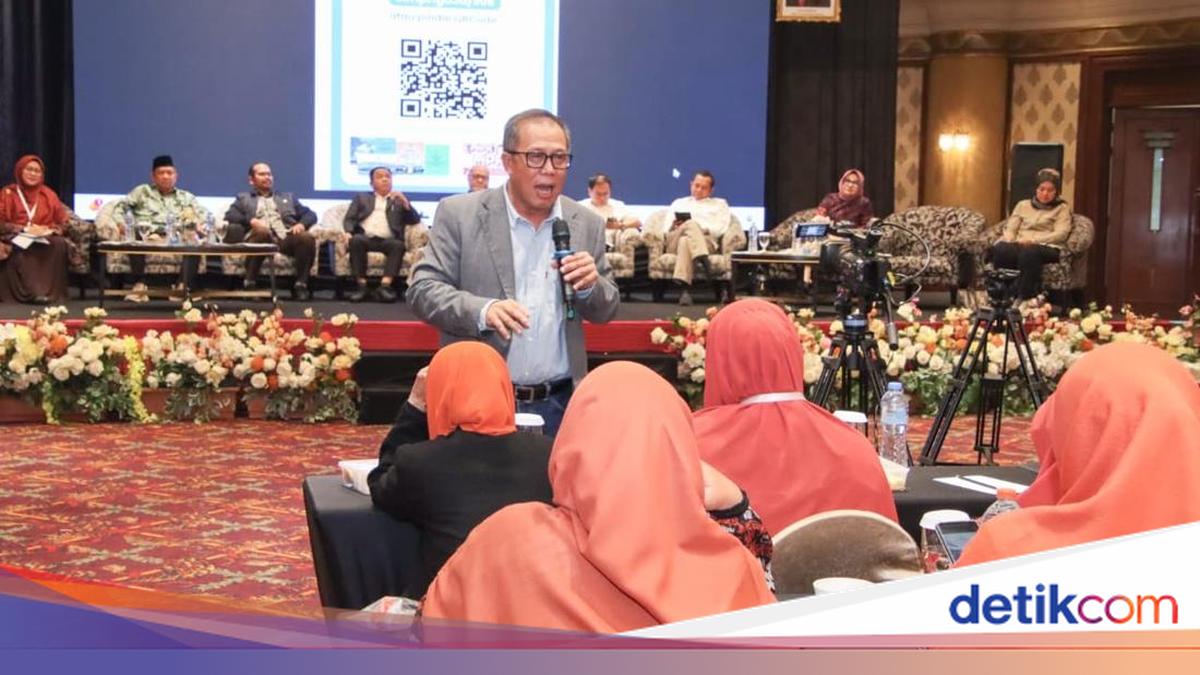
He conveyed this before 250 PAUD teachers from Persatuan Islam Istri across Greater Bandung, Garut and Sumedang. They gathered to hear the proposals of three movement figures who proposed the foundation of an independent Indonesian state, namely Moh. Yamin, Soepomo and Soekarno. The event was held in Bandung on Saturday (15/8).
The statement was delivered by Abidin Fikri while speaking at the Community-Based Four Pillars Socialisation, a collaboration between the MPR Socialisation Body and PP Persatuan Islam Istri. The event took place in Bandung on Saturday (15/8/2026).
Seeing the lengthy formation process involving the opinions of various groups, according to Abidin Fikri, it is not excessive for Nahdlatul Ulama to state that Pancasila is a ‘kalimatun sawa’, meaning a consensus. Therefore, it is only proper that Pancasila is always safeguarded and preserved as the fruit of the nation’s founders’ agreement, just as the form of the Unitary State of the Republic of Indonesia (NKRI) is also continually defended from deviation.
Abidin assessed that Nahdlatul Ulama is very precise in calling Pancasila a ‘kalimatun sawa’ or consensus, given its lengthy formation process and its accommodation of ideas from diverse groups. Therefore, Pancasila along with the form of the Unitary State of the Republic of Indonesia (NKRI) should rightly continue to be safeguarded, preserved and maintained as the fruit of the nation’s founders’ agreement, and protected from various forms of deviation.
He also invited all Indonesians to continually safeguard and care for the legacy of the nation’s founders. This is in line with the example of M. Natsir, who persistently defended the form of the Unitary State of the Republic of Indonesia (NKRI) from the undermining efforts of the Dutch colonialists.
“The form of the NKRI state was once replaced with the RIS, according to the decision of the Round Table Conference in The Hague, Netherlands in 1949. But that decision was opposed by M. Natsir, through the Integral Natsir motion delivered before the RIS parliamentary meeting on 3 April 1950. The proposal was accepted, so the form of the Indonesian state returned to the NKRI, and thus the proclamation of independence of 17 August 1945 was saved,” he said.
On the same occasion, Chair of the MPR RI Socialisation Body, Abraham Liyanto, added that the process of forming the Four Pillars of the MPR RI went through difficult stages. But applying them in daily life is also not easy. Therefore, the MPR RI Communication Body undertakes various collaborations, including with PP Persatuan Islam Istri to carry out the Community-Based Four Pillars Socialisation.
“The hope is that the agreement already reached by the nation’s founders can be applied in daily life,” said Abraham.
Abraham described Pancasila as a very strong foundation and base, like a house. With such a solid foundation, the structure above it can be arranged neatly and beautifully, and will not easily shake or be damaged even when hit by earthquakes and various other trials.
“We have experience facing all kinds of trials in the life of the nation and state. Because the foundation and base of this Indonesian house is strong, we have all also been saved. Therefore, let us safeguard and preserve the Four Pillars by applying them in daily life,” he concluded.
Source: jawawa.id (https://jawawa.id/newsitem/mpr-deputy-chair-discusses-history-of-pancasila-formulation-1786891909)
Originally published by detikcom (https://news.detik.com/berita/d-8621544/waka-badan-sosialisasi-mpr-bicara-sejarah-perumusan-pancasila), translated from Indonesian