
MPR Considers Enshrining PPHN Through Constitutional Amendment or MPR Decree
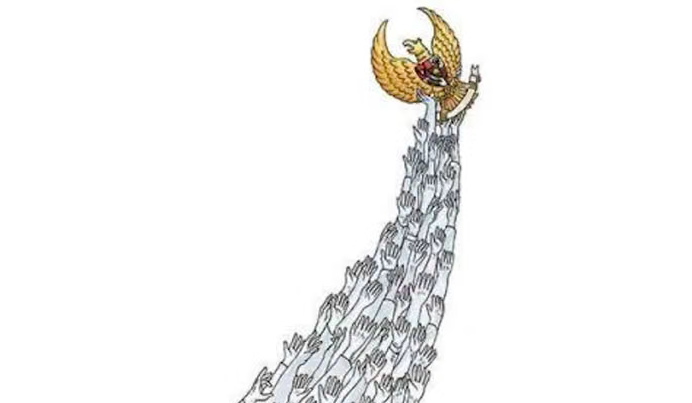
The People’s Consultative Assembly (MPR) is considering whether to amend the 1945 Constitution or issue an MPR Decree as the most ideal legal instrument to house the State Policy Guidelines (PPHN). This step is considered crucial to ensure the PPHN has a strong, binding legal standing and guarantees the continuity of national development direction across leadership periods. MPR Deputy Speaker Eddy Soeparno revealed that three legal options for the PPHN—inclusion in the 1945 Constitution, an MPR Decree, or a Law—were reported to President Prabowo Subianto during a consultation meeting on 3 August 2026. “Because this is the strategic direction for the nation’s future development, its legal status is better regulated through a constitutional amendment or an MPR Decree,” Eddy stated in Jakarta on Thursday (6/8). He explained that the PPHN is essentially a strategic direction for national development, so its position in the legislative hierarchy must be at a very high level. If the PPHN were only regulated through an ordinary law, the regulation would be vulnerable to judicial review by the Constitutional Court or could be altered by a subsequent administration. “If we pass it as a law, it can certainly be brought to the Constitutional Court if there is a dispute. Even the next government could make changes. But for continuity and legal strength, a constitutional amendment or an MPR Decree is a much stronger legal product,” he said. Eddy added that following a joint meeting between the MPR leadership, faction leaders, and the Regional Representative Council (DPD) group, the PPHN draft has been returned to the MPR Assessment Body for further refinement to determine the most appropriate and constitutional legal form. The MPR leadership is targeting the completion of this review as soon as possible so that the PPHN can be ratified during the current MPR leadership period. Regarding the substance, Eddy disclosed that the PPHN only contains broad outlines of the nation’s development direction, such as human resource development, law enforcement structuring, strengthening downstream industries, and basic democratic principles, without regulating technical political matters like the electoral system. “We are only regulating the broad outlines. So, there is nothing written about open or closed elections, nothing like that. Whether electoral districts are reduced or increased, there is nothing like that,” he concluded.