
MPR Commission: Agrarian Management Still Dominated by Corporations and Oligarchs
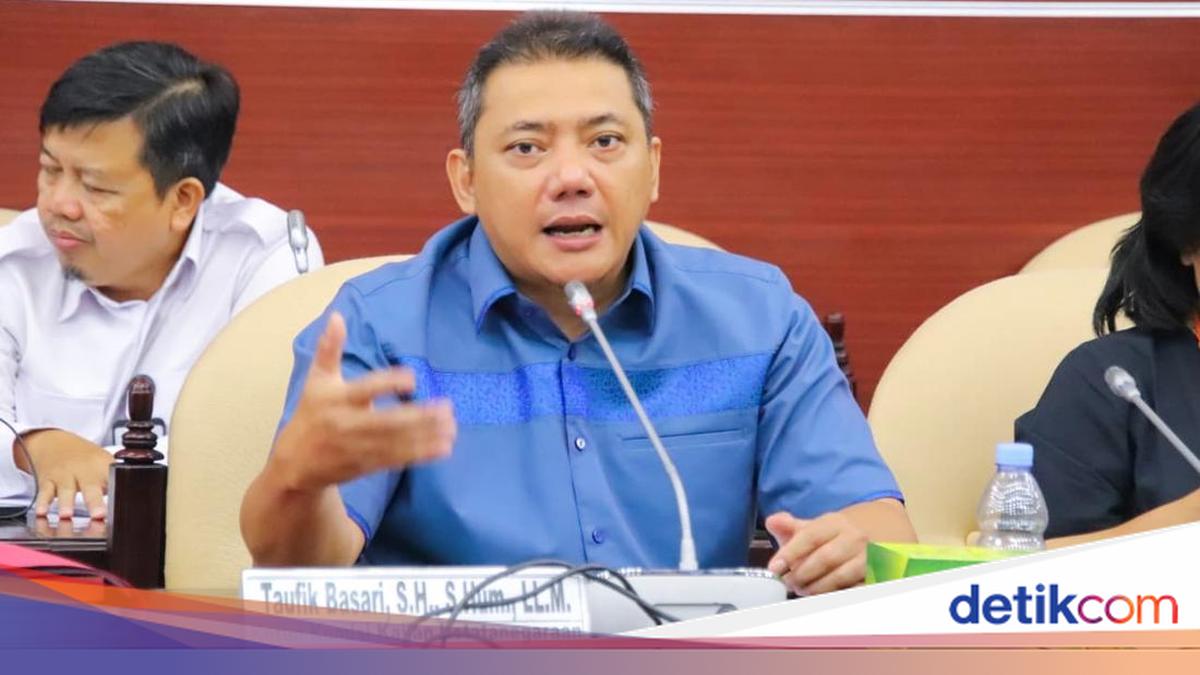
The management of agrarian resources in Indonesia is still controlled by corporations and oligarchs, resulting in the marginalisation of the people who hold sovereign rights, according to the People’s Consultative Assembly (MPR) Constitutional Studies Commission.
Commission member Taufik Basari stated that the current situation is far from the ideals of the nation’s founders as formulated in the 1945 Constitution. “At present, it can be said that agrarian management is still dominated by corporations and oligarchs, so the people who hold sovereignty are instead marginalised,” Taufik said after a discussion held by the commission at the Parliament Complex in Senayan, Jakarta, on Wednesday.
The discussion featured three speakers: Professor Aarce Tehupelory from the Indonesian Christian University (UKI), Erasmus Cahyadi Terre, Secretary General of the Indigenous Peoples Alliance of the Archipelago (AMAN), and Dewi Kartika, Secretary General of the Consortium for Agrarian Reform (KPA). The session focused on the implementation of Article 33 of the 1945 Constitution and its relation to Article 18B, paragraph (2), as well as MPR Decree No. IX/MPR/2001 on Agrarian Reform and Natural Resource Management.
Taufik, who is familiarly called Tobas, explained that there is an intersection between Article 18B, paragraph (2) and Article 33, paragraph (3) through MPR Decree No. IX/MPR/2001. The three speakers agreed that agrarian issues must be approached based on the constitutional mandate, as agrarian management in Indonesia has a constitutional foundation and mandate that must be implemented consistently.
He elaborated that the constitution affirms that sovereignty rests with the people and is exercised according to the constitution. The 1945 Constitution grants the state the right of control over the earth, water, and natural resources contained therein, to be used for the greatest prosperity of the people. However, this authority does not mean the state becomes the owner of the land.
“The 1945 Constitution constructs that the sovereign people give a mandate to the state to carry out policies, management actions, regulations, stewardship, and supervision for the purpose of the greatest prosperity of the people. This state right of control is not in the sense of ownership by the state, but rather a mandate from the people to ensure that land functions socially to realise social justice, national prosperity, and social welfare for the Indonesian people,” he explained.
During the discussion, the speakers also conveyed that the implementation of agrarian reform has so far fallen far short of the constitutional mandate. Agrarian management is still largely controlled by corporations and oligarchic groups, while the people who hold sovereignty are instead marginalised. “We conducted a fundamental evaluation of how agrarian conflicts occur and how the implementation of agrarian reform has not yet proceeded as expected,” he added.
Taufik noted that Indonesia already has a guideline through MPR Decree No. IX/MPR/2001 on Agrarian Reform and Natural Resource Management. According to him, this decree is one of the important mandates of the reform era. “The MPR issued this decree because throughout our national life, agrarian issues have remained a problem and have not brought prosperity to the people,” he said.
He added that the MPR Decree tasks the government and the House of Representatives (DPR) with evaluating all laws and regulations related to agrarian affairs. This is necessary to ensure that the implementation of Article 33 of the 1945 Constitution can proceed properly and be oriented towards the people’s welfare. “Interestingly, this MPR Decree orders the President to report on the progress of agrarian reform at the MPR Annual Session. So, every year the people can hear what the state has done in carrying out agrarian reform through the MPR Annual Session forum,” he stressed.
Taufik also urged the DPR and the government to immediately complete the deliberation of the Indigenous Peoples Bill, which is currently in process. “Because this law regulates the rights of indigenous peoples, including traditional rights related to agrarian matters,” he said.
He pointed out that there is still a paradigm problem in viewing customary land rights, where indigenous peoples are always required to show formal proof of land ownership. “That way of thinking was built by the Dutch colonialists who made maps based on their own perspective. Meanwhile, customary land and the rights of indigenous peoples have existed since long ago,” he stated. Taufik emphasised that this perspective must be changed, and that indigenous peoples are part of the Indonesian people whose rights must be guaranteed and protected by the state. “The owners of this republic are the people, including indigenous peoples. Therefore, the state must ensure that no people’s rights, including those of indigenous peoples, are marginalised and oppressed due to rules that do not side with the people,” he concluded.