
MPR Chairman Muzani Urges Supreme Court to Uphold Judicial Independence and Rule of Law
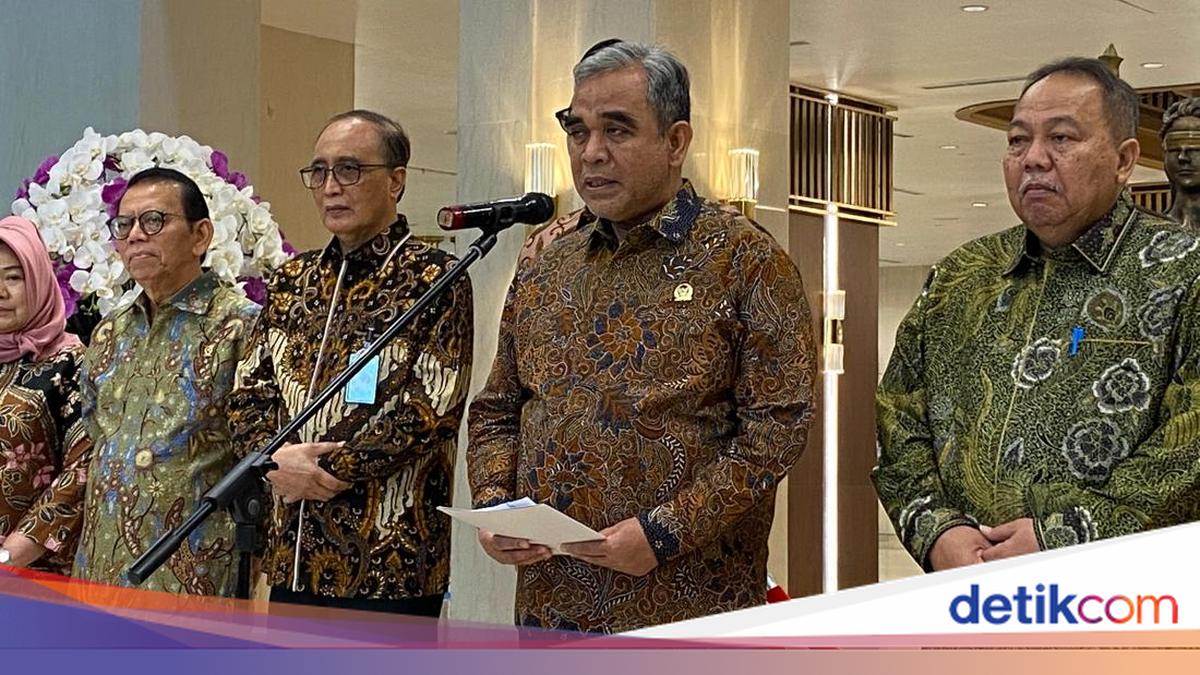
Speaker of the People’s Consultative Assembly (MPR RI) Ahmad Muzani led a courtesy visit to the Supreme Court of Indonesia. Muzani reminded the Court to continue safeguarding judicial independence and the supremacy of law.
The meeting took place at the Supreme Court building in Gambir, Central Jakarta, on Tuesday (14/7/2026). Also in attendance were Chief Justice Sunarto and fellow MPR deputy speakers including Rusdy Kirana and Abcandra Muhammad Akbar Supratman.
“Today’s visit by the MPR leadership is part of national fellowship and consultation among the leaders of state institutions, especially ahead of the MPR’s annual session, which will be held before the commemoration of 17 August 2026,” Muzani said at a press conference.
Muzani reminded the Supreme Court to uphold the supremacy of law, expressing hope that its independence would continue to be protected.
“Secondly, among our discussions, we agreed on several things, including the need to continue upholding the supremacy of law by safeguarding judicial independence,” Muzani said.
“Because judicial independence is a way to continually affirm Indonesia as a state governed by law, so judicial supremacy and judicial independence are means that we must continue to protect,” he continued.
The MPR stressed that it would not interfere in the affairs of other state institutions, noting that both the MPR and the Supreme Court share the same goal of serving the nation.
“The People’s Consultative Assembly respects whatever falls under the Supreme Court’s authority and does not interfere in matters that are the Supreme Court’s internal affairs. Thirdly, both the MPR and the DPR are state institutions intended to realise the goals of our nation, as set out in the Preamble to the 1945 Constitution,” he explained.
During the meeting, Muzani also discussed the Supreme Court’s budget, noting that it amounts to just 0.34 per cent of the state budget (APBN).
“As a branch of state power, the Supreme Court is also beginning to consider budgetary independence. Although the salaries of its judges are already very good, given the immensity of judicial power that must remain independent, budgetary independence should start being considered. At present, the Supreme Court’s budget is 0.34 per cent of the entire APBN,” he said.
He noted that Supreme Court justices’ salaries are already high. Muzani therefore expressed hope that a new generation of young Indonesians would pursue careers as Supreme Court judges.
“Naturally, this figure is quite good because judges’ salaries have been improving. Earlier I asked, ‘What is the salary of the newest judge, a fresh law graduate?’ After joining as a judge, their salary is roughly Rp 50 million per month,” Muzani said.
“This is certainly a very attractive figure, so the hope is that graduates from the best law faculties in Indonesia can pursue careers as judges,” he added.
He said 1,600 judges are needed to fill the current shortage. Muzani noted that two to three years of training would be required for these recruits, expressing hope that Indonesia’s legal institutions would grow ever stronger.
“The number of judges needed to fill the current shortfall is 1,600. If they are recruited now, according to my colleagues at the Supreme Court, they will only begin serving as judges around 2029. This means the education and training process as a judge takes two to three years. This shows the Supreme Court is preparing itself to become a formidable judicial institution,” he concluded.