
MPR Assessment Body Reviews National Economic System with Academics in Padang
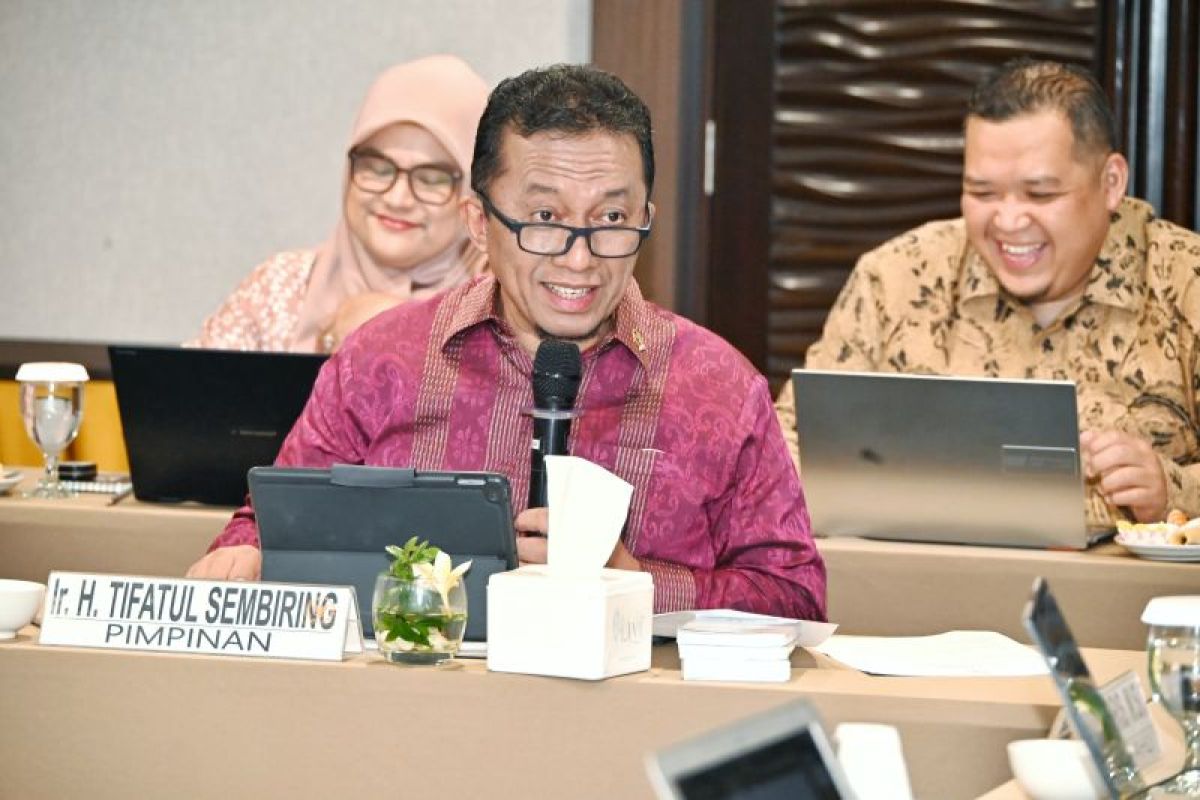
Jakarta (ANTARA) - The Study Body (BP) of the People’s Consultative Assembly (MPR RI), together with a number of academics in Padang, West Sumatra, is examining the national economic system as part of efforts to strengthen the constitutional system, refine national economic policy, and study the possibility of amending the 1945 Constitution.
Tifatul Sembiring, Chair of Group IV of the MPR Study Body, said in Jakarta on Wednesday that the discussions in the forum were mandated by Articles 33 (1), (2) and (3) of the 1945 Constitution, which govern the national economic system and social welfare.
According to him, the various economic problems emerging today demonstrate the need to evaluate the constitutional system so that it is better able to answer the challenges of the times. Many economic policies tend to be reactive and are not built upon a strong philosophical foundation.
“The government must not merely be responsive to momentary problems. Every policy must have a mature philosophy, vision and strategy so that its implementation does not create new problems,” he said.
“Because they are not derived from a mature philosophy, vision and strategy, they ultimately become prone to corruption. Budgets worth trillions of rupiah can simply vanish without clarity,” he said.
He reminded the importance of reviving the spirit of gotong royong (mutual cooperation), which underpins the economic thinking of Pancasila.
According to him, various mismatches within the constitutional system, ranging from economic inequality and low minimum wages in a number of regions to regional transfer policies, are important reasons to refine the constitution.
“Ultimately, the direction is an amendment to the 1945 Constitution of the Republic of Indonesia, because there are many things that genuinely need to be adjusted,” said Tifatul.
Speakers at the event included Professor Idris, Professor of Environmental Economics at the Faculty of Economics and Business of Universitas Negeri Padang (UNP); Dr Charles Simabura, Chair of PUSaKO and lecturer at the Faculty of Law of Universitas Andalas; and Muhammad Ichsan Kabullah, lecturer at the Faculty of Social and Political Sciences of Universitas Andalas and PUSaKO researcher.
In his presentation, Professor Idris stressed that economic development must not ignore the environmental costs borne by society.
According to him, the state needs to apply economic instruments that encourage businesses to take responsibility for pollution impacts through the polluter pays principle.
“Polluters should be given a choice that is economically logical, namely paying an environmental tax or treating the waste they produce,” he said.
He explained that the religious funds managed by the state are substantial. Hajj funds managed by BPKH reach Rp180 trillion, while national zakat potential is estimated at hundreds of trillions of rupiah each year.
According to him, the size of these funds demands clarity regarding the limits of state authority so that there is no overlap between the functions of regulator and operator.
“It is precisely when we are in this mixed model that it becomes a challenge for the DPR and MPR to reposition the boundaries. When is an institution responsible as a manager on behalf of the community, and when is it responsible as a manager on behalf of the state, including the limits of its accountability,” he said.
Muhammad Ichsan Kabullah assessed that current national fiscal policy still presents gaps between the centre and the regions.
Regions, he said, face fiscal pressure due to limited transfers from the centre and rising burdens of public service obligations.
Input from the various speakers and other BP MPR members at the forum will be compiled as study material in the framework of strengthening the constitutional system, refining national economic policy, and studying possible changes to the 1945 Constitution of the Republic of Indonesia, in order to realise a fairer economic system, strengthen the spirit of gotong royong, and establish a more balanced centre-region relationship.