
MPR Assessment Body examines decentralisation and regional autonomy issues with UI and IPB experts
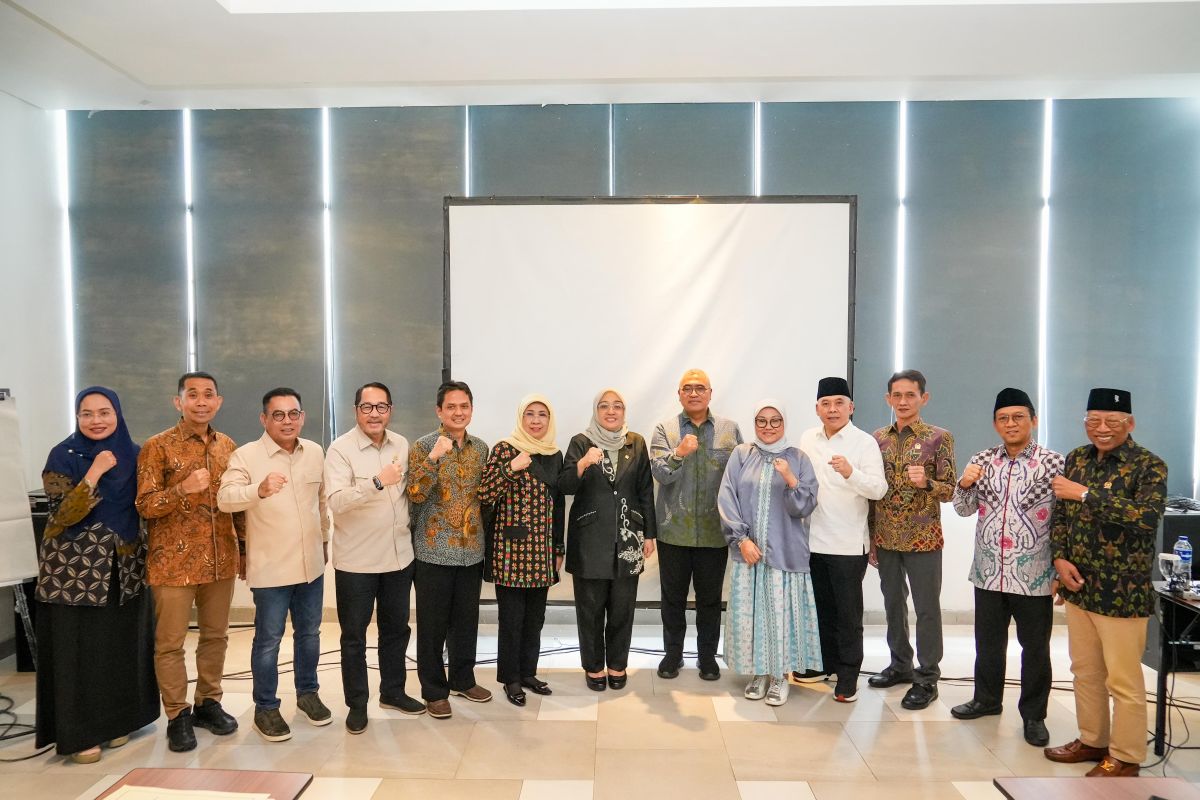
The Research Body of the People’s Consultative Assembly (BP MPR RI) is examining various problems in the implementation of decentralisation and regional autonomy together with academics from the University of Indonesia (UI) and IPB University, as part of a review of the 1945 Constitution.
Hindun Anisah, Chair of Group III of the MPR Research Body, said the body aims to identify fundamental issues in the implementation of decentralisation and regional autonomy, including whether Article 18, Article 18A, and Article 18B of the 1945 Constitution remain sufficiently relevant to current constitutional developments or require refinement and improvement.
“Are Article 18, Article 18A, and Article 18B of the 1945 Constitution still sufficiently relevant to current constitutional developments, or do they require refinement and improvement?” she said in a statement received in Jakarta on Tuesday.
She observed that there is still a tug-of-war of interests between the central government and the regions. Through a discussion forum with academics, the MPR Research Body therefore examined the provisions of Article 18 paragraph (4) of the 1945 Constitution, which states that governors, regents, and mayors are each elected democratically as heads of provincial, regency, and city governments.
“What does ‘elected democratically’ actually mean? If we look at it, regional elections still face many challenges, including very high political costs and the occurrence of social polarisation,” Hindun said.
The MPR Research Body held a focus group discussion themed “Decentralisation, Regional Autonomy, Regional and Village Government” in Bogor, West Java, on Monday (24/8).
The discussion featured three speakers: Professor Eko Prasojo, Professor of Public Administration at the University of Indonesia; Professor Alla Asmara, Professor at the Faculty of Economics and Management of IPB University; and Dr Qurrata Ayuni, a lecturer at the Faculty of Law of the University of Indonesia.
At the forum, Professor Eko Prasojo assessed that the main problem in the implementation of decentralisation and regional autonomy lies in the aspects of implementation and consistency.
According to him, the authority granted to regions must be accompanied by the ability of regional heads and the bureaucracy to carry out government affairs effectively.
He also considered the capability of regional heads and the bureaucracy to be one of the main challenges in achieving effective decentralisation. Regional bureaucracies, he said, must be able to function as engines of development in carrying out the various affairs that have been decentralised.
“The capability of regional bureaucracies is a problem. This occurs in almost all regions. The bureaucracy is not competent,” he continued.
Eko therefore stressed that decentralisation must go hand in hand with strengthening regional governance. Without strengthening institutional and bureaucratic capacity, the authority granted to regions will not be optimal in achieving the goals of decentralisation.
A different assessment was delivered by Professor Alla Asmara, who highlighted the fiscal decentralisation aspect.
He said the level of regional dependence on the central government remains high even though fiscal decentralisation policies have been in place for more than two decades.
Alla noted that around 85 percent of regional revenue still depends on transfers from the central government. Meanwhile, locally generated revenue (PAD) on average only contributes around 10–15 percent of total regional revenue.
“This means that fiscal decentralisation, which has been running for more than 20 years, has not made regions more self-reliant. Dependence on the centre remains high,” he said.
“It turns out that the transfer formula to the regions has not been able to overcome fiscal disparities between regions,” he explained.
He assessed that this condition shows that regional autonomy has not fully produced fiscal independence.
“From this phenomenon, it is evident that regional dependence on the centre remains high. So autonomy itself is more ‘administrative autonomy’, not yet fully fiscally independent,” he added.
Dr Qurrata Ayuni presented her views from a constitutional perspective.
She said the idea of regional autonomy has an important foundation in MPR Decree Number XV/MPR/1998 concerning the Implementation of Regional Autonomy; the Equitable Regulation, Distribution, and Utilisation of National Resources; and the Financial Balance between the Central Government and the Regions within the Framework of the Unitary State of the Republic of Indonesia.
According to Qurrata, the birth of that decree cannot be separated from the demands of regional communities to obtain greater authority in managing life and resources in their regions.
Qurrata said that although various regulations on regional autonomy and regional head elections have been issued as part of the follow-up to these policy developments, the problems of regional autonomy are still not fully resolved.
“It is the task of MPR members to carry out an evaluation,” she said.
She also highlighted the issue of natural resource management in the regions. According to her, the presence of natural resources such as nickel, coal, oil, and gas has not always been directly proportional to improvements in the welfare of communities in producing regions.
Qurrata concluded that the principle of “the broadest possible autonomy” does not mean that all affairs must be handed over to the regions. However, that principle must also not be interpreted to mean that laws can freely withdraw authority from the regions until regional governments become mere administrative implementers.