
MPR and Unpad Experts Discuss Strengthening People's Sovereignty Through Constitutional Implementation
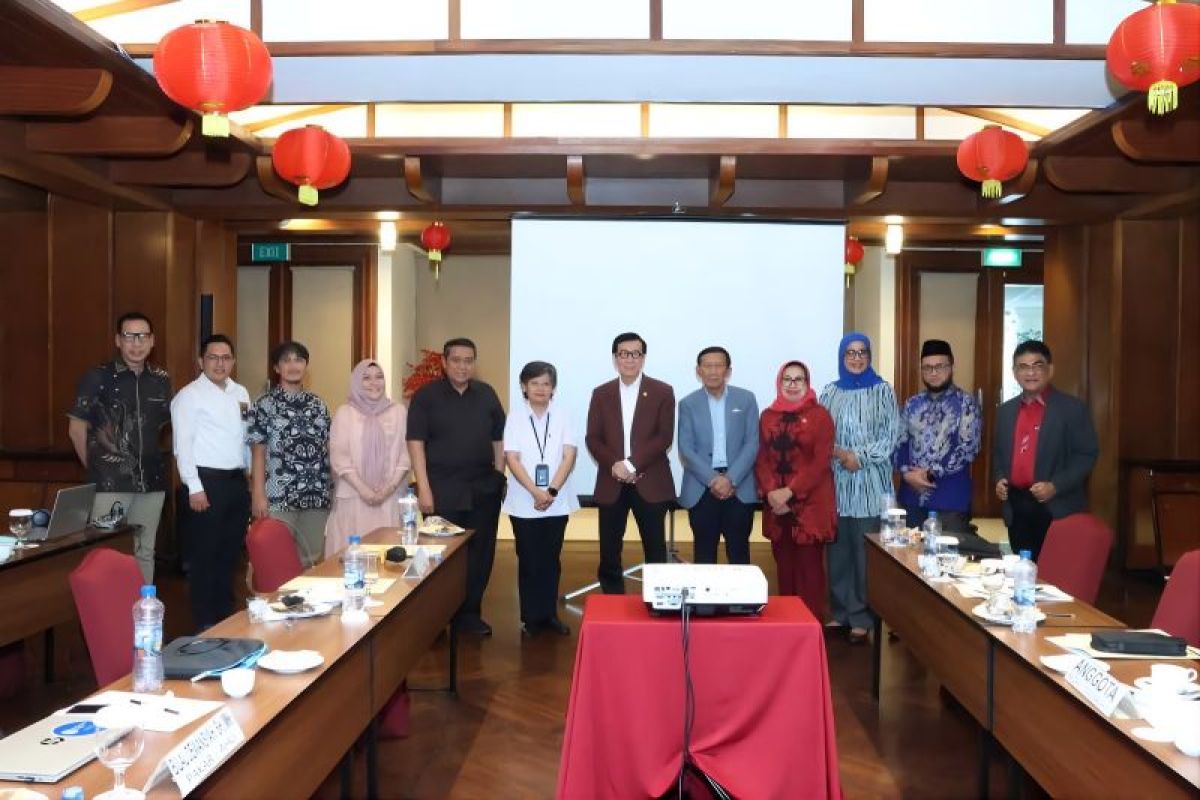
The Assessment Body (BP) of the MPR RI, together with experts from Padjadjaran University (Unpad), has discussed the implementation of the constitution and the future of democracy in the context of strengthening people’s sovereignty.
BP MPR Chairman Yasonna H. Laoly stated in Jakarta on Tuesday that the body is gathering academic views and public aspirations to serve as discussion material for a Constitutional Conference. “The results of various studies and public aspiration forums are expected to be initial material to build momentum for the MPR RI to hold a Constitutional Conference in the future,” he said.
The BP MPR held a focus group discussion themed ‘People’s Sovereignty in the Perspective of Pancasila Democracy’ in Bandung, West Java, on Monday. The speakers included Professor Caroline Paskarina, a Professor of Contemporary Political Science at Unpad’s Faculty of Social and Political Sciences (FISIP); Ari Ganjar Herdiansah, Head of the Political Science Postgraduate Programme at FISIP Unpad; and Bilal Dewansyah from the Department of Constitutional Law and the Centre for State Policy Studies at Unpad.
During her session, Professor Paskarina said the people should not only be present as voters on election day. People’s sovereignty, she argued, must be exercised before, during, and after elections. She stated that the relationship between the people and their representatives needs to shift from a personal and transactional one to a programmatic relationship based on service, public policy, and accountability.
She also highlighted that public participation in policy and legislative formation is still treated as a mere formality rather than a process that influences the substance of decisions. “Therefore, the policy process must apply the principle of meaningful participation, namely the right of the people to be heard, the right to have their opinions considered, and the right to receive an explanation regarding the acceptance or rejection of their input,” she said.
She cautioned that the anxiety of the younger generation can grow from everyday issues, such as difficulty finding employment, rising education costs, economic pressures, and declining trust in institutions. This anxiety, she said, should not be underestimated or dismissed as movements controlled by certain parties.
Meanwhile, Bilal Dewansyah highlighted the dominance of political parties and factions within the representative system. He argued that this condition could weaken the accountability of people’s representatives while opening up the risk of policy capture by interest groups. “Legislative members are formally elected by the people, but in practice, they are often more dependent on party and faction decisions than on the aspirations of their constituents,” he said.
In light of this, he stressed the importance of safeguarding academic freedom and space for public criticism. He noted that universities can function as a moral force and an informal check on power. “Criticism of state policy must be positioned as part of democratic control, not as a threat to be met with intimidation or the excessive use of legal instruments,” he said.