
MPR and UGM Experts Review Relevance of National Defence and Security Provisions
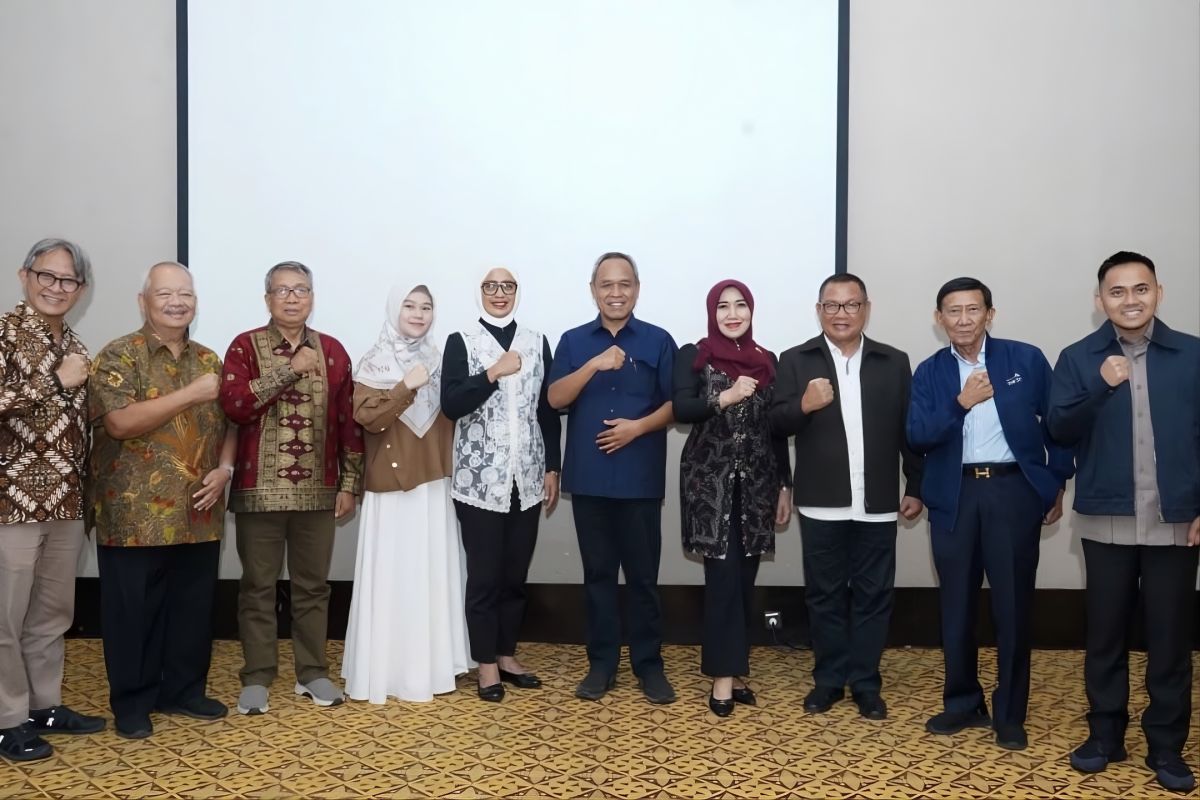
Jakarta (ANTARA) - The Study Body (BP) of the People’s Consultative Assembly (MPR) of the Republic of Indonesia and experts from Gadjah Mada University (UGM) are examining the relevance of national defence and security regulations as part of an evaluation of the implementation of the 1945 Constitution of the Republic of Indonesia.
The Vice Chairman of the BP MPR RI, Benny K. Harman, stated that the evaluation of the 1945 Constitution involving experts is being conducted to formulate comprehensive recommendations. This step is deemed necessary after the constitution has been in effect for more than 25 years.
“Are the current article formulations still relevant to ever-changing global challenges? Therefore, we need the views of academics and experts to provide input, including the possibility of refining constitutional formulations,” said Benny, according to a statement received in Jakarta on Tuesday.
He noted that issues of defence and security are now evolving far beyond conventional approaches. Geopolitical shifts, technological advancements, and the emergence of non-military threats demand a new perspective in interpreting the national defence system regulated by the constitution.
According to him, Focus Group Discussions (FGD) with experts serve as an important instrument for the MPR in performing its evaluation function before formulating recommendations for constitutional amendments.
In addition to engaging with academics, the BP MPR RI routinely absorbs public aspirations through various forums across different regions to ensure that the evaluation of the 1945 Constitution is thorough and based on community needs.
The BP MPR RI FGD, themed “National Defence and Security,” was held in the Special Region of Yogyakarta (DIY) on Monday (6/7).
The discussion was attended by Professor of FISIPOL UGM Dafri, Professor of the Faculty of Philosophy UGM Armaidy Armawi, and the Acting Head of the Social Sciences and Humanities Research Organisation of the National Research and Innovation Agency (BRIN), Muhammad Najib Azca.
In his presentation, Dafri assessed that Indonesia needs to reorient its defence and security policies to respond to increasingly complex global geopolitical dynamics. He stated that the global strategic environment has changed drastically due to US-China rivalry, the Russia-Ukraine war, the Gaza conflict, tensions in the South China Sea, and the rise of non-traditional threats such as cyber, food, energy, and maritime security.
According to him, the concept of security can no longer be viewed narrowly or solely with an inward focus. Indonesia needs to begin developing a more outward-oriented strategy without abandoning the principles of its free and active foreign policy. Defence policy, he added, must be able to adapt to the dynamic nature of the global environment and consider comprehensive regional security relations.
He proposed that the government establish an independent strategic defence research institution to serve as the basis for formulating national policy. In addition to strengthening the domestic defence industry, Indonesia is also seen as needing to modernise technology-based defence systems, strengthen cyber security, and develop long-term defence policies based on scientific research to face global geopolitical, geostrategy, and geo-economic changes in a more measurable manner.
Meanwhile, Armaidy Armawi stated that Indonesia must immediately undertake a strategic transformation of its defence system by adopting an air and space defence paradigm. He noted that global geopolitical developments, including the Iran conflict and increasing rivalry between major powers, show that modern defence no longer relies solely on land, sea, and air forces, but must also master cyber and space domains.
He identified that threats to Indonesia have evolved into three main clusters: physical and kinetic threats, digital and electromagnetic threats, and astropolitical and information threats. To address these challenges, Armaidy encouraged the integrated transformation of defence administration and logistics by eliminating sectoral egos between military branches.
He also emphasised the importance of strengthening cyber security, modernising logistics, developing the domestic defence industry, and building national satellite infrastructure so that Indonesia does not depend on other nations to support defence and intelligence operations.
On the other hand, Najib Azca assessed that the national defence and security system needs to adjust to the changing character of global threats, which are now increasingly dominated by cyber, hybrid, and transnational threats. Najib suggested that strengthening cyber defence should be done gradually through the reinforcement of existing institutions, particularly the National Cyber and Crypto Agency (BSSN), before forming a new cyber branch.
He warned that the expansion of the authority of defence institutions must remain within the corridor of civilian supremacy and must not open the door for the return of practices involving the expansion of military roles into the civilian realm, which could potentially disrupt democratic consolidation.
Source: jawawa.id (https://jawawa.id/newsitem/mpr-and-ugm-experts-review-relevance-of-national-defence-and-security-provisions-1783411015)
Originally published by Antara (Indonesian) (https://www.antaranews.com/berita/5638573/bp-mpr-dan-pakar-ugm-kaji-relevansi-pertahanan-dan-keamanan-negara), translated from Indonesian