
MPR & DPR Leaders 1999-2024 Urge Strengthening of Government Governance
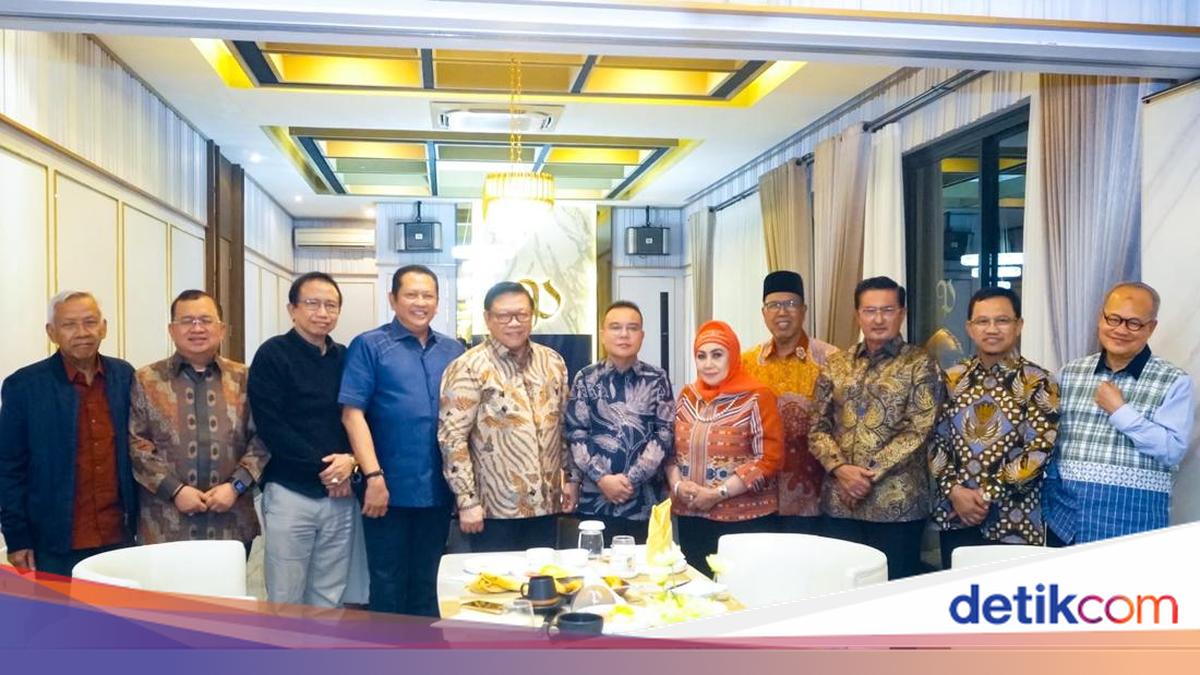
The National Forum of MPR and DPR RI Leaders for the 1999-2024 Period has emphasised the importance of strengthening the quality of government governance. This is deemed necessary amidst increasing global economic challenges, geopolitical dynamics, digital transformation, and high public expectations regarding state performance.
During a meeting at the Parliament Complex in Senayan, former MPR and DPR leaders, together with Deputy Speaker of the DPR RI Sufmi Dasco Ahmad, agreed that government effectiveness, law enforcement synergy, and public communication are the three main foundations that determine the strength or weakness of public trust in the state.
Bambang Soesatyo (Bamsoet) stated on Saturday (25/7/2026) that the greatest challenge for the current government is not merely producing more policies, but ensuring every policy is carefully formulated, consistently implemented, enforced through a synergistic legal system, and well communicated to the public. He noted that the state requires governance capable of unifying the vision between institutions, strengthening coordination, and building public trust as the main foundation for effective state administration. This was conveyed during the gathering of the National Forum of MPR and DPR Leaders for the 1999-2024 period at the Parliament Complex in Senayan, Jakarta, on Wednesday evening (22/7).
Besides Bamsoet, the forum was also attended by MPR and DPR RI leaders from the 1999-2024 period, including Sufmi Dasco Ahmad, Marzuki Alie, Agung Laksono, Priyo Budi Santoso, Agus Hermanto, Hajriyanto Y. Thohari, Fadel Muhammad, Melani Leimena Suharli, Ahmad Farhan Hamid, and Amir Uskara.
The discussion developed around the issue of government effectiveness, which is considered to be facing increasingly complex challenges. The leaders assessed that the government is required to move quickly in the face of global economic pressures, geopolitical conflicts, technological disruption, and social changes. However, they noted that the speed of decision-making must be balanced with quality planning, cross-ministerial coordination, policy evaluation, and consistency of implementation to avoid creating uncertainty among the public and business actors. In many countries, good governance has proven to be a major factor in maintaining economic stability and investor confidence during uncertain global situations.
Marzuki Alie pointed out that problems in government communication with the public remain a weakness that needs immediate improvement. He noted that many aspirations from the community and the education sector are often passed on to them because existing communication channels are perceived as ineffective. He added that in the investment sector, licensing processes remain a serious obstacle requiring government attention.
The forum also highlighted the need to build a government that can move quickly without sacrificing the quality of decision-making. The leaders observed frequent policy changes within short periods, weak coordination between ministries and agencies, and suboptimal evaluation of policy impacts, leading to uncertainty for the public and business actors.
World Bank data indicates that global economic growth remains at a moderate level of around 2.3 per cent in 2025, while the IMF estimates the world economy will continue to face pressures from geopolitical fragmentation and trade uncertainty. In such a situation, the quality of governance is a determining factor for a country’s resilience.
Agung Laksono stressed that corruption cases emerging almost daily with increasingly large sums indicate that law enforcement still requires serious reform. He urged the DPR to carry out its oversight function optimally so that issues are not merely fleeting news items but are resolved thoroughly. He added that the criticism voiced is a form of constructive support for the government.
The issue of corruption eradication was a main topic of discussion. The forum assessed that harmonisation between the Police, the Attorney General’s Office, the Corruption Eradication Commission (KPK), and judicial institutions still needs strengthening. Overlapping authority, differing legal interpretations, and public polemics between institutions were seen as potentially reducing public trust in the law enforcement system. The leaders agreed that the success of corruption eradication is not determined by the number of institutions involved, but by the integration of systems, clarity of authority, secure data exchange, and national leadership capable of synergising all law enforcement apparatus.
Priyo Budi Santoso stated that the relationship between law enforcement institutions, which has caused political turbulence, needs immediate reform. He noted that the current momentum is right for a comprehensive transformation so that law enforcement institutions can work more harmoniously. He also added that the DPR must be more active in explaining the government’s strategic programmes to the public to prevent misperceptions.
The forum also paid significant attention to the government’s public communication, viewing it as an inseparable part of policy success. In the digital media era, the public judges the government by the substance of its policies as well as the way it explains its policy direction. Discrepancies in statements, overly rapid changes in narrative, and clarifications that only emerge after polemics have developed were seen as opening space for speculation, disinformation, and a crisis of trust. Therefore, data-based communication, a consistent national narrative, credible spokespersons, and the use of digital technology are considered urgent needs in modern state administration.
Fadel concluded that the government requires credible spokespersons so that every policy can be fully understood by the public without causing misunderstandings, as good public communication is an integral part of government success.
Source: jawawa.id (https://jawawa.id/newsitem/mpr-and-dpr-leaders-1999-2024-urge-strengthening-of-government-governance-1784958685)
Originally published by detikcom (https://news.detik.com/berita/d-8589594/pimpinan-mpr-dpr-1999-2024-dorong-penguatan-tata-kelola-pemerintahan), translated from Indonesian