
MPR Affirms Commitment to Improving Public Services
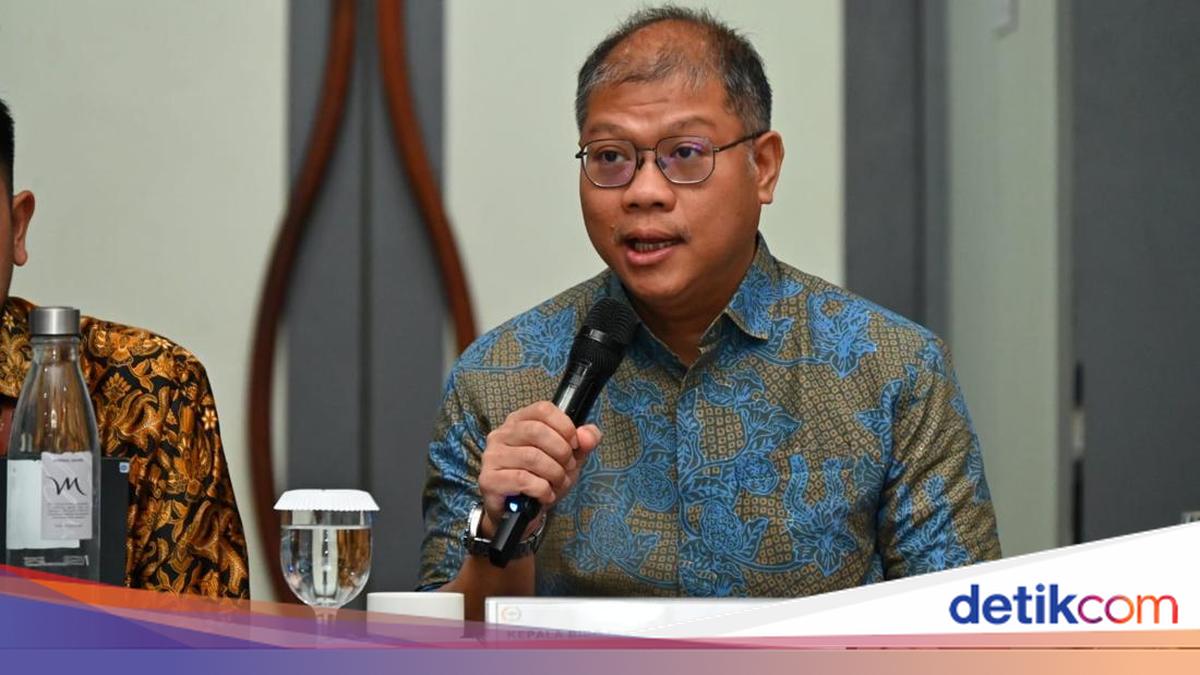
Head of the Public Relations and Information Systems Bureau of the MPR RI, Budi Muliawan, has affirmed the MPR RI’s commitment to continuously improving the quality of public services through open evaluation and refinement of service standards. This was conveyed during the MPR RI Public Consultation Forum (FKP) titled ‘Enhancing Public Trust Through Information Transparency and Institutional Strengthening’, held in collaboration with the Faculty of Social and Political Sciences at Bina Bangsa University (UNIBA) in Tangerang, Banten, on Thursday (23/7).
Budi explained that the Bureau has two main services that directly engage the public: institutional visit services and data and information services through the Information and Documentation Management Officer (PPID). ‘We request as much input as possible from the speakers and participants. We believe every suggestion given aims for improvement so that the services we provide in the future will be better, more targeted, transparent, and beneficial to the public,’ he stated.
According to Budi, service standards are designed to ensure all public services are measurable, transparent, easily accessible, accountable, and have procedural certainty. Evaluations of these service standards are conducted at least once a year to adapt to the evolving needs of the public. He further detailed the mechanism for institutional visits to the MPR RI. Visit requests can be submitted online via electronic mail or the MPR visit page by attaching the applicant’s identity, number of participants, purpose of the visit, proposed time, and a contact person. Upon approval, the applicant will receive a schedule confirmation, including alternative times if the desired slot is already filled.
Budi stressed that all visit services are free of charge. Participants will also receive an orientation to the Parliamentary Complex, a presentation on the MPR RI institution, and a discussion session lasting approximately two to three hours. ‘We ensure that institutional visit services to the MPR are free of charge. This is a form of our commitment to providing the best service to the public who wish to get to know the MPR RI institution more closely,’ he asserted.
In addition to visit services, Budi also explained public information services through the MPR RI PPID. The public can submit information requests directly at the PPID service room or via the website, telephone, and electronic mail. ‘We are committed to providing the best service to all stakeholders, especially the public who visit or require public information from the MPR RI,’ he said.
At the same event, Technical Policy Reviewer from the Ministry of State Apparatus Empowerment and Bureaucratic Reform (KemenPAN-RB), Rizky Dwiputra Restavie, stated that the draft service standards for the MPR RI Secretariat General were fundamentally well-prepared and compliant with Law Number 25 of 2009 on Public Services and PANRB Ministerial Regulation Number 15 of 2014. However, he noted several aspects could be refined to make the service standards easier for the public to understand and more user-oriented. Rizky explained that service standards differ from standard operating procedures (SOPs). SOPs serve as internal work guidelines, whereas service standards provide the public with information about their rights, procedures, requirements, service times, costs, and complaint mechanisms. ‘Service standards must be drafted from the public’s perspective so that the information provided is clear, easy to understand, and provides service certainty,’ Rizky said.
He also provided several recommendations, including refining service titles, creating a clearer separation between requirements and service flow, adding information on filing objections, presenting the total service time, and strengthening the protection of applicants’ personal data. Furthermore, Rizky emphasised the importance of implementing human-centric public service, focusing on the needs and experiences of the public. He noted that service standards need continuous evaluation to remain aligned with evolving user needs.
Meanwhile, First Policy Analyst at KemenPAN-RB, Dian Ayu Puspitasari, asserted that public participation is key to improving the quality of public services. She stated that service providers must understand the experiences and expectations of the public so that the policies formulated genuinely address user needs. Therefore, the FKP serves as a dialogue space allowing the public to convey their experiences, expectations, and suggestions for improvement directly to service providers. ‘We must understand public expectations so that public services become more humane, fast, fair, and accountable,’ Dian said. She added that Law Number 25 of 2009 guarantees the public’s right to participate, from knowing service standards and submitting input and complaints to overseeing their implementation. Dian expressed hope that the FKP would not merely be a formal activity to fulfil regulatory requirements but would truly become a collaborative space between the government and the public in creating more responsive, transparent, and human-centred public services.