
MPR Absorbs Academic Input from Unair for Climate Change Control Bill
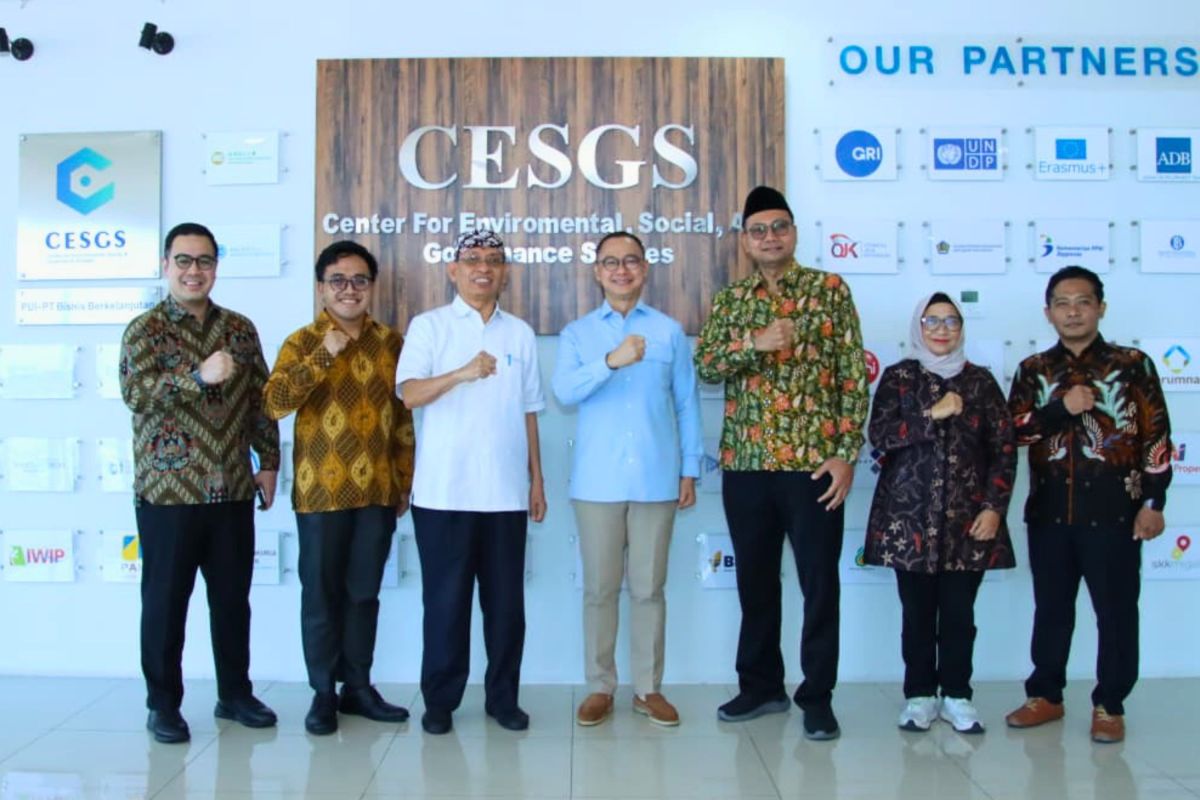
The Equitable Climate Change Control Bill must be able to integrate environmental interests with economic development, energy security, community protection, and the interests of future generations.
Jakarta (ANTARA) - The Deputy Speaker of the MPR RI from the PAN Faction, Eddy Soeparno, has absorbed aspirations and input from professors, lecturers, and researchers from Universitas Airlangga (Unair) as part of the drafting process for the Equitable Climate Change Control Bill.
He argued that the involvement of academics is essential to ensure the Bill possesses a strong scientific foundation while remaining responsive to real issues within society.
“We are committed to continuing to open spaces for dialogue with universities, professors, researchers, and various study centres,” Eddy stated in a briefing received in Jakarta on Saturday.
During the discussion, Eddy assessed that climate change has become a systemic risk to national development and security, with impacts affecting energy security, food, health, infrastructure, the economy, and the protection of the most vulnerable communities.
Because climate change has broad and interconnected impacts, he noted, Indonesia requires a comprehensive legal framework.
“This Equitable Climate Change Control Bill must be able to integrate environmental interests with economic development, energy security, community protection, and the interests of future generations,” he said.
According to Eddy, the Climate Change Control Bill needs to serve as an integrated national climate legal framework so that climate policies do not operate sectorally and in isolation.
He explained that this framework covers climate change targets and planning, mitigation and adaptation, loss and damage, climate finance, carbon economic value, a just transition, data and MRV (Measurement, Reporting, and Verification), institutional arrangements, public participation, supervision, and law enforcement.
He stated that efforts are ongoing to achieve emission reduction targets while ensuring strong governance to translate those targets into measurable, transparent, supervisable, and accountable policies.
Therefore, he continued, aspects of institutional frameworks, data, funding, public participation, and law enforcement are inseparable parts of the Bill.
He also emphasised climate justice as a vital principle in climate change management.
“We must ensure that the communities that contribute the least to climate change are not the groups that bear the greatest impact,” Eddy said.
It was noted that the principle of justice must be present in mitigation, adaptation, funding, and the energy transition process.
In this context, he views the energy transition as a strategic part of the climate change agenda and an opportunity for national economic development.
Energy transition, he continued, can strengthen energy security, drive new investment, create green jobs and industries, strengthen decarbonisation, and open opportunities for state revenue through carbon trading and the development of renewable energy.
According to him, the energy transition should be managed not merely as an obligation to reduce emissions, but also as an opportunity to build a more productive new economy, create jobs, attract investment, and strengthen Indonesia’s energy independence.
The academics involved are part of The Centre for Environmental, Social, and Governance Studies (CESGS) at Unair.
Among those welcoming Eddy were the Vice Rector of Unair for Resources, Professor Ardianto; Professor Mohammad Nasih, Professor and Rector of Unair for the 2015–2020 period; and various professors and academics belonging to CESGS.