
MPLS Ramah 2026: A Strategic Management Approach to Eradicating School Hazing
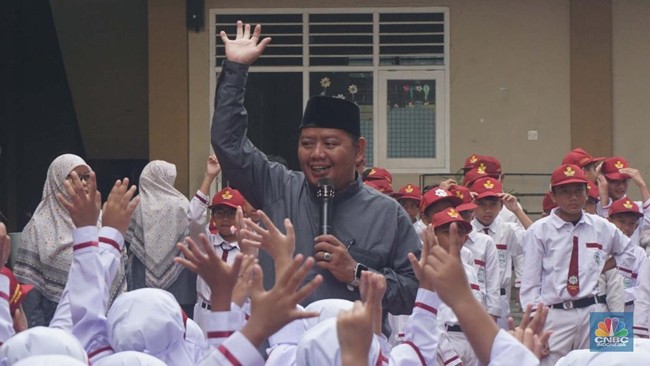
The Ministry of Primary and Secondary Education has officially established the implementation of the 2026 Friendly School Environment Introduction Period (MPLS Ramah) as the primary foundation for building a safe, healthy, comfortable, and character-driven school culture. This policy directly responds to President Prabowo Subianto’s directive regarding the strengthening of three fundamental pillars of the education sector: the physical, social, and spiritual environments.
Through this regulation, the ministry is not merely issuing an administrative rule but carrying out a massive restructuring of values. The goal is to ensure every student begins their learning journey in an inclusive ecosystem, while permanently removing the latent ‘cancer’ of the education world, namely hazing and seniority.
However, from a business and organisational perspective, a grand vision without mature governance is merely wishful thinking. The success of realising the Friendly MPLS cannot be left to chance or allowed to run haphazardly. This step requires systematic, measurable strategic management execution based on total stakeholder management involvement.
In the landscape of modern organisational management, a school is a strategic service provider. Edward Sallis (2002) asserts that the quality of an educational institution’s output, including the first impression during orientation, is heavily determined by two factors: top-level leadership commitment and the total involvement of all organisational lines. Sugiyono (2018) sharpens this view by stating that effective school governance must adopt a humanistic planning approach, meaning that key performance indicators for school management success must centre on fulfilling the basic rights and psychological comfort of students.
When this comfort is disrupted by seniority, a system failure occurs. H.A.R. Tilaar (2012) warned that school management must cleanse the initial educational climate of all forms of destructive power hegemony. Management must dare to redesign the school’s cultural space to be more democratic and liberating for students from day one. This serves as one of the theoretical foundations that gave strong legitimacy to the Minister of Primary and Secondary Education Regulation Number 12 of 2026 concerning Friendly MPLS.
To translate the regulation into tangible results, school management must implement an integrated operational blueprint in stages. First, de-radicalise the organisational culture by completely eradicating feudalistic practices disguised as seniority. All forms of physical punishment, intimidation, and pointless attribute assignments must be prohibited. Empirical data from the Center for Subsidized Violence and Bullying Studies (2021) shows that radical intervention in eliminating hazing culture has proven to cut potential inter-batch conflicts and bullying by up to 42% within the current academic year.
Second, focus on repositioning human resources, where teachers must take over as facilitators and primary controllers of the orientation process. This pedagogical control must not be handed over to the student council (OSIS). The role of senior students must be shifted to that of protective mentors through a buddy system, rather than repressive disciplinarians.
Third, schools must modernise cultural introduction through interactive creative marketing methods. Tedious one-way lectures must be avoided. School management can utilise technology such as digital-based school tours or mini extracurricular exhibitions to spark new students’ interest.
Fourth, organise collaborative games to erode unhealthy individual competition mentalities from the outset. Replacing rivalry with strategic group games is an organisational risk mitigation measure to dampen social friction and build bridges of inclusivity among students regardless of their backgrounds.
Fifth, provide contemporary preventive education against the real threats facing today’s teenagers. Schools need to facilitate interactive workshops related to bullying prevention, sexual violence, intolerance, and strengthening digital civility ethics to fortify students against the dangers of online gambling and drugs.
Sixth, school management must activate the student support system. The functions of Guidance and Counselling (BK) services and the School Health Unit (UKS) must be introduced transparently, complete with a safe, confidential, and encrypted complaint system infrastructure should a student experience an unpleasant incident.
Finally, build a strategic partnership with parents. Before the first day of MPLS begins, school management and the committee must align perceptions to create harmony in upbringing and communication consistency between the domestic family environment and the school.
Why does strategic management place such strong emphasis on the importance of a friendly initial school climate? Because its impact is directly proportional to the institution’s long-term efficiency. Research from the Harvard Graduate School of Education (2020) on initial school climate reveals a positive anomaly: schools that implement welcoming, collaborative-based orientation recorded a surge in school connectedness reaching 35%. In operational matrix terms, this figure correlates positively with a significant decrease in student absenteeism rates in the first semester.
From a strategic management perspective, the Friendly MPLS is not a cost burdening the school budget, but rather a long-term investment. When the first day of school is managed professionally, safely, and happily, we are simultaneously suppressing social risks and increasing the institution’s competitive value.