
MPLS and the Investment in Human Capital
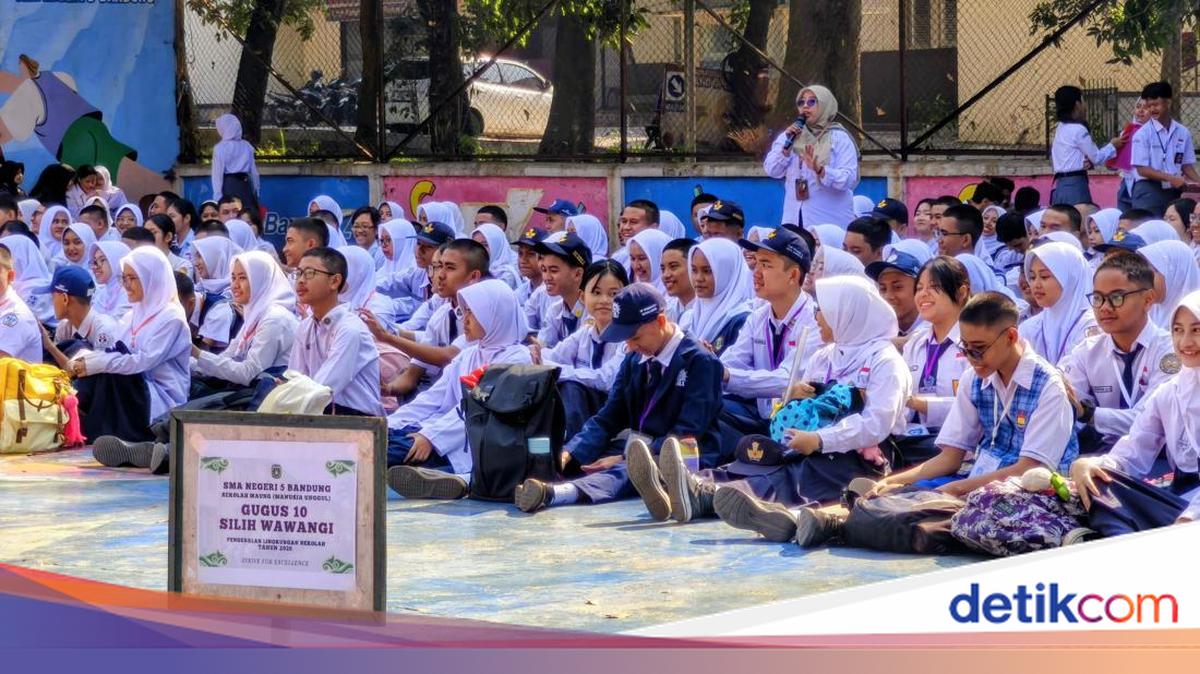
That morning, I tightly held my child’s hand as we entered the school gate. As a father, I deliberately accompanied him on his first day of school. His face showed a mixture of curiosity, enthusiasm, and a little nervousness. For a child, the first day of school is the beginning of a new journey. However, for me as a parent, that day was a moment to entrust my hopes to the school.
Our hopes are actually simple. We do not demand that our child immediately becomes the best in the class. We just want him to feel safe, accepted, valued, and to come home with the same smile he had when he left the house. This is because the first experience at school often becomes an impression that will shape a child’s perspective on the world of education.
Therefore, the presence of the Minister of Primary and Secondary Education Regulation Number 12 of 2026 concerning the Friendly School Environment Introduction Period (MPLS Ramah) is an important step in the transformation of Indonesian education. This policy is further strengthened by the launch of the National Movement for Safe and Comfortable Children’s Spaces (Gernas RANA), which affirms the government’s commitment to presenting schools as safe, comfortable, inclusive, healthy, and happy spaces for every child. This spirit is also in line with the mandate of Law Number 35 of 2014 concerning Child Protection, which guarantees every child’s right to protection from all forms of violence, discrimination, and degrading treatment in the educational environment.
For some, MPLS might be understood merely as a school environment introduction activity. However, when viewed from an economic and management perspective, its meaning is far greater. Friendly MPLS is an initial investment in building Indonesia’s human capital.
Nobel Prize-winning economist Gary S. Becker (1964) explained that education is a form of investment in people that provides long-term benefits for both individuals and the state. Education not only increases knowledge but also shapes skills, character, productivity, and adaptability. Thus, the quality of human resources becomes the main capital for economic growth and national competitiveness.
This idea is further reinforced by James J. Heckman (2024), who demonstrated that investment in the early stages of a child’s life yields the highest economic and social returns. A safe and supportive learning environment shapes the cognitive abilities, character, and social skills that serve as provisions for a person throughout their life. This means that investment in human resources actually begins on the first day a child enters school.
Various international findings support this view. The OECD, through PISA 2022, showed that students who feel safe at school and have positive relationships with teachers tend to have better learning motivation, psychological well-being, and academic achievement. The UNESCO Global Education Monitoring Report 2024 also confirms that safe and inclusive schools are the primary foundation for improving education quality. Meanwhile, UNICEF (2024) reminds us that a sense of safety at school directly affects students’ mental health, socio-emotional development, and learning resilience.
These findings show that a friendly school is not just a slogan. A school that respects a child’s dignity will produce students who are more confident, creative, able to cooperate, and resilient in facing various challenges. These values ultimately shape the quality of a nation’s human capital.
In this context, the implementation of Friendly MPLS must be understood as part of an educational management strategy. The success of a policy is not solely determined by the existence of regulations, but depends heavily on the quality of school leadership. School principals must become agents of change who ensure that the entire MPLS process is educational, enjoyable, and free from bullying and violence. Teachers must also act as mentors who build students’ self-confidence, not just deliver subject matter.
Education expert Eric A. Hanushek (2024) asserts that the quality of learning is closely related to workforce productivity and a country’s economic growth. Therefore, creating safe schools is not only an agenda for the education sector but also part of the national development strategy. A nation that can build a quality learning environment will have human resources that are more productive, innovative, and competitive.
The implementation of Friendly MPLS also requires the support of all stakeholders. Parents should not just drop their children off on the first day of school; they must become active partners in character education. Local governments, the public, mass media, the business sector, and community organisations need to collaborate to promote the values of Gernas RANA so that a safe and comfortable school culture truly becomes a collective movement.
In this digital era, such socialisation can be carried out through various media close to the community. Digital campaigns, parent forums, seminars, educational communities, and social media content can be effective means to reinforce the understanding that there is no longer any room for bullying, discrimination, or violence in the school environment. A friendly school culture must become the identity of all educational units in Indonesia.
As a father, I still remember when my child waved before entering his classroom. At that moment, I was not just letting go of his small steps into the learning space, but also entrusting the school with the hope that it would become a second home offering knowledge, affection, and a sense of security. I am sure that millions of parents in Indonesia share the same hope.
Therefore, the success of Friendly MPLS cannot be measured merely by the smooth running of the event.