
MP Urges Government to Develop a Special Education Framework for Disaster-Prone Areas
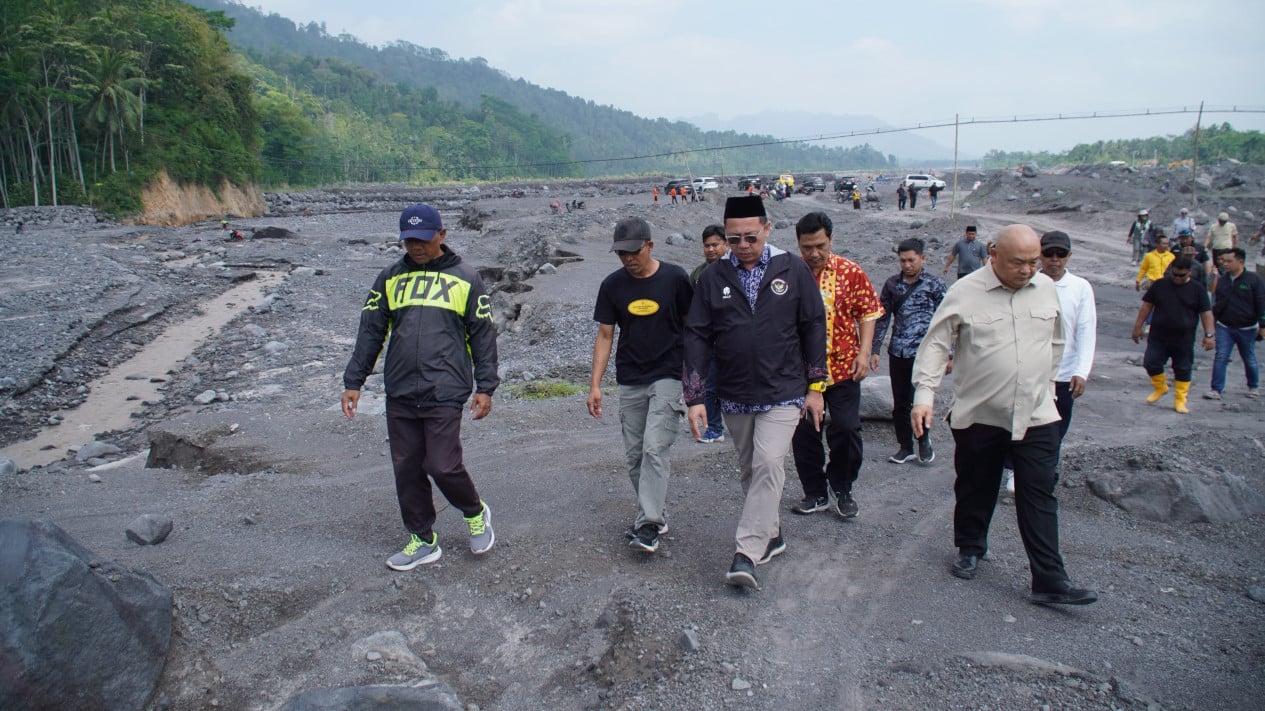
Lumajang — Every day, 46 pupils at SDN Jugosari 03 in Sumberlangsep hamlet, Jugosari village, Candipuro district, Lumajang regency, have to cross the Regoyo River, which carries cold-lahar material from Mount Semeru.
They carry their shoes, step over large rocks and volcanic sand, and are sometimes carried by their parents to reach school safely.
Muhamad Nur Purnamasidi, a member of Commission X of the House of Representatives (DPR), stressed that the situation was not merely an infrastructure issue, but one concerning the fulfilment of constitutional rights.
“Providing education services is a constitutional mandate. It must be upheld in every situation,” Purnamasidi said during a visit to the pupils’ river crossing in Sumberlangsep, as quoted on Tuesday (10 November 2026).
He said the case in Sumberlangsep underscored the urgent need for a permanent, tailored education-services framework for disaster-prone areas, rather than an ad hoc response each time a disaster strikes.
“This has not happened just once or twice; it happens every year. In areas hit by disasters annually, a different education service system must be established. That way, services will not disappear when a disaster occurs,” he said.
He said the failure of distance learning (PJJ) in disaster-hit locations exposed a fundamental weakness in emergency education policy: policies were in place, but the technical requirements for implementing them were never guaranteed.
“We must take steps to ensure that they continue to receive education, but in a different way. We must also ensure that the quality of the service does not decline,” he said.
Indonesia already has a relatively comprehensive policy framework for disaster education. Education and Culture Ministerial Regulation No. 33/2019 on Disaster-Safe Education Units (SPAB) serves as the main legal basis, reinforced by Secretary-General Regulation No. 6/2023 on SPAB technical guidelines and the 2026 Disaster Education Implementation Guide.
The Ministry of Primary and Secondary Education has also issued Circular No. 1/2026 on learning at educational units affected by disasters. It allows schools to choose limited face-to-face learning, distance learning or a hybrid format, depending on local conditions.
However, he noted that in practice, SPAB remained focused on general preparedness and had yet to become a fully functioning education-services system in areas facing annual disaster cycles.
Source: jawawa.id (https://jawawa.id/newsitem/mp-urges-government-to-develop-a-special-education-framework-for-disaster-prone-areas-1794325820)
Originally published by VIVA.co.id (https://www.viva.co.id/berita/nasional/1942605-anggota-dpr-dorong-pemerintah-ciptakan-formulasi-khusus-buat-pendidikan-di-wilayah-rawan-bencana), translated from Indonesian