
MP Urges Creative Economy Ministry to Delay New Income Tax Adjustments
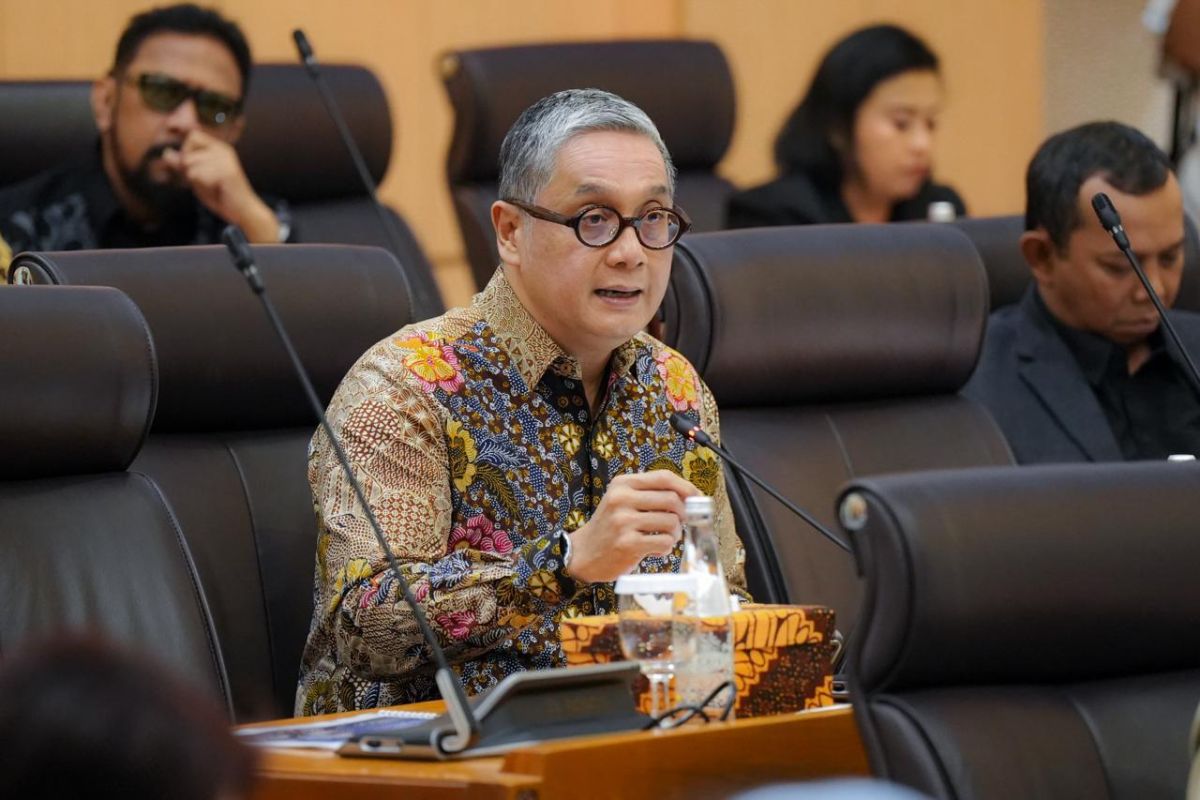
Jakarta (ANTARA) - Putra Nababan, a member of Commission VII of the Indonesian House of Representatives (DPR RI), has requested the Ministry of Creative Economy (Kemenekraf)/Creative Economy Agency (Bekraf) to advocate for the postponement of standard tax rate obligations or the provision of tax holidays for creative economy business entities still in the product incubation phase.
Putra also urged the Ministry of Creative Economy to immediately approach the Ministry of Finance to negotiate derivative regulations that are more friendly to the creative ecosystem. “In my view, Kemenekraf must be able to fight for the postponement of standard tax rate obligations for CVs and PTs in the creative economy that are in the incubation phase. The first step must be with the Ministry of Finance to ensure they are clear and fully understand the nature of these creative businesses,” Putra stated in a statement received in Jakarta on Wednesday.
Putra reminded the Ministry to complete the harmonisation of these policies at the government level before meeting business actors in the field. “Once it is clear and the struggle at ‘Lapangan Banteng’ (the Ministry of Finance office) is complete, then we can meet the creative economy actors. That way, even if they cannot accept the outcome, we can return to the Ministry of Finance,” he said.
He noted that the Ministry needs to act swiftly to mitigate the impact of the implementation of Government Regulation (PP) Number 20 of 2026. The new regulation is seen as having the potential to stifle the creativity and growth space of creative entrepreneurs who are just transforming into formal legal entities.
During a working meeting between Commission VII of the DPR RI and the Ministry of Creative Economy in Jakarta on Tuesday (2/6), Putra emphasised that the Ministry must act as a “protective shield” and an “advocacy bridge” for creative entrepreneurs, particularly those in the incubation phase. “In this context, I believe the Minister must communicate earlier with the Ministry of Finance, because by the time we approach associations and creative actors, the government must already speak with one voice,” Putra said.
Putra highlighted the immediate impact of PP 20/2006, which directly hits micro and small-scale creative entrepreneurs attempting to collaborate and build businesses formally with investors through CV, Firm, or standard PT structures. Under the latest regulation, from the first day of establishment, businesses will no longer have their taxes calculated based on turnover; instead, they will be required to enter the normal bookkeeping system and pay taxes based on the company’s net profit.
According to Putra, the characteristics of the creative industry are unique and vastly different from conventional trade. Industries such as animation studios, production houses, and game developers require years of research and significant initial capital before they can generate real profits. “Therefore, the Ministry of Finance cannot apply a ‘one-size-fits-all’ approach. The Minister and their staff must educate and differentiate creative economy businesses from others,” he added.
In addition to pushing for the tax delay, Commission VII also encouraged the harmonisation of the Indonesian Standard Industrial Classification (KBLI) for the creative economy. This step is crucial so that the Directorate General of Taxes (DJP) has a shared understanding of the creative industry’s cost structure. Through this harmonisation, cost components such as in-depth research, software license purchases, and fees for freelancers could be fully recognised as legitimate deductions from gross income (in accordance with Article 31E facilities).
Responding to these concrete demands, the Minister of Creative Economy, Teuku Riefky Harsya, expressed his readiness. “Very well, we will implement this. Thank you,” concluded a representative from the Ministry of Creative Economy at the end of the intervention session.