
MP Member States Agrarian Reform Bill Must Become the Foundation of the People's Economy
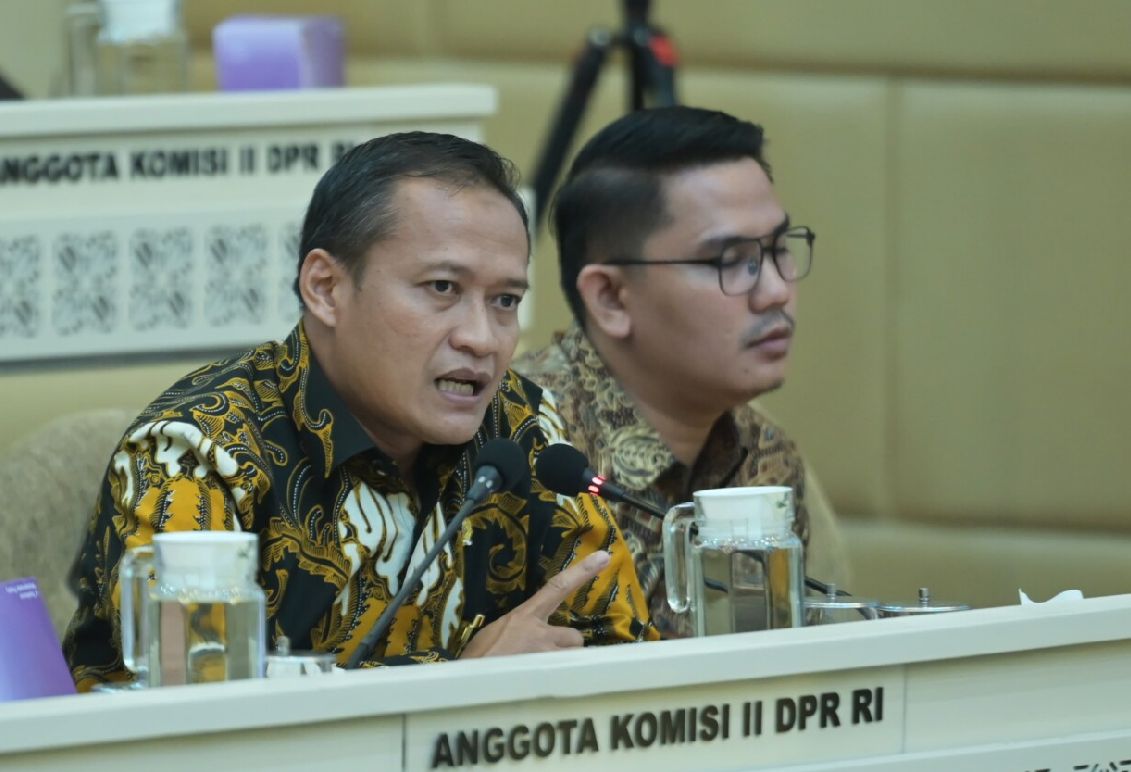
Azis Subekti, a member of the Indonesian Parliament’s (DPR RI) Legislative Body, is pushing for the Agrarian Reform Regulation Bill to move beyond the issues of land redistribution and legalisation. According to him, agrarian reform must be developed into a foundation for the people’s economy by linking land access, cooperative institutions, market certainty, and the downstreaming of production results.
“Land alone is not enough. The poor who obtain land without capital, technology, organisation, and markets may simply become asset owners who remain poor,” said Azim on Thursday (10/09/2026).
The Gerindra Party legislator expressed this view after the DPR approved the Agrarian Reform Regulation Bill to become a DPR-proposed Bill. He noted that, thus far, the provision or legalisation of land does not necessarily change the economic situation of farmers if it is not accompanied by empowerment.
Farmers may possess land but still face capital issues. Even when production increases, they are not guaranteed certain buyers, while the largest profits often reside in the processing and distribution chains.
“Therefore, the question is not just who receives the land, but after receiving the land, what do they produce, who finances it, who buys it, and who enjoys the added value,” Azis stated.
Consequently, he is encouraging agrarian reform areas to be integrated with the Merah Putih Village/Sub-district Cooperatives, the Free Nutritious Meal (MBG) Programme, and agricultural downstreaming. According to Azis, the MBG programme has the potential to become a large-scale market for local food production because it requires a regular supply of food ingredients across various regions.
If these needs can be met by local farmers, livestock breeders, fishermen, cooperatives, and SMEs, he believes the impact of the MBG budget can expand from nutritional improvement to the strengthening of the local economy.
“MBG meets nutritional needs, but at the same time, it can create certainty of demand for food producers. These two benefits must be connected,” he said.
Azis continued that the Merah Putih Village/Sub-district Cooperatives could serve as the institution that gathers community production to ensure the scale, quality, and continuity of supply required by the market.
Cooperatives can also handle financing, warehousing, transportation, processing, and marketing so that farmers do not face the market alone. He also requested that the agricultural downstreaming agenda ensures producers receive a share of the increased added value.
In his view, building processing facilities in production centres is insufficient if farmers remain at the end of the chain as suppliers of cheap raw materials. He proposed that every priority agrarian reform area be equipped with a regional economic plan.
Before or alongside land distribution, the government needs to map the commodities to be developed, financing needs, producer institutions, potential buyers, warehousing facilities, infrastructure, and processing facilities.
“Agrarian reform ensures the people have a production base. Cooperatives organise economic strength. MBG provides demand. Downstreaming retains added value in the region. If this chain is connected, agrarian reform can become the foundation of the people’s economy,” Azis concluded.
Source: jawawa.id (https://jawawa.id/newsitem/mp-member-states-agrarian-reform-bill-must-become-the-foundation-of-the-peoples-economy-1789041479)
Originally published by Media Indonesia (https://mediaindonesia.com/politik-dan-hukum/931977/anggota-dpr-sebut-ruu-reforma-agraria-harus-jadi-fondasi-ekonomi-rakyat), translated from Indonesian