
MP Member: Agrarian Reform Must Be Linked to Free Nutritious Meal Programme and KDKMP
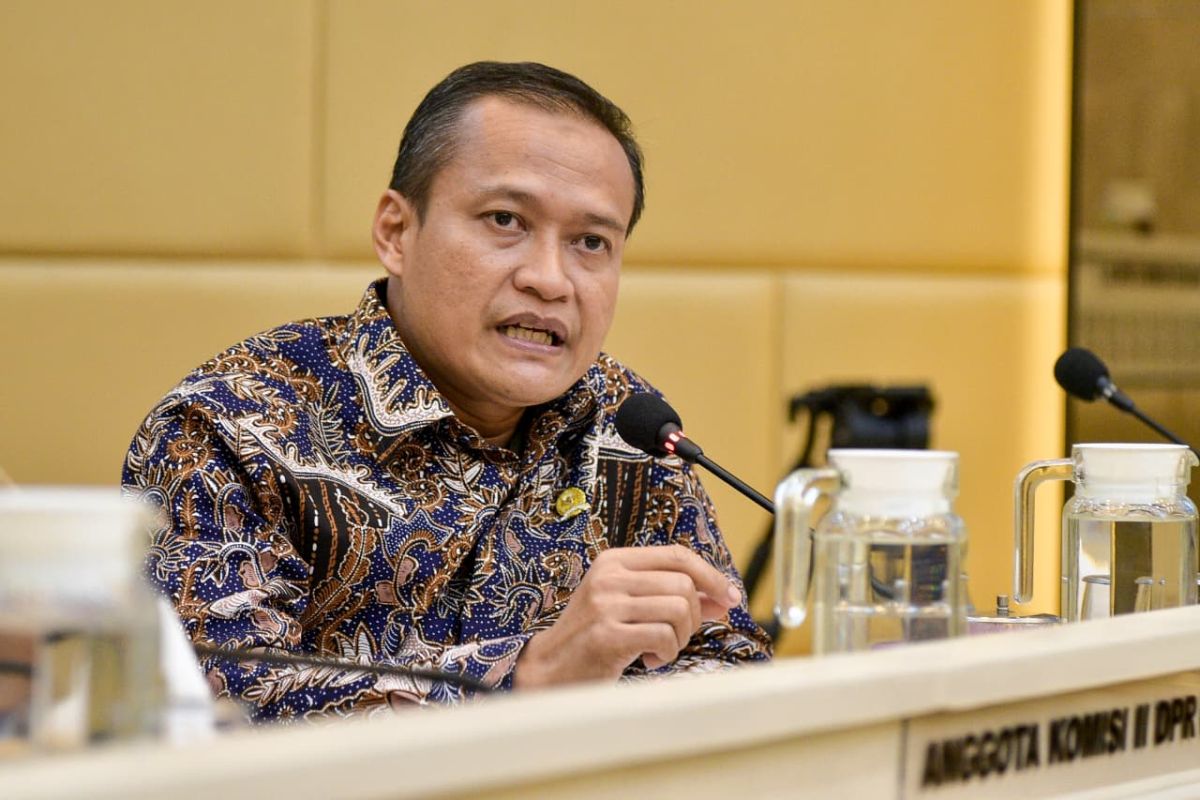
Jakarta (ANTARA) - Azis Subekti, a member of the Indonesian House of Representatives (DPR) Legislative Body, believes that agrarian reform must not stop at the redistribution of land and the provision of land rights certainty.
However, he stated that it needs to be developed by linking agrarian reform areas with the Merah Putih Village/Sub-district Cooperatives (KDKMP) and the supply chain of the Free Nutritious Meal (MBG) programme.
Speaking in Jakarta on Thursday, Azis noted that the Bill on Agrarian Reform Regulation needs to pay significant attention to community empowerment after the land arrangement and redistribution processes are completed.
“Agrarian reform must be a pathway so that the people do not only possess land, but also possess production capabilities, economic organisations, markets, and a future for that land,” he said.
According to him, agrarian reform also needs to be integrated with access to capital, cooperative institutions, market certainty, and the downstreaming of production results.
This integration, he argued, is necessary so that the beneficiaries of agrarian reform do not merely become landowners, but are able to increase their income and strengthen their position within the economic structure.
“Land alone is not enough. The poor who obtain land without capital, technology, organisation, and markets may become asset owners who remain poor,” he remarked.
He noted that the MBG programme creates a large and sustainable demand for food, ranging from rice, eggs, vegetables, fish, fruit, and milk to meat.
If a portion of these needs is supplied by local farmers, livestock breeders, fishermen, cooperatives, and MSMEs, the programme’s expenditure can simultaneously create a market for local producers.
“The MBG programme can serve as a market anchor for the local economy. Children receive nutritious food, while surrounding farmers, breeders, and fishermen gain certainty in demand,” said Azis.
He added that the KDKMP can play a role in aggregating community production, providing production facilities, warehousing, and logistics, as well as connecting small producers with larger-scale markets.
The next stage, he said, is to ensure that downstreaming also benefits producers. He emphasised that downstreaming should not merely involve moving factories closer to farmers while farmers remain raw material suppliers with low bargaining power.
Therefore, he proposed that priority areas for agrarian reform should not only have land distribution maps but also regional economic plans encompassing flagship commodities, financing, cooperative institutions, buyers, warehousing, and processing industries.
In his view, this approach aligns with the government’s efforts to build the economy from the villages and strengthen national food security.
“Producers must obtain a share of the added value,” he concluded.