
MP Karmila Sari Backs Polytechnic Development in Rokan Hilir
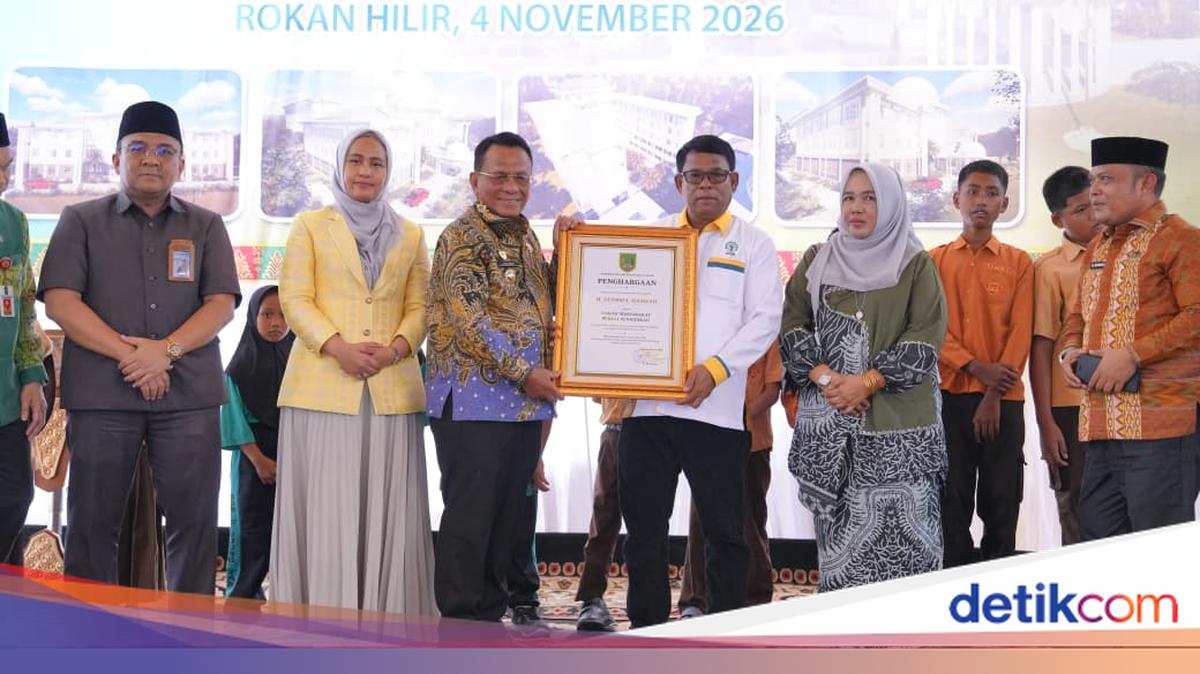
Efforts to improve access to higher education and develop skilled human resources in Rokan Hilir Regency, Riau Province, are beginning to take shape with the establishment of Mulia Rokan Polytechnic. The vocational higher education institution has the backing of Karmila Sari, a Golkar Party member of the House of Representatives (DPR) representing Riau and serving on Commission X.
The polytechnic is a strategic step towards widening opportunities for young people to pursue higher education without leaving their home region. It is also expected to prepare skilled workers for Rokan Hilir’s leading industries, particularly palm oil plantations and oil and gas.
The initiative was marked by the inauguration of Mulia Rokan Polytechnic by Rokan Hilir Regent Bistamam and the laying of the first stone for a permanent campus building in Ujung Tanjung, Rokan Hilir Regency, on Wednesday (4 November).
Karmila Sari said the establishment of Mulia Rokan Polytechnic was a joint undertaking that had been in preparation since mid-2025. The vocational institution, she said, belonged not just to its foundation or the government, but to the people of Rokan Hilir as a whole.
“We are grateful to everyone who has attended and supported this initiative. Mulia Rokan Polytechnic is something we started together. It belongs to all of us, and we must develop it together,” Karmila Sari said in a statement on Wednesday (4 November 2026).
She said one problem facing the community was limited access to higher education. The cost of study, distance from universities and an environment that did not always encourage young people to continue their education were challenges that needed to be addressed.
Karmila said the presence of Mulia Rokan Polytechnic in Ujung Tanjung was expected to meet this need. Its location along a major route should make the campus more accessible to people in Rokan Hilir and surrounding areas.
“We want young people to have greater opportunities to continue their higher education. The constraints of cost and distance should not prevent them from obtaining a better education,” she said.
Karmila also stressed the importance of fostering a new culture in the community, particularly discipline, positive thinking, responsibility, and the ability to plan for the future and build a career.
Higher education, she said, should do more than provide graduates with certificates. Institutions must also build character, improve skills and prepare students for competition in the world of work.
Mulia Rokan Polytechnic has initially received an operational licence, with three study programmes approved, according to the foundation’s account of the institution’s initial development. They include Plantation Crop Production Technology and Digital Communication Technology. Further programmes are planned in fields related to the region’s industrial potential, including oil processing.
Karmila said vocational education was a suitable choice given Rokan Hilir’s considerable potential in palm oil plantations and oil and gas.
Preparations for the polytechnic have included visits and discussions with educational and other institutions with expertise in plantations and oil and gas, including INSTIPER, SKK Migas and Lemigas.
The effort is intended to improve education quality, build partnerships and ensure that teaching is not limited to theory but includes practical training and competency certification.
“We do not want this polytechnic to develop in isolation. We want to work with institutions and universities that already have experience and expertise. That way, students can gain the knowledge, practical experience and certification that companies need,” she said.
Karmila added that she had contacted plantation companies in Rokan Hilir to explore partnerships, particularly to support student placements and graduate employment.
She hopes companies in the palm oil and oil and gas sectors will contribute to the campus’s development, ensuring that its education is aligned with industry needs.
Alongside promoting the campus’s construction, Karmila said she was also concerned about the cost of education.
She noted that students could access various scholarship opportunities, including schemes linked to the palm oil plantation sector. Depending on the programme’s rules, these can cover tuition fees as well as living expenses.
Karmila hopes the scholarship opportunities will be widely publicised so that more young people in Rokan Hilir can continue their education.
She also called on the regional government, community leaders, businesses and the wider public to introduce Mulia Rokan Polytechnic to prospective students, not only in Rokan Hilir but also in neighbouring areas.
“We want more young people to be able to go to university. I therefore invite everyone to help promote Mulia Rokan Polytechnic so that the campus can continue to grow and benefit the wider community,” she said.
Yulizar, chairman of the Rokan Jaya Bermarwah Foundation, said the polytechnic was established in response to the region’s substantial economic potential, particularly in palm oil plantations and the oil and gas industry.
Vocational education was chosen because its approach places greater emphasis on practical learning. With about 60 per cent of the curriculum designed around practical work, students are expected to gain technical skills they can apply directly in the workplace.
He said the polytechnic was intended not merely to produce academic graduates, but also professionals ready to contribute to regional development.
The foundation is also developing character education, instilling discipline, responsibility, resilience and professionalism in students.
“We want discipline to become a habit, responsibility a matter of conscience, and professionalism the hallmark of Mulia Rokan Polytechnic graduates,” he said.
Prof Junaidi, secretary of the Mulia Rokan Polytechnic Foundation, said the idea for the campus emerged from discussions involving various parties, including the regional government, Karmila Sari and community leaders.
He said the polytechnic was established to address local needs for education and workers.
Classes are initially planned to be held in the Bank Mandiri complex in Ujung Tanjung while construction of the permanent building is under way.
He thanked Syamsul for donating the land for the campus.
“We want Mulia Rokan Polytechnic to be more than a place of learning; it should also be part of the community’s economic growth. We hope young people from Rokan Hilir will no longer be spectators, but participants in the plantation and oil and gas industries,” he said.
Nopriadi, head of LLDIKTI Region XVII for Riau and the Riau Islands, welcomed the establishment of Mulia Rokan Polytechnic. He praised the Rokan Jaya Bermarwah Foundation and everyone who had contributed to setting up the institution.
Vocational education, he said, had a strategic role in responding to economic transformation because it could produce people with applied skills and competencies suited to industry needs.
LLDIKTI Region XVII would continue to provide guidance, support and assistance to improve education quality and ensure that the institution complied with the National Higher Education Standards, he said.
He also called for stronger collaboration between the campus, government, businesses and industry so that courses were closely linked to labour-market needs.
The Riau Provincial Government also voiced support for the polytechnic. Erisman Yahya, head of the Riau Education Office, conveyed the appreciation of acting Riau Governor SF Hariyanto for the initiative.
He said Mulia Rokan Polytechnic was one response to the challenge of improving human resources amid Riau’s abundant natural resources.
Around 125,000 students graduate from senior high school and equivalent institutions in Riau each year, he said, making it important to provide more higher education options so young people can develop their skills.
The provincial government, he added, continued to offer scholarships for both high-achieving students and people from low-income households.
Bistamam said the construction of Mulia Rokan Polytechnic was a first step towards building the future of the region’s human resources.
He hopes the campus will grow into a high-quality vocational education centre with competent teaching staff, a curriculum suited to industry needs and adequate facilities.
Bistamam also called for its courses and teaching to remain focused on the needs of industry, agriculture, plantations, fisheries, technology and oil.
“We want young people in Rokan Hilir to have the opportunity to receive a quality higher education without always having to leave their region. They should be able to thrive in their own home area, secure decent work and even create jobs for others,” he said.
The inauguration and groundbreaking ceremony was also attended by Riau Provincial DPRD members Ali Rahmat Harahap and Darmalis; members of the Rokan Hilir Regency DPRD; Rokan Hilir Military District Commander Lt Col M. Ricky Prawiratama Putra Prima Abdul Gafar Akbar; Rokan Hilir Police Chief AKBP Aldi Alfa Faroqi; and the commander of the B Company of the Riau Police Mobile Brigade in Rokan Hilir, AKBP Epadhoni Lilik Pamungkas.
Also present were representatives of the Rokan Hilir District Prosecutor’s Office, Rokan Hilir Regional Secretary Sarman Syahroni, regional government assistants and advisers, heads of government agencies, university rectors, company executives, community leaders and education-sector representatives.
The event concluded with donations to 170 orphaned children, the presentation of awards and a ribbon-cutting ceremony to mark the inauguration and the start of educational activities at Mulia Rokan Polytechnic.