
MP: Inter-island Transport Must Be Viewed as a Basic Service
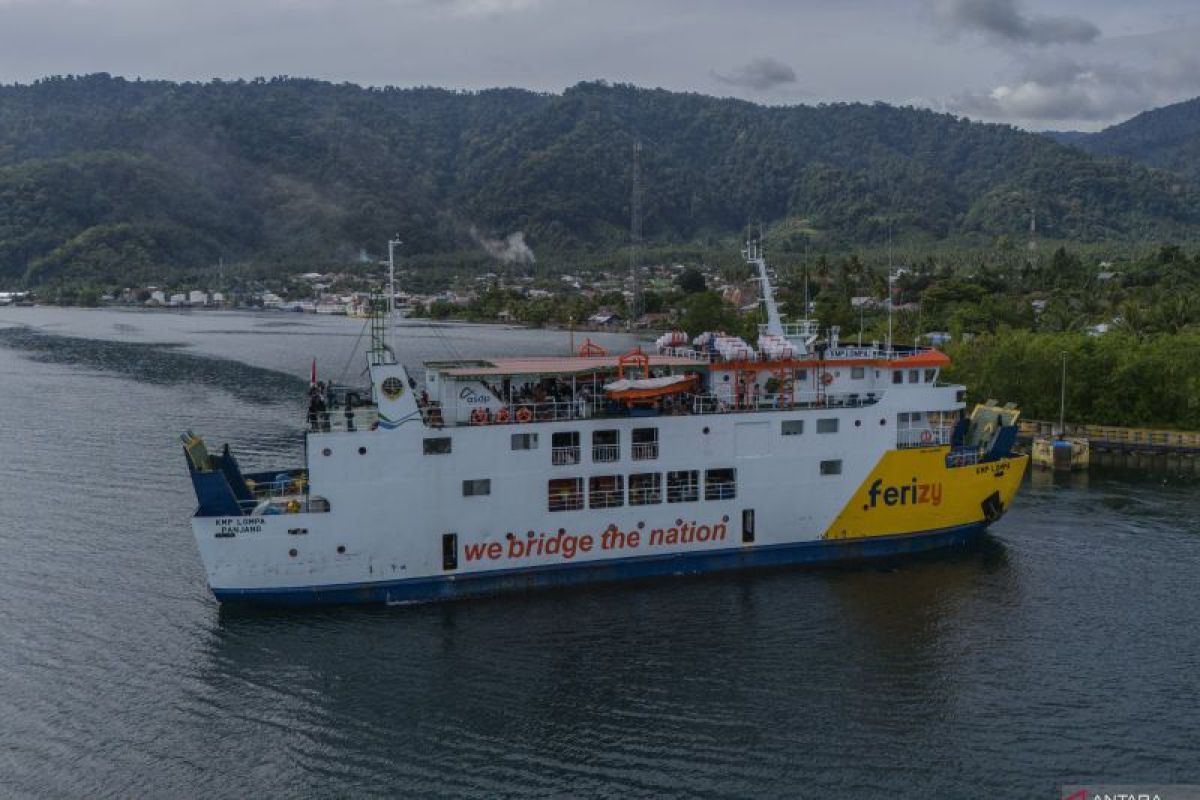
Jakarta (ANTARA) - Member of the Indonesian House of Representatives (DPR RI), Hendry Munief, believes that inter-island transportation must be viewed by the government and relevant stakeholders as a basic service for the community.
“Inter-island transportation needs to be seen as a basic regional service,” said the member of the Special Committee for the Archipelagic Region Bill (RUU Daerah Kepulauan) in a statement confirmed in Jakarta on Wednesday.
Hendry explained that for people living in archipelagic areas, inter-island transport is a component of basic services because it determines the ease or difficulty of accessing a decent standard of living.
Therefore, he reminded the government and relevant stakeholders not to view inter-island transport solely as an infrastructure project, but as an effort to provide services to island communities that are on par with those on the mainland.
“When transportation is limited, access to education, health, energy, and trade is also impacted,” he warned.
Furthermore, he illustrated that when transportation is limited, the distribution of goods to archipelagic regions becomes increasingly expensive, which in turn affects the prices of essential goods needed by the community.
“Consequently, connectivity must be part of the affirmative policy for archipelagic regions,” he asserted.
On the other hand, he believes that the Archipelagic Region Bill needs to provide space for transportation service schemes that suit the geographical character of the region.
For example, he suggested using pioneer routes, providing subsidies through the Public Service Obligation (PSO) scheme, and establishing minimum service standards for routes that may not be commercially attractive to operators.
Additionally, he encouraged the Archipelagic Region Bill to regulate the connectivity of maritime transport with land, air, digital, energy, and logistics networks.
He pushed for this so that connectivity does not only facilitate the mobility of people but also smooths the flow of goods, public services, and inter-island economic activities.
“The state must be present and ensure that connectivity serves as a bridge to provide basic services and open economic access for the people,” he said.