
MP Highlights Decile Classification Chaos as Thousands of Students Unable to Re-enrol
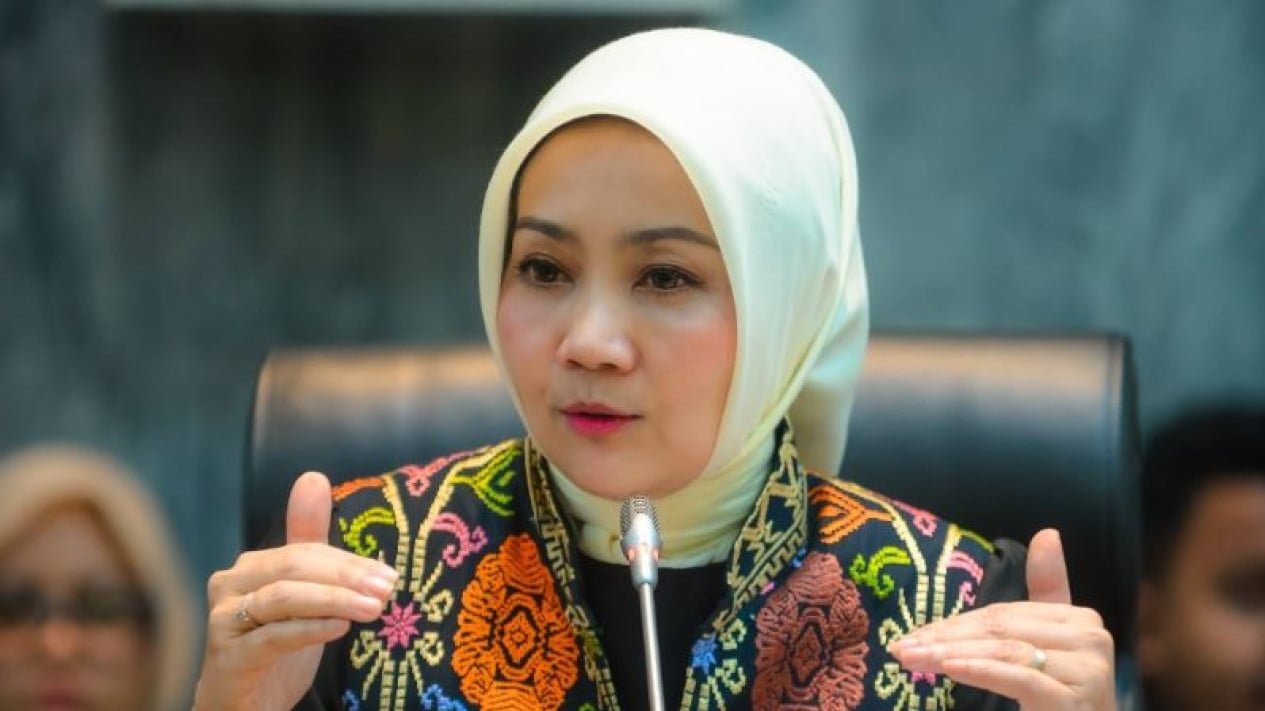
Member of Commission VIII of the House of Representatives (DPR RI) for West Java I electoral district, Atalia Praratya, has highlighted the chaotic state of the decile classification system within the National Socio-Economic Single Data (DTSEN), which is now the primary basis for distributing social assistance (bansos) as well as the Smart Indonesia Card for higher education (KIP Kuliah).
According to her, the issue is no longer merely administrative; it now touches on the people’s basic rights to education and social protection.
“The decile system should be a tool to help the government target those most in need, not a wall blocking poor children from attending university. If the measuring instrument itself is flawed, how can the social justice promised by the state ever reach the people?” Atalia said in a written statement on Tuesday, 15 September 2026.
Atalia outlined a number of findings which, in her view, prove that the current decile system is far from accurate. Based on the data, of 86,118 applicants who passed the 2026 SNBT admission route, only 39,662 were ultimately deemed eligible to receive KIP Kuliah after DTSEN screening.
The remaining 46,456 applicants were declared not to meet the criteria, including 2,656 students whose data had never even been entered into the welfare decile system at all.
In addition, some 60,000 prospective new students were recorded as not re-enrolling at state universities due to tuition cost constraints — a figure that reflects the true scale of the problem on the ground.
Atalia also pointed to inexplicable patterns in decile status changes. Students originally classified in deciles 1–4 suddenly moved to deciles 6–10 during the verification process, without any significant change in their family’s economic circumstances.
“These numbers are not mere statistics. Behind them are children who fought to pass the selection, who held dreams of going to university, but had to return empty-handed simply because of data input errors or a ranking method that does not reflect real conditions in the field,” said Atalia.
As a member of Commission VIII, which works directly with the Ministry of Social Affairs and the Ministry of Religious Affairs, Atalia stressed that the impact of the decile chaos is felt doubly within religious higher education institutions (PTKA) under the Ministry of Religious Affairs — encompassing Islamic, Christian, Catholic, Hindu and Buddhist campuses, as well as Ma’had Aly within pesantren environments.